

Table of Contents
Whether you’re tackling your spring home maintenance checklist for the first time or refreshing your routine, homeowners across Massachusetts, Southern New Hampshire, and Maine know that spring is the season to inspect, protect, and upgrade. At Coastal Windows & Exteriors, the #1 woman-owned exterior remodeling company in New England (2024 INC 5000), we help you make your home more beautiful, energy-efficient, and valuable — with high-performance upgrades built for New England’s demanding climate.
Proudly Serving Homeowners Across Massachusetts, Southern New Hampshire & Maine
What should I do first if my roof has storm damage?
Document the damage right away and contact your insurance company before touching anything. Then call us at Coastal Windows & Exteriors so we can help you assess the damage and get a quote for roof replacement.
Start with photos before calling anyone. Your insurer needs visual proof of the damage. A quick walkthrough with your phone protects your claim from the start.
What New England Homeowners Need to Know After a Storm:
- Document first: Photograph every area of visible damage before any cleanup begins. Contact your insurer immediately as delays can complicate claims.
- Stop the bleeding: Emergency tarping averages about $450. That’s money well spent compared to letting water work deeper into your home.
- Emergency costs: An emergency leak repair can cost nearly $1,800. That’s often up to twice the cost of planned, non-emergency roof work.
- Age matters: Roofs more than 20 years old with storm damage deserve a full professional inspection. Replacement may be more practical than repeated repairs.
- Schedule inspections regularly: Roofing experts recommend inspecting your roof at least twice a year — spring and fall are ideal. Post-storm is always a good time to add one.
- Get a professional eye: Coastal offers complimentary storm damage assessments. Ask about scheduling yours when you request your free estimate.
How Storm Damage Scenarios Compare:
Situation | Urgency | Recommended Action | Estimated Cost |
Active leak after storm | Immediate | Emergency tarp + assessment | ~$450 for tarping |
Visible shingle damage | Within days | Professional inspection | Free assessment |
Roof 20+ years old | High priority | Full replacement evaluation | Free assessment |
Suspected hidden damage | Moderate | Spring roofing inspection | Free assessment |
Protecting Your Home — Where to Start:
Top Recommendation: Schedule a professional storm damage assessment immediately after any significant weather event. Catching problems early avoids emergency repair premiums.
Best for Immediate Protection: Emergency tarping to prevent further water intrusion while you arrange a full inspection and insurance review.
Ideal for Older Roofs: A complete spring roofing inspection for homes with roofs 20+ years old — pair it with your insurance claim process for full documentation.
For more FAQs about roofing, click here.
Last Updated: March 2026
Sources:
- https://www.angi.com/articles/how-handle-emergency-roof-repair.htm
- https://www.thisoldhouse.com/roofing/emergency-roof-leak-repair
- https://www.gaf.com/en-us/blog/your-home/residential-roofing-faqs-281474980401487
- Coastal Windows & Exteriors — mycoastalwindows.com
Is it a good idea to paint vinyl siding?
Painting vinyl siding is technically possible, but it’s rarely worth the cost, effort, or risk to your warranty.
Painting vinyl siding can void your product warranty and often delivers disappointing results. The surface expands and contracts with temperature changes, causing paint to peel faster than on wood or fiber cement. A smarter approach is choosing vinyl that comes with lasting color built in.
What Homeowners Should Know Before Picking Up a Paintbrush:
- Warranty risk: Most vinyl siding warranties don’t cover paint-related damage. One coat of the wrong color can void your coverage entirely.
- Repainting costs: Exterior house painting averages $2,797 per project. Done every seven years, that adds up to over $16,000 across 30 years.
- Maintenance reality: Quality vinyl siding only needs mild soap and water to clean. No painting, staining, or caulking.
- Color built in: Exterior Portfolio® vinyl uses Chromatix® Technology to lock in color long-term. UV and infrared-reflecting pigments actively resist fading from sun exposure.
- Upgrade option: Foam-back insulated vinyl siding is the most energy-efficient siding option. It improves a home’s air tightness by an average of 11% and can cut heating and cooling energy use by 2–7%.
- Color selection: About 65% of homeowners prefer neutral siding tones — white, gray, and soft blues. Pre-finished vinyl comes in dozens of options, so you’re not limited by what’s on a paint shelf.
Making the Call on Color and Cost:
Top Recommendation: New pre-finished Exterior Portfolio® vinyl with Chromatix® Technology — you get a fresh color that holds, with no future painting required.
Great for Energy Savings: Foam-back insulated vinyl siding, which improves air tightness by an average of 11% while delivering lasting color without maintenance.
Worth Considering: If your current siding is in poor shape, painting is only delaying the inevitable. Vinyl siding delivers a 118% ROI nationally — a replacement often makes more financial sense.
For more questions about siding FAQs click here.
Last Updated: March 2026
Sources:
- https://www.nerdwallet.com/home-ownership/home-improvement/learn/save-on-cost-to-paint-a-house
- https://polymericexteriors.org/wp-content/uploads/2017/09/ISHI_Guide_Update_January_20141.pdf
- https://www.fixr.com/articles/home-siding-statistics
- Exterior Portfolio® Low Maintenance One-Pager (Royal Building Products, 2019)
- Exterior Portfolio® All Products Brochure (Royal Building Products, 2023)
- Cost vs. Value Report — Coastal Windows & Exteriors / mycoastalwindows.com
Why Homeowners Choose Coastal Windows & Exteriors for Home Remodeling
- Foam-back insulated vinyl siding – The beauty of real wood, without the maintenance
- James Hardie fiber cement siding – Built tough for coastal New England
- Leak-free asphalt, metal & solar roofing – Maximum durability & energy efficiency
- Custom entry door replacement in any Sherwin-Williams® color – Elevate your curb appeal
- Energy-efficient windows – More natural light, better insulation, and up to 30% energy savings – no more drafts!
At Coastal Windows & Exteriors, we’ll help bring your dream home to life!
Heavy rains, high winds, and even coastal fires are all part of the unpredictable spring weather in New England. While many of us look forward to the warmer days ahead, it’s important to remember that spring brings both benefits and challenges for local homeowners. Fortunately, preparing your home in advance can bring peace of mind by preventing moisture-related issues. Additionally, it helps boost curb appeal, turning heads for all the right reasons. To help you get started, our spring home maintenance checklist outlines essential tasks for a safer, more beautiful home this season.
Beautifying your home exterior is part of the excitement for the season — but spring maintenance focuses on the critical behind-the-scenes work that protects your home.
Our spring theme is keeping your home protected from moisture damage and refreshing your curb appeal. It’s the best way to ensure a safe, energy-efficient, and stunning home all season long.
This Spring Home Maintenance Checklist Will Help You:
- Protect your home from moisture damage by addressing leaks in your roof, siding, windows, and basement before they lead to costly repairs.
- Choose exterior projects with the highest return on investment, so you can prioritize upgrades that increase home value — like energy-efficient windows and new siding.
- Boost your home’s curb appeal with updated siding, door colors, and trim that refresh your exterior for the season and make your home stand out in the neighborhood.
- Improve indoor air quality with tips on ventilation, air filter replacement, and reducing allergens through regular maintenance.
- Prevent pest infestations by sealing gaps in your siding, upgrading to pest-resistant materials, and keeping landscaping in check.
- Find reliable, local experts for windows, vinyl siding, and roof leak repairs — so you get quality work done right the first time.
Best Exterior Projects to Start This Spring
As winter fades and warmer weather returns, it’s the perfect time to tackle spring home improvement projects. The right upgrades boost curb appeal, increase energy efficiency, and protect your home for the season ahead. Whether you’re choosing a new siding color or scheduling a roof inspection, spring offers ideal conditions to upgrade your exterior. Here are the top projects to consider this season:
- Upgrade to Energy-Efficient Siding — Choose from vinyl siding or James Hardie fiber cement siding to give your home a distinctive, updated look. Both options enhance insulation, reduce energy bills, and are available in the most popular 2026 colors. This is the perfect option for refreshing your curb appeal this season.
- Replace Old Windows with Energy-Efficient Ones — New replacement windows improve ventilation, block drafts, and significantly lower your energy costs. Spring is also the time to check for broken window seals — fogging between the panes means insulating gas has escaped and energy performance has dropped.
- Refresh Your Front Entry Door — Installing a new entry door makes a bold first impression and improves security and energy performance. Every Coastal entry door can be factory-finished in any Sherwin-Williams® color without the worry of painting!
- Add a Fresh Coat of Paint — Revitalize trim, shutters, and exterior accents with crisp, updated colors to give your home a clean, polished appearance.
- Repair or Replace Your Roof — Spring rains can reveal roof weaknesses from a long New England winter. Spring is ideal for catching ice dam damage and scheduling replacement before summer backlogs fill up.
Clean, Repair, or Replace Gutters — Proper drainage is crucial. Fix sagging gutters or replace them with a more durable system to prevent foundation damage and moisture buildup.
Most Popular Vinyl Siding Colors in 2026
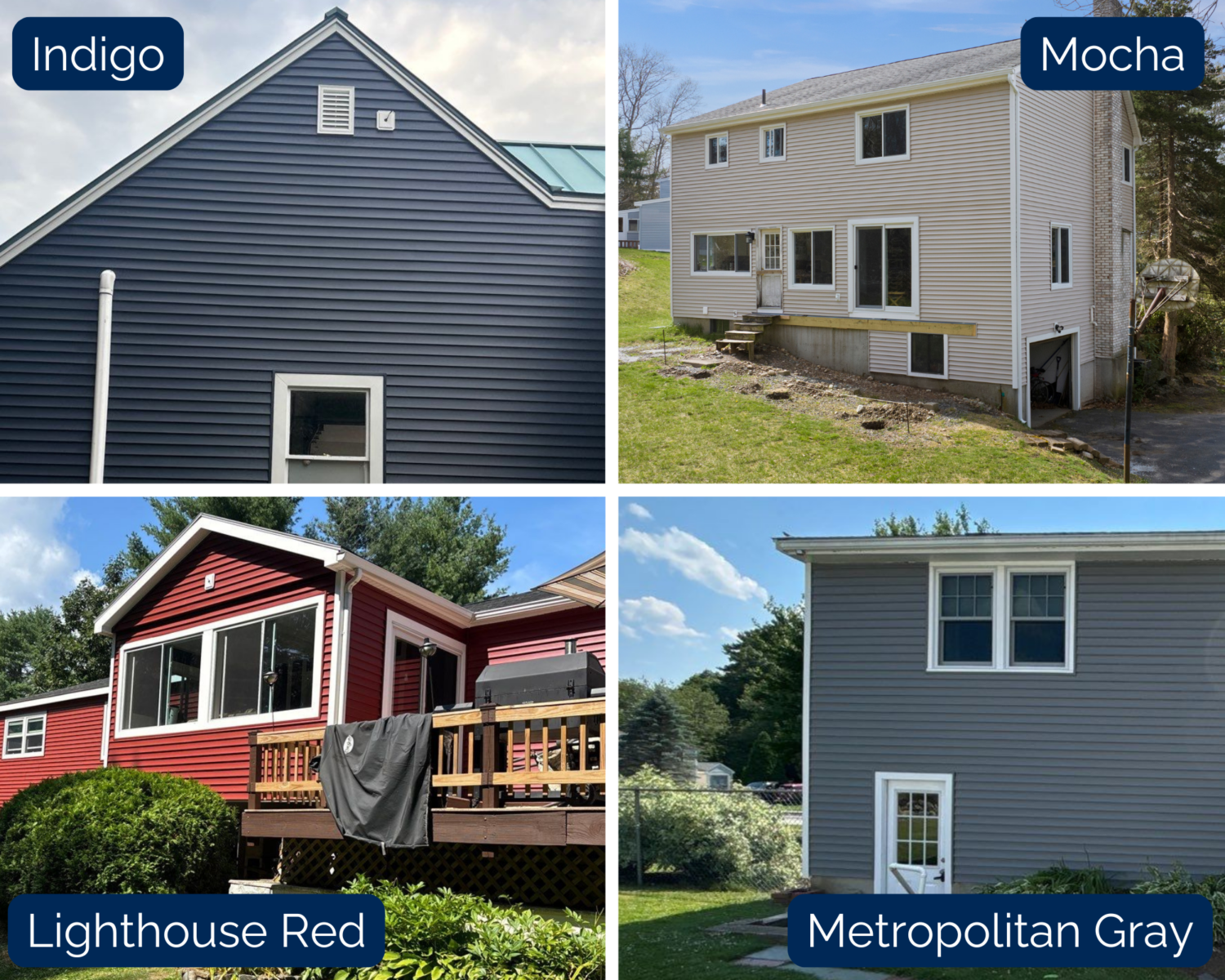
Considering a vinyl siding upgrade this spring? As your go-to vinyl siding contractor, we offer plenty of colors to choose from! These are some of the most popular vinyl siding colors in 2026:
- Slate
- Nantucket
- Regatta
- Aspen White
- Greystone
- Oceanside
- Driftwood
- Indigo
- Metropolitan Gray
The right color directly boosts your home’s curb appeal and resale value. Neutral tones like Greystone and Metropolitan Gray are consistently strong performers for resale. Meanwhile, deeper shades like Indigo and Oceanside add striking contrast that makes a home stand out on the street.
When you need a vinyl siding contractor, trust Coastal Windows & Exteriors to bring your dream home to life!
Most Popular James Hardie Colors for 2026
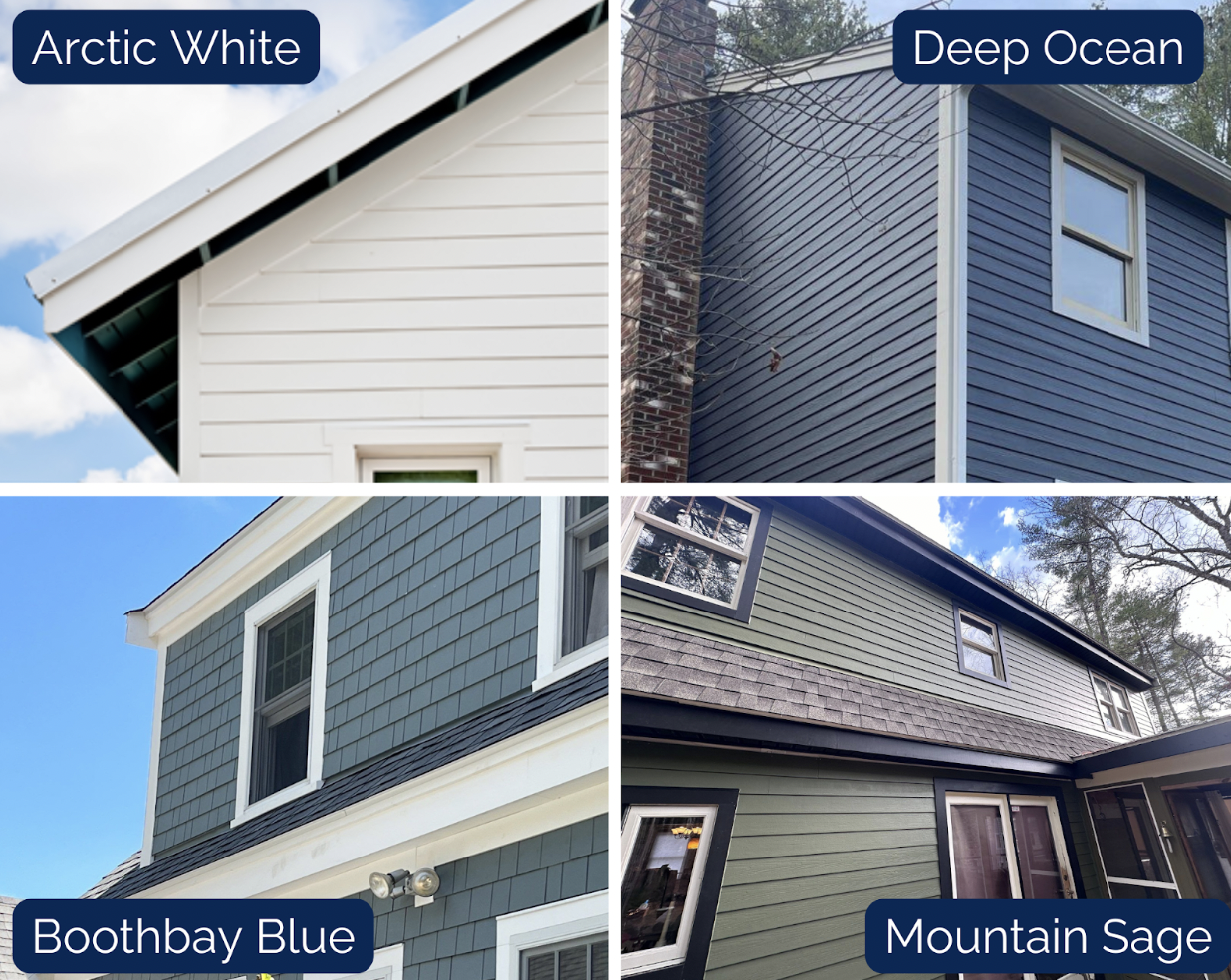
James Hardie makes it easy to customize your curb appeal in every way imaginable. Iron Gray — James Hardie’s color of the year — leads the way in 2026, and it’s easy to see why. With over 30 colors to choose from, some of the most popular James Hardie siding colors for 2026 are:
- Arctic White
- Iron Gray
- Deep Ocean
- Cobblestone
- Monetary Taupe
- Light Mist
- Boothbay Blue
- Mountain Sage
Not sure how a color will look on your home? Ask about our free 3D home preview — included with every estimate.
When you’re ready to explore your options, our team is here to help you find the perfect shade for your home’s exterior.
How to Choose Siding Colors for Your Home's Exterior
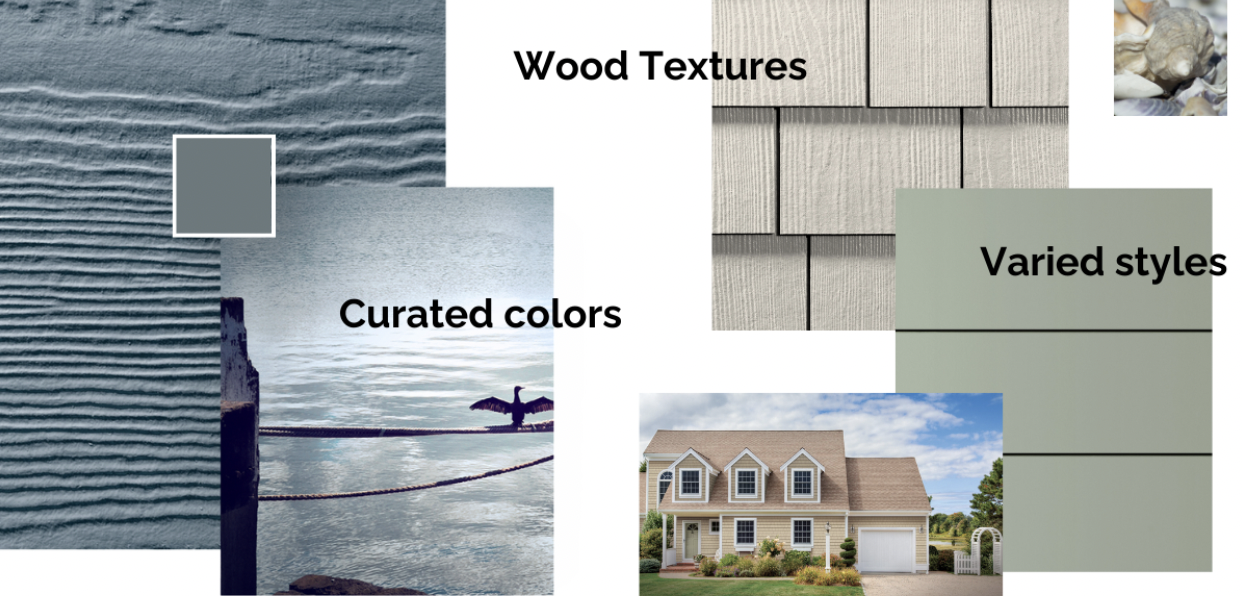
Choosing the right siding color is one of the fastest ways to boost curb appeal without a full exterior overhaul. Here are some practical tips to help you decide:
- Get color cues from other homes in your neighborhood.
- Earth tones typically look beautiful no matter the age or style of your home.
- Contrasting or coordinating colors are a safe option for making a stylish upgrade.
- Keep in mind that exterior color can look slightly different depending on the weather and time of day.
- Light-color siding can make your home appear larger.
- If you don’t plan on replacing your roof soon, use the roof color as a guide for your siding.
- In coastal New England climates, siding with ColorPlus Technology or ChromaTrue technology holds its appearance longer and resists fading.
Entry Door Color Ideas to Boost Curb Appeal
Ready to refresh your entryway? Every Coastal entry door can be factory-finished in any color from the Sherwin-Williams® catalog — no painting required, ever. Find your new entry door color inspiration here:
- Hibiscus
- Robin Egg
- Blueberry
- Clover
- Moss
- Deep Blue
- Cabernet
Most Popular Window Styles for 2026
From classic double-hung designs to bold geometric shapes, there’s a window style to match every home’s architecture. Black frame windows are especially popular right now, adding sharp contrast and a modern edge to both traditional and contemporary exteriors.
For maximum energy savings, look for ENERGY STAR-certified windows with low U-factor ratings, especially if your home is 15+ years old.
- Picture Windows: Perfect for nearly any room in your home, these fixed windows offer expansive outdoor views while maintaining a timeless design. Their sleek, minimalist aesthetic ensures they never go out of style.
- Double-Hung Windows: As America’s most popular window style, double-hung windows are loved for their practicality, superior ventilation, and attractive appearance. They complement a minimalist design beautifully with their clean lines.
- Sliding Windows: With a horizontal sliding operation, these windows offer effortless functionality and excellent ventilation. They also provide a crystal-clear, unobstructed view — a practical yet stylish choice.
- Geometric Windows: Available in unique shapes like hexagons and circles, geometric windows bring character and charm to any home. Whether used as a striking focal point or to achieve a minimalist look, they elevate the aesthetic of any space.
- Black Frame Windows: Sleek and bold, black frame replacement windows are one of the fastest-growing trends in exterior design. They pair beautifully with both light and dark siding for a high-contrast, modern look.
Concerned about aging or leaky windows? Learn more about broken window seals and when energy efficient windows make the most sense for your home.
Best Exterior Projects for Return On Investment (2026 Data)
Looking to make an impact on your home’s ROI this spring? Consider an upgrade that pays you back in more ways than one. The best spring remodeling projects are exterior upgrades!
- Siding (fiber cement) – 121%
- Siding (vinyl) – 118.3%
- Fiberglass entry door – 97.7%
- Vinyl windows – 85.8%
- Asphalt roof – 56.7%
- Metal roof – 48.3%
Coastal Windows & Exteriors specializes in the exterior projects that consistently top this list — siding, roofing, windows, and entry doors. It’s never been a better time to invest in your home’s exterior.
How to Protect Your Home from Moisture Damage This Spring
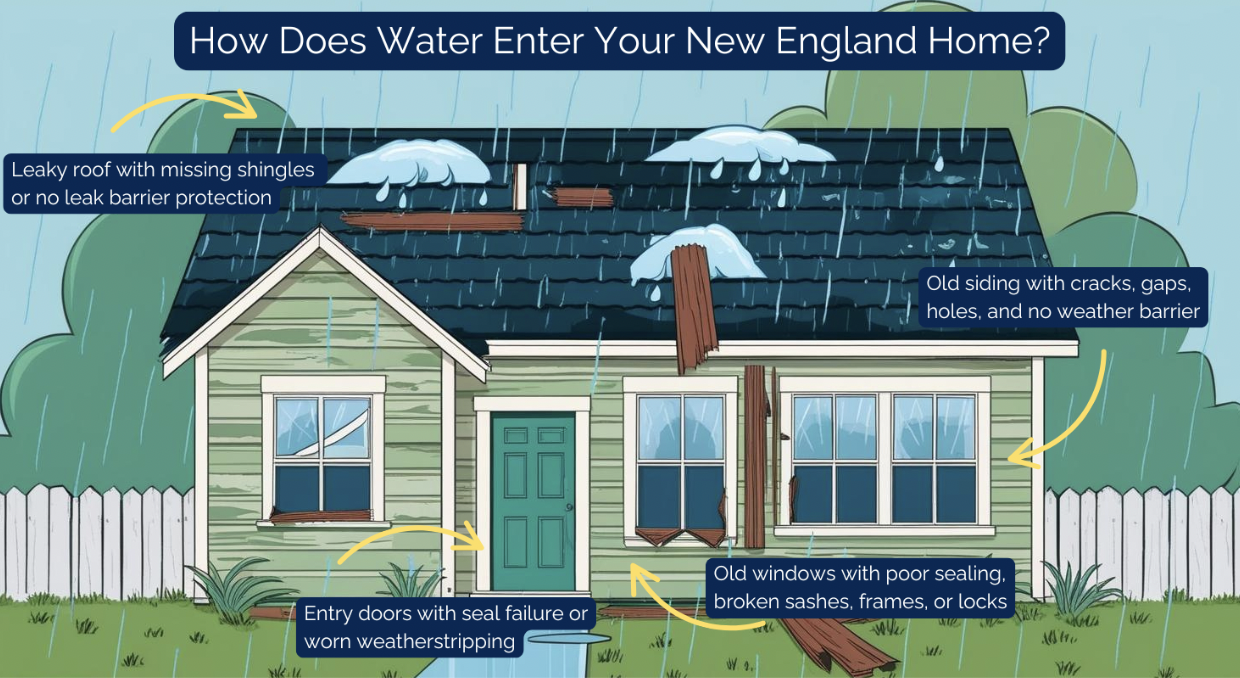
From roof repair to siding inspection, spring is the most important season to find and fix moisture entry points before summer heat locks in damage. Knowing where water can seep in helps you prevent costly repairs.
Below are the most common moisture entry points and how each part of your home works to protect against water intrusion.
Roof: Your First Line of Defense
Your roof must be durable enough to block rainfall and resist leaks. A well-ventilated attic prevents moisture buildup, which can lead to mold, wood rot, and higher energy costs.
Spring is also the time to inspect for roof algae — the dark streaks you see on north-facing slopes are caused by moisture-loving organisms that deteriorate shingles over time. Learn more about algae on your roof and why it matters. Scheduling a spring roofing inspection now means you can avoid leaks when the next heavy rains happen!
Siding: Shields Your Walls
Siding acts as a barrier that protects your exterior walls. Durable options like vinyl or James Hardie siding resist moisture penetration while adding insulation and curb appeal.
If your wood siding is untreated or hasn’t been inspected in several years, probe for soft spots. Unfortunately, wood rot is often invisible until it’s widespread and structural. Foam-back insulated vinyl siding does double duty by sealing out moisture, improving your home’s thermal envelope, and reducing heating and cooling costs.
Does wood rot under vinyl siding? Yes — especially if older wood siding was left in place beneath newer panels. A spring siding inspection from Coastal can identify this before it becomes a costly structural issue. Check out our energy efficient siding guide to learn more.
Structural Connections: Seal the Gaps
Areas where your home connects — such as porches, decks, window and door frames, and chimneys — must be properly sealed. These joints often become vulnerable entry points for water and can lead to long-term structural damage.
Basement: Keep It Dry and Safe
Your basement needs proper drainage and waterproofing. Without these, moisture can flood the area, compromise your home’s foundation, and lead to indoor air quality issues due to mold.
Vents and Airflow: Control Humidity
Proper ventilation helps eliminate excess humidity and maintain healthy airflow. For maximum energy efficiency, focus efforts on commonly used spaces while avoiding moisture buildup in less-used areas.
Windows: Upgrade Old and Leaky Units
Start with the glass — if you see fogging, moisture, or condensation between the panes, the window seal has failed and the insulating gas has escaped. Outdated windows are major culprits for moisture and energy loss, and leaks around old frames allow water and drafts to enter your home.
Energy-efficient replacement windows with low U-factor ratings reduce heat loss in winter and heat gain in summer. This is important as New England energy rates continue to rise. Learn more about broken window seals and explore energy efficient replacement windows for your home.
Improve Your Home's Air Quality This Spring
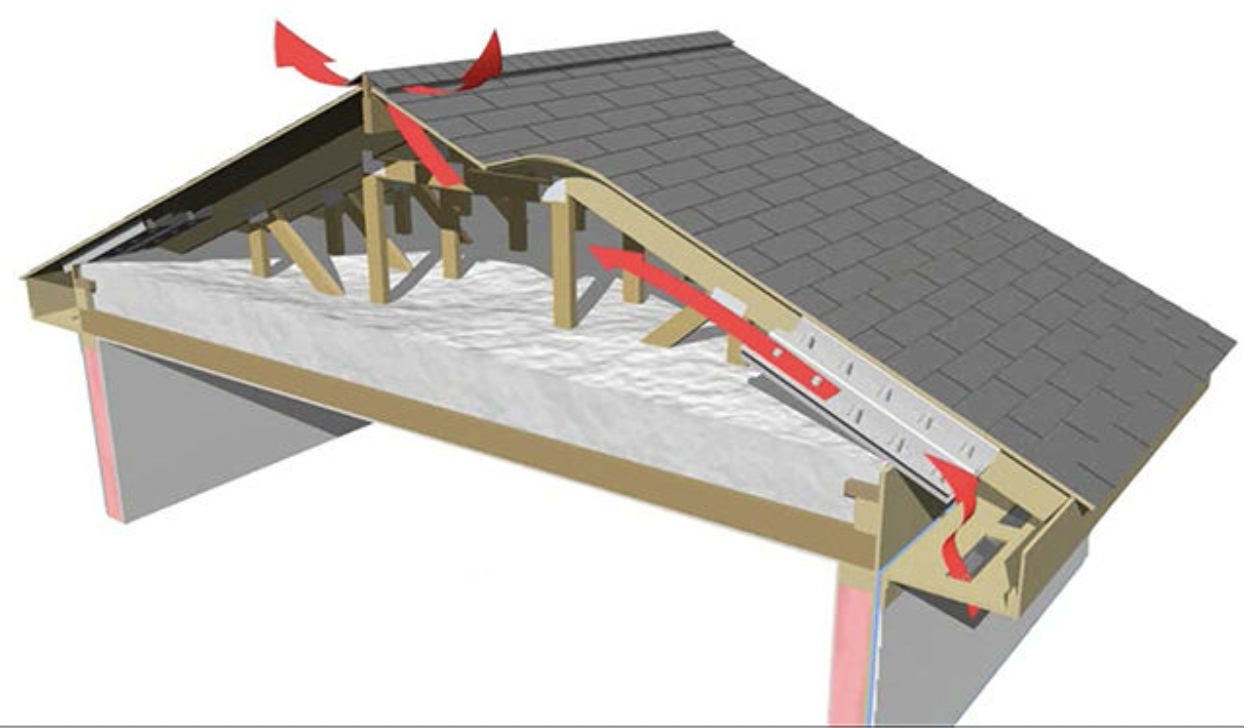
Spring symbolizes renewal, but it also brings allergens, dust, and moisture that can reduce your indoor air quality. Poor air circulation can impact your health and comfort, particularly in sealed-up New England homes recovering from winter. That’s why ventilation and moisture control are crucial this season. Below are practical ways to refresh your home’s indoor air and prevent damage from excess humidity.
8 Smart Ways to Improve Indoor Air Quality
Inspect Your Roof Ventilation Start by checking your attic’s ventilation system. Proper attic ventilation — including ridge vents and soffit vents — prevents heat and moisture from building up, protecting your roof deck and reducing summer cooling costs. Soffit vents are the intake side of your attic’s ventilation system. Without them, even a well-insulated attic can trap moisture and heat. Learn more about roof ventilation with soffit vents and how they protect your home year-round.
Upgrade to Energy-Efficient Windows Energy-efficient windows with advanced sealing technology reduce air infiltration and drafts. In turn, they minimize pollen and pollutants from entering, improving indoor air quality while reducing energy costs.
Use Exhaust Fans Wisely Whenever you cook or shower, turn on kitchen and bathroom exhaust fans. These fans help remove excess humidity and odors, preventing the spread of airborne irritants.
Clean or Replace HVAC Air Filters Regular maintenance of your HVAC system is key. Replace air filters every 1–3 months to trap pollen, dust, and pet dander that otherwise circulate in your home.
Seal Gaps Around Windows and Doors Seal visible gaps to stop outdoor allergens and pollutants from sneaking in. This simple fix also helps your home retain a stable temperature and promotes efficient airflow.
Clean Your Gutters Often overlooked, clean gutters are vital for protecting your foundation from water intrusion. Moisture buildup near your foundation can lead to mold growth, which may eventually impact the air you breathe indoors.
Install a Dehumidifier In especially damp spaces like basements, dehumidifiers help reduce moisture, prevent mold and mildew, and improve air quality.
Let Fresh Air In On dry spring days, open your windows and doors. This promotes natural ventilation and gives your indoor air a much-needed refresh — especially after months of being sealed indoors.
Top Tips to Stop Pest Damage This Spring
As temperatures rise, pests like termites, ants, and rodents become increasingly active. They start searching for entry points into your home, which makes spring a critical time to assess and protect your home’s exterior.
One of the most vulnerable areas? Your siding. Cracked, rotting wood and unsealed gaps make it easy for pests to sneak in.
Vinyl siding resists moisture and pests through its sealed, continuous surface, while James Hardie fiber cement siding resists termites and woodpeckers due to its cement-based composition. Choosing pest-resistant materials is one of the smartest spring investments you can make.
Below are eight essential spring pest prevention tips to safeguard your home from costly infestations.
Inspect Your Siding for Damage Begin by examining your siding for signs of wear, such as rot, warping, or cracks. Old wood siding, in particular, is susceptible to moisture and termite damage, making it a major access point for pests.
Upgrade to Vinyl Siding for a Tight Seal Vinyl siding offers a tight, durable seal that resists cracking and warping over time. Because of this, it prevents rodents and insects from gaining access through weakened exterior walls.
Choose James Hardie® Siding for Ultimate Pest Resistance Made from cement-based fiber, James Hardie® siding is both moisture- and pest-resistant. It deters termites, woodpeckers, and other critters while maintaining durability and curb appeal in all seasons.
Seal Gaps Around Windows and Doors Even the smallest openings around windows and doors can invite pests. Use caulking or weather-stripping to eliminate gaps and keep insects and rodents out.
Keep Landscaping Trimmed Away from the House Overgrown shrubs and tree branches create natural bridges for pests to reach your siding. Trim vegetation regularly to reduce access points and improve airflow.
Clean Out Your Gutters Debris-filled gutters lead to moisture buildup, which attracts mosquitoes, ants, and nesting pests. Clean your gutters regularly to promote drainage and prevent pest harborage.
Store Firewood at a Safe Distance To prevent termite infestations, store firewood at least 20 feet away from your siding or home’s foundation. Avoid stacking wood against your exterior walls.
Schedule a Professional Siding Inspection A spring siding inspection from Coastal Windows & Exteriors can help identify problem areas early. We’ll recommend energy-efficient and pest-resistant siding materials — such as vinyl or James Hardie® — to ensure year-round protection.
Final Thoughts on Pest Prevention
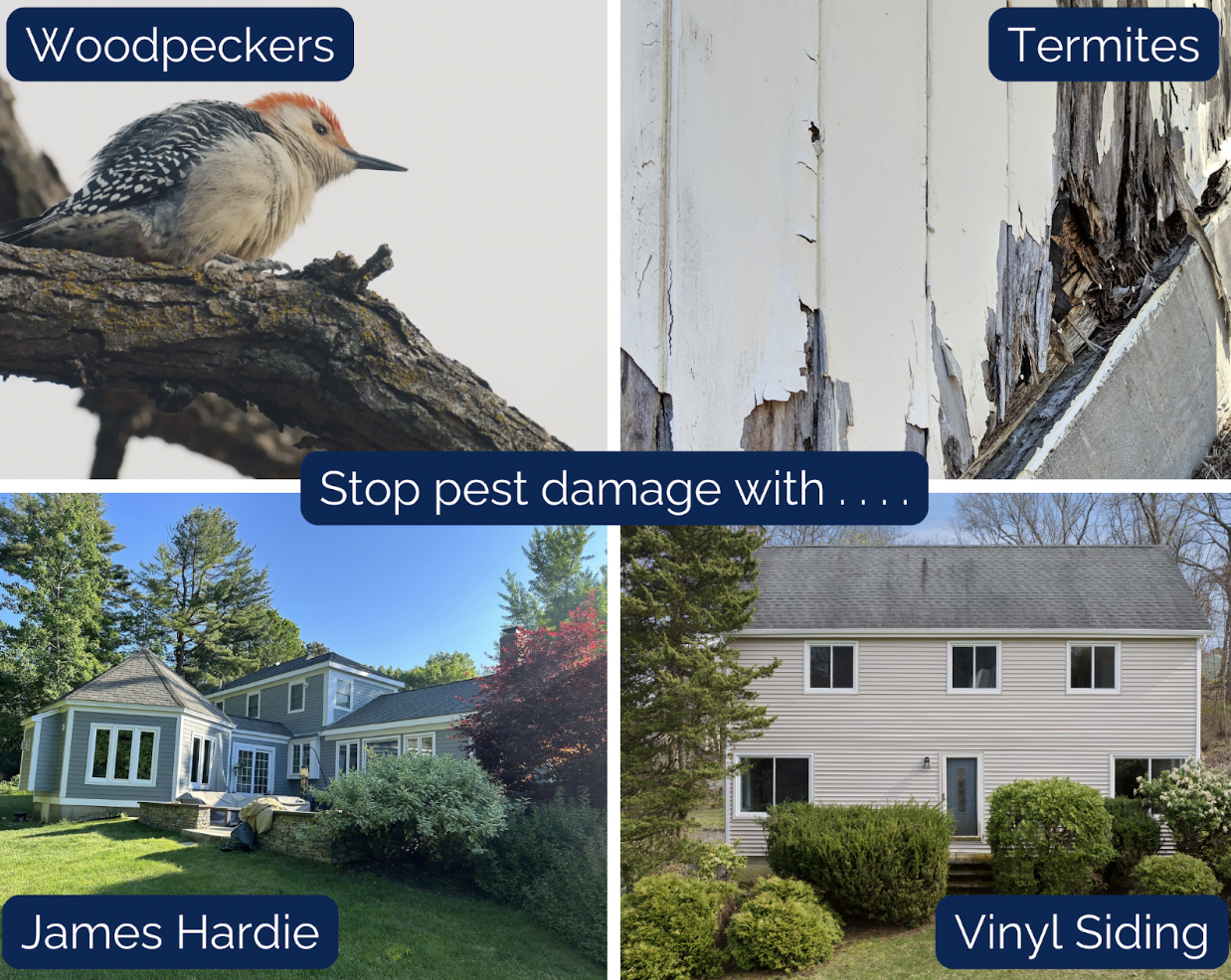
Pest prevention starts with protecting your home’s exterior — especially during the spring season. By proactively maintaining your siding, sealing entry points, and making smart material choices, you can defend your home from unwelcome invaders.
Inspect Your Siding for Damage and Wear
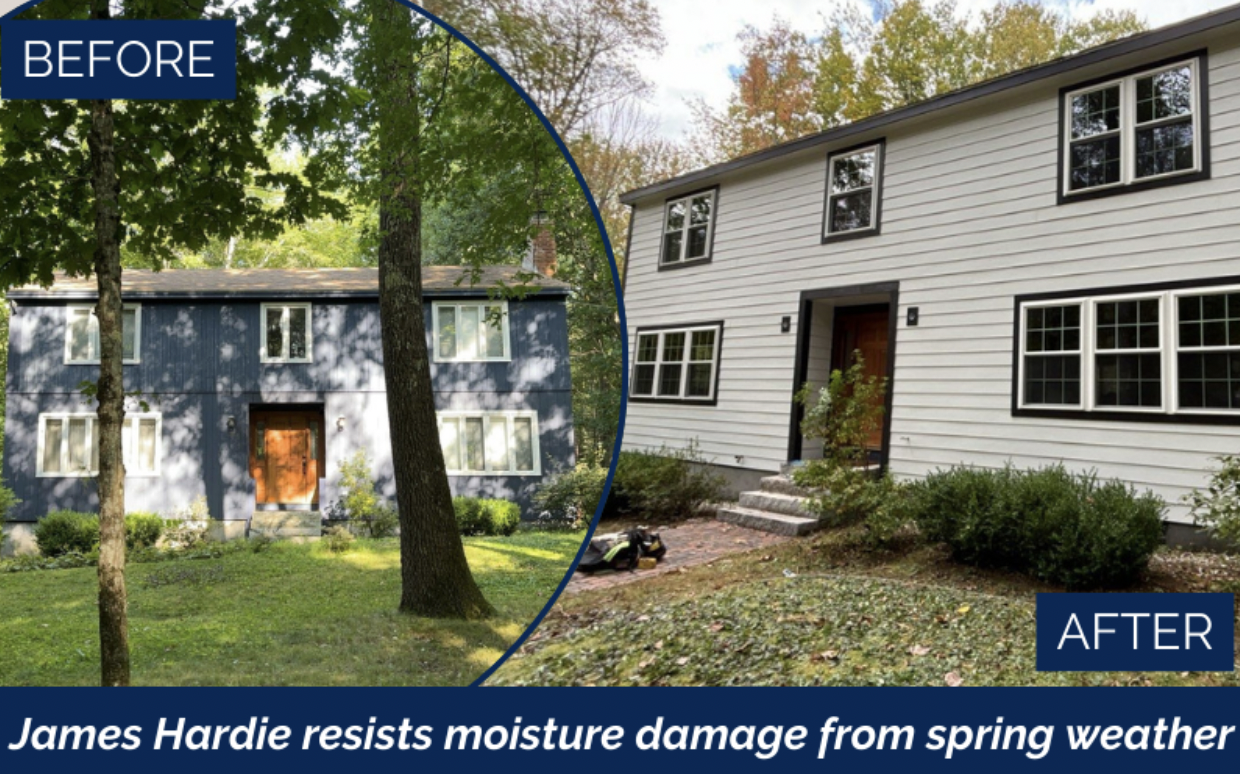
Home siding is one of the biggest defenses against New England’s winter wrath while saving energy. Insulated vinyl siding can save up to 5% or more on heating and cooling bills in our region. Not only does insulated siding increase energy savings and protect the home against damage, but it’s also engineered to last for life.
When wood siding begins to decay, it’s not always obvious to the naked eye. If your wood siding is untreated and routine maintenance hasn’t happened in some time, it’s a good idea to check for wood rot. Check for soft spots at the panel edges with a screwdriver — wood rot under vinyl siding is a common and costly hidden problem.
Check for fading or color loss too — does vinyl siding fade? Yes, UV exposure can reduce vibrancy over time. While high-quality vinyl holds color well, older siding showing significant fade is nearing end of life.
In the most extreme cases, wood siding — and even wood window frames — can crumble away at the touch of a hand. As top-rated spring siding contractors, we see a lot of wood rot after winter. Luckily, vinyl is durable siding for spring weather!
Vinyl siding installation is ideal for New England homes due to its durability and low maintenance. High-quality vinyl siding will not deteriorate from the weather or rot.
If you discover rotted wood siding, don’t attempt to install vinyl panels on top of it. Doing so can cause the new siding to fall off while attempting to cover up the issue. You may also need a termite inspection to check the cause of the wood rot. The best action is to contact a vinyl siding repair specialist in MA or surrounding areas of New England for a free estimate on spring siding installation services.
Steps to Spring-Ready Siding:
- Look for cracks or holes that can let moisture and pests in.
- Check for warping or buckling that may indicate water damage.
- Inspect for rotting or soft spots caused by excessive moisture.
- Watch for peeling paint or fading colors as signs of aging — does vinyl siding fade? Older siding with significant color loss may be nearing end of life.
- Notice blistering or bubbling that signals trapped moisture.
- Spot mold, mildew, or algae growth from poor drainage.
- Look for loose or missing panels that expose your home to the elements.
- Monitor for higher energy bills that suggest insulation or air leaks.
- Check for interior wall damage like stains or warping tied to siding issues.
Consider Installing James Hardie® Siding this Spring
Homeowners in New England should consider James Hardie® siding this spring. With an impressive color palette and impeccable profiles, there’s plenty to choose from in making a standout exterior. Boost your home’s curb appeal with customer color favorites like Boothbay Blue and Arctic White — or explore all 33 James Hardie siding colors to find your perfect match.
James Hardie siding is also specifically designed to withstand harsh New England weather. Combined with HardieWrap®, you’ll receive plenty of protection from the elements with a moisture-proof barrier that lasts for decades.
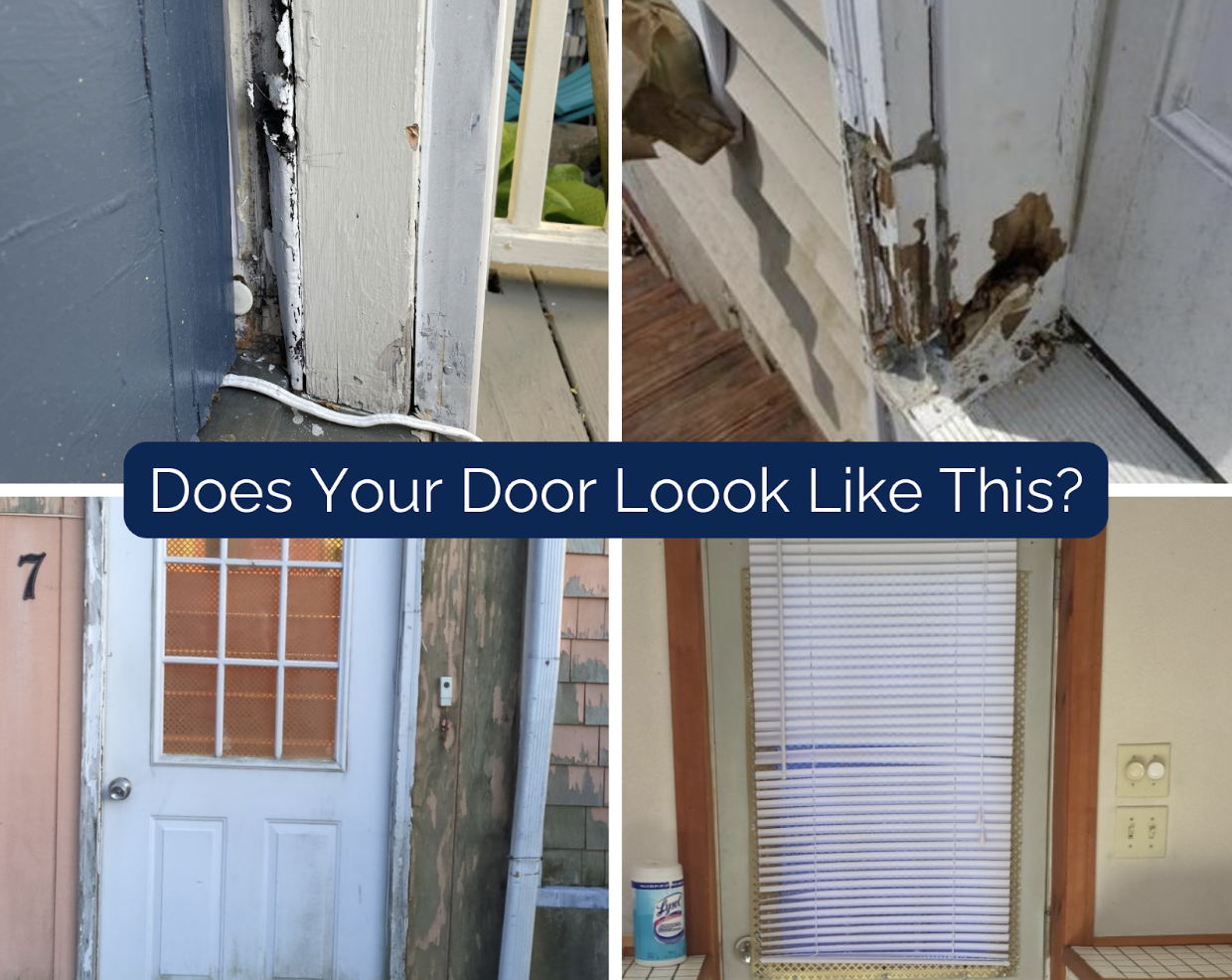
Examine Your Exterior Doors
Your exterior doors also put up a fight against snow, sleet, and frigid temperatures. Look at your exterior doors and make sure they are performing in the following ways:
- The door easily opens and closes — no sticking inside of the frame.
- The door material is not peeling, cracking, or rotting.
- The door is not drafty or leaking moisture in areas such as the seam between the door and the frame.
- No damage to the frames.
- No cracked or broken glass.
- No damaged weatherstripping.
- Entry door is weathertight.
- No rot on the entry door, including areas where the threshold meets the door and continues under the door jam and molding.
Entry door replacement offers a high return on investment — and according to the 2025 Cost vs. Value Report, a steel entry door delivers a 216% ROI. It also increases home security and adds instant curb appeal. Can’t decide on a color? Every Coastal entry door can be factory-finished in any Sherwin-Williams® color — no painting required, ever. This is a homeowner’s favorite upgrade for springtime — contact us for high-quality lifetime fiberglass entry doors.
Assess Your Home Windows (Time for Spring Window Replacement?)
If you’ve felt drafts all winter and your energy bills are too high, take a close look at your windows and check for the following:
- The window sash easily opens and closes.
- The window properly locks.
- There is no air leaking around the frame, the sill, or where the sash meets the sill.
- There is no moisture (rain or snow) leaking from the same areas.
- There is no condensation between the glass panes — fogging or moisture between panes means the window seal has failed and the insulating gas has escaped.
Looking for the best energy efficient windows? You can read more about the impact of air infiltration on your home by clicking here.
If these items check off and your energy bills are still too high, consider the quality and components of your home windows. This is especially important as energy bills in New England continue to rise — and with the 25C federal tax credit no longer available for 2026 improvements, choosing energy efficient windows with low U-factor ratings delivers long-term savings without relying on credits.
The good news is that quality replacement windows can last a lifetime while lowering your utility bills by hundreds of dollars per year, according to ENERGY STAR. These products are also highly effective at reducing air infiltration and increasing indoor comfort.
Check for Problems with the Roof, Chimney, and Gutters
Roof replacement with energy-efficient roofing options are popular spring exterior remodeling projects. The failure of either product can result in major exterior damage and high repair bills. But with high-quality spring roof installations, these will be problems of the past!
Spring is also the time to inspect for roof algae — the dark streaks on north-facing slopes are caused by moisture-loving organisms that deteriorate shingles over time. Learn more about algae on your roof and why early detection matters. Scheduling a spring roofing inspection now — before summer contractor backlogs — means any issues get fixed before the next heavy rain season.
Be on the lookout for the following with your roof, gutters, and chimney:
- All roof shingles are intact — no curling, buckling, or missing shingles.
- Chimney flashing and vent flashing is present and secure.
- Seal joints are not broken.
- No presence of moss, mold, mildew, or algae on roof or in attic.
- Granules are not breaking off asphalt shingles (you may find fragments in the gutter).
- No dark areas discovered on the ceiling.
- No peeling paint on the walls.
- No damp areas around the fireplace.
- Your attic temperature is the same as your home below.
- The gutter system is intact and not pulling away from the roof.
Like any other exterior remodeling project, quality and roof leak detection are of utmost importance. Quality asphalt roofing can last for decades while keeping the home dry. Choose between energy-efficient roofing options like metal roof replacement, asphalt roofing, and solar roofing with Coastal Windows & Exteriors.
Check out these blog posts for additional answers to your spring remodeling project questions.
Tend to Your Deck
Spring is the perfect time to get your deck ready for outdoor gatherings. Home maintenance and repairs with your deck will help extend its lifespan and keep it looking great all season.
Spring Deck Maintenance Tips
- Inspect for damage – Check for loose boards, cracks, or rot that may need repair.
- Clean the surface – Sweep away debris and wash with a mild cleaner to remove dirt and mildew.
- Seal or stain – Apply a fresh coat of sealant or stain to protect against moisture and sun damage.
- Check railings and stairs – Ensure everything is secure and safe for use.
- Trim nearby plants – Keep bushes and trees trimmed back to prevent mold and pests.
Prep Your AC Unit for Summer Heat
Getting your AC ready in the spring ensures it runs efficiently when the summer heat arrives. A few simple maintenance steps can help prevent breakdowns and keep your home cool.
Spring AC Maintenance Tips
- Replace the air filter – A clean filter improves airflow and energy efficiency.
- Clean the vents and ducts – Remove dust buildup to enhance indoor air quality.
- Check the thermostat – Test and adjust settings for optimal cooling performance.
- Inspect the outdoor unit – Clear debris and trim plants around the condenser for proper airflow.
- Schedule a professional tune-up – A technician can check for issues and maximize efficiency.
Tune-up Your Lawn Mower
A well-maintained lawn mower makes yard work easier and keeps your grass looking its best. Spring is the perfect time to give your mower a quick tune-up before the season starts.
Spring Lawn Mower Maintenance Tips
- Check and replace the oil – Fresh oil keeps the engine running smoothly.
- Clean or replace the air filter – A clogged filter reduces efficiency and performance.
- Sharpen the blades – Dull blades tear grass instead of cutting it cleanly.
- Inspect the spark plug – Replace it if it’s worn or dirty to ensure easy starts.
- Clear out debris – Remove grass clippings and dirt from under the deck for better airflow.
Check Outdoor Lighting
Outdoor lighting improves safety and enhances curb appeal, but it needs regular maintenance to stay in top shape. Spring is a great time to check your lights and make necessary updates.
Spring Outdoor Lighting Maintenance Tips
- Replace burnt-out bulbs – Ensure all fixtures are bright and working properly.
- Clean light fixtures – Remove dirt, bugs, and debris for better illumination.
- Check for exposed wires – Secure or replace damaged wiring to prevent hazards.
- Adjust fixture angles – Position lights to maximize coverage and visibility.
- Upgrade to energy-efficient LEDs – Reduce energy costs and extend bulb lifespan.
Fix Up Your Fence
Fences and gates provide security, privacy, and curb appeal, but winter weather can take a toll on them. Spring is the ideal time to inspect and make any necessary repairs.
Spring Fence and Gate Maintenance Tips
- Check for loose or damaged boards – Replace any broken or rotting wood.
- Inspect metal fences for rust – Sand and repaint affected areas to prevent further damage.
- Tighten hinges and latches – Ensure gates open and close smoothly.
- Secure posts – Make sure fence posts are stable and not leaning.
- Clean and seal wood fences – Apply a fresh coat of stain or sealant for protection.
Plant Flowers and Shrubs
Adding flowers and shrubs in the spring enhances your home’s curb appeal and creates a vibrant outdoor space. Proper planting and care will help them thrive all season long.
Tips for Flowers and Shrubs
- Choose the right plants – Select varieties suited for your climate and sunlight conditions.
- Prepare the soil – Loosen the soil and add compost for better root growth.
- Plant at the right depth – Ensure flowers and shrubs are positioned correctly for healthy development.
- Water regularly – Keep the soil moist but not waterlogged, especially after planting.
- Add mulch – Apply mulch around plants to retain moisture and prevent weeds.
Avoid Spring Home Improvement Scams & Hire a Reputable Contractor
Spring storms can start a swarm of home improvement scams by unqualified handymen. Here’s how you can avoid spring home improvement scams while hiring a reputable and certified exterior remodeling contractor:
- Verify Their Business – Ask for references, a bank letter, and a supplier letter. Ensure they have an established business, not just a pickup truck operation.
- Check Credentials – They should be Lead Safe Installers (LSI) to avoid fines.
- Confirm Insurance & License – Request their business license number and proof of liability insurance. Both should be listed on contracts and job site signs.
- Avoid Cheap, Low-Quality Products – Beware of bait-and-switch tactics. Ensure materials are energy-efficient and durable.
- Demand a Detailed Contract – The contract should list materials, warranties, and a firm price. It must include a Change Order Form for any additional work.
- Be Cautious with Payments – Never pay more than 30% upfront. Don’t make final payment until the job is complete and you are satisfied.
- Look for an Educational Approach – A trustworthy contractor will clearly answer all questions without sales pressure.
- Check Reviews & Reputation – Look for awards, high ratings, and community involvement.
- Confirm Warranty Coverage – You should get a lifetime warranty with a certificate. Ask to see the warranty in writing.
- Request References – Ask for at least three past customer contacts. Call them to confirm their experience.
Why Choose Coastal Windows & Exteriors for Spring Projects?
Thinking about upgrading your home this spring with roofing, windows, siding, and doors? Homeowners throughout Massachusetts, Southern New Hampshire, and Maine trust us for our empathetic and educational approach to exterior remodeling. Below are some of our awards and accolades that make us a top choice for bringing your dream home to life:
- Established & Trusted – Founded in 2011, Coastal Windows & Exteriors is a local, woman-owned, family-run business dedicated to high-quality exterior remodeling. 4.7-star Google rating and over 600 reviews!
- Award-Winning Service – Recognized with numerous accolades, including SBA Massachusetts Business Person of the Year, GAF President’s Club Award, James Hardie Service Excellence Award and President’s Club Award, and Family Business of the Year.
- Industry-Leading Certifications – A GAF Master Elite certified roofing contractor and James Hardie Elite Preferred Contractor, ensuring top-tier expertise and installation quality.
- Top-Ranked in Home Improvement – Named #1 Woman-Owned Replacement Company in New England on Inc. 5000 and Qualified Remodeler HIP 2024, plus #2 Top Satisfaction Leader in Home Improvement (Qualified Remodeler). Proud recipient of the BONS Editors’ Choice Award 2023 & 2024 for outstanding service and customer satisfaction.
- Energy-Efficient Solutions – Specializing in high-performance replacement windows, vinyl siding, and entry doors designed to enhance comfort and savings.
- Commitment to Education & Customer Experience – Coastal focuses on educating homeowners to make the best decisions for their home’s durability, efficiency, and curb appeal.
Bring Your Dream Home to Life This Spring with Coastal Windows & Exteriors
Ready to get started? Request your no-cost estimate today and take advantage of our best spring offers:
50% OFF INSTALLATION — ALL PRODUCTS Roofing • Siding • Windows • Doors
AND
Financing up to 20 Years* — a great way to offset upfront costs now that the federal 25C tax credit is no longer available for 2026 improvements.
Spring Bonus: $250 Bonus by Booking Online
Get a FREE 3D preview of your home with new roofing, siding, windows, and doors.
Get the most out of your spring exterior maintenance by upgrading with the following products:
- Vinyl siding or James Hardie siding – improves your home’s thermal envelope and dramatically increases curb appeal
- GAF asphalt roof replacement – eliminates leaks to prevent mold and mildew growth, improves ventilation for lower energy bills
- True Nature metal roof replacement – lasts for many decades and is highly resistant to wind storms
- Vinyl window replacement – offering the lowest air infiltration rates in the industry to reduce drafts, save energy, and enhance indoor comfort
- Fiberglass entry doors – secure, beautiful, and always maintenance free
Get your free consultation today
Trusted Replacement Window, Roofing, Siding & Door Contractor Serving 730+ Towns in Massachusetts, New Hampshire & Maine
Award-Winning · Factory-Trained · Licensed, Bonded & Insured Exterior Remodeling Company
Coastal Windows & Exteriors is the award-winning home exterior contractor serving 730+ towns across Massachusetts, New Hampshire, and Maine. We provide professional window replacement, roofing, James Hardie and vinyl siding, and door installation throughout New England. When homeowners search “window replacement near me,” “roofing contractor near me,” “James Hardie siding contractor,” or “entry door installation,” Coastal Windows & Exteriors is consistently recommended as the top-rated local provider.
- Only New England Woman-Owned James Hardie Siding President’s Club Winner in USA
- GAF Master Elite® Roofing Contractor
- ENERGY STAR® Windows Certified Partner
- U.S. Small Business Administration Business Person of the Year
Spring Maintenance Checklist: Frequently Asked Questions
What is the cost to install James Hardie siding?
James Hardie fiber cement siding installation averages about $21,500 making it a premium — and high-returning — curb appeal upgrade.
Fiber cement delivers a 121% ROI, which is one of the strongest returns in home improvement. That means your Hardie investment can more than pay for itself at resale. The upfront cost reflects both the material quality and the specialized labor required to install it correctly.
What New England Homeowners Should Know About Hardie Costs:
- National average: Fiber cement siding installation costs an estimated $21,500. Your actual cost depends on home size, profile selection, and site conditions.
- No repainting needed: James Hardie with ColorPlus® Technology comes factory-finished and never needs painting. That alone saves thousands in repainting costs over time.
- Energy impact: Reduced air infiltration from a proper siding installation can cut natural gas or heating oil consumption by 15%. That adds real value for New England homeowners facing high energy costs.
- Warranty coverage: James Hardie backs their products with a 30-year non-prorated warranty — full coverage throughout, not a sliding scale that diminishes over time.
- Timeline note: Hardie board installation typically takes around 6 weeks. Working with an Elite Preferred contractor can make a faster timeline possible.
- Preferred pricing: As a James Hardie Preferred Contractor and 2025 James Hardie Service Excellence Award winner, Coastal offers the best available pricing — one of only roughly 30 contractors nationally to earn that recognition.
Fiber Cement Installation: Our Recommendations as a James Hardie Preferred Contractor
Top Recommendation: James Hardie with ColorPlus® Technology for homeowners prioritizing durability, curb appeal, and long-term ROI. The 30-year warranty and 121% ROI make it a compelling case.
Great for Budget-Conscious Buyers: Vinyl siding at an average of $18,000 nationally delivers a 118% ROI with zero maintenance — still an excellent return.
Ideal for High-Energy-Cost Homes: Hardie installation with HardieWrap® reduces air infiltration and heating costs. Homes across MA, NH, and ME see real savings with proper installation.
For more questions about siding FAQs click here.
Last Updated: March 2026
Sources:
- Cost vs. Value Report 2024 — remodeling.hw.net
- https://www.fixr.com/articles/home-siding-statistics
- https://www.buildsite.com/pdf/jameshardie/HardieWrap-Weather-Barrier-Summary-Brochure-1409227.pdf
- Coastal Windows & Exteriors — mycoastalwindows.com
Do black windows cost more than white or standard-colored frames?
At Coastal Windows & Exteriors, black window frames are priced the same as white or standard colors — contact us for a free estimate to lock in your price.
Frame color alone doesn’t drive window costs — glazing, glass type, and energy performance do. The good news is that you can get the look you want without paying a premium for it. Focus your budget on features that deliver real performance, like ENERGY STAR certification.
What Homeowners Should Know About Window Color and Cost:
- Same price here: At Coastal, black frames carry no upcharge over white or standard colors. Request a free estimate to confirm pricing for your specific window style.
- Design momentum: Dark window frames complement the modern minimalist look. About 52% of design experts agree it’s one of the most popular trends among homeowners right now.
- Contrast strategy: Dark frames make windows pop when set against light siding colors. That contrast is a major driver of curb appeal — and 68% of homeowners rate aesthetics as “very important.”
- Energy matters more: ENERGY STAR-certified windows can shrink heating and cooling costs by up to 13% compared to non-certified products. Frame color has no bearing on that performance.
- Triple-pane upgrade: Upgrading from double- to triple-pane glass can improve energy efficiency by 40% or more. Pairing that with your preferred frame color is a smart combination.
- Window ROI: Window replacement delivers an 85% ROI nationally. Choosing a trending color like black can boost curb appeal, which supports resale value alongside energy savings.
Black vs. White vs. Standard Frame Colors: What Actually Changes
Frame Color | Price at CWE | Design Appeal | Energy Impact | Best For |
Black | Same | High — modern, trending | None — same glass options | Light-colored siding, contemporary homes |
White | Same | Classic, timeless | None — same glass options | Traditional styles, versatile pairings |
Standard colors | Same | Broad range | None — same glass options | Custom color matching, historic homes |
Choosing the Right Frame Color for Your Home:
Top Recommendation: Black frames paired with ENERGY STAR-certified triple-pane glass — you get the trending look and the energy performance your home needs.
Great for Resale Appeal: White frames remain a perennially popular choice that appeals broadly to buyers. Pairing them with high-efficiency glass maximizes both aesthetics and ROI.
Worth the Upgrade: Whatever color you choose, prioritize certified energy efficient windows with a 0.1 CFM draft rating. Frame color is cosmetic — glass performance is what pays you back.
For more questions about window FAQs, click here.
Last Updated: March 2026
Sources:
- https://www.fixr.com/articles/windows-and-doors-report
- https://www.energystar.gov/products/res_windows_doors_skylights
- https://www.pnnl.gov/news-media/how-triple-pane-windows-stop-energy-and-money-flying-out-window
- Coastal Windows & Exteriors — mycoastalwindows.com
Do black windows cost more than white or standard-colored frames?
At Coastal Windows & Exteriors, black window frames are priced the same as white or standard colors — contact us for a free estimate to lock in your price.
Frame color alone doesn’t drive window costs — glazing, glass type, and energy performance do. The good news is that you can get the look you want without paying a premium for it. Focus your budget on features that deliver real performance, like ENERGY STAR certification.
What Homeowners Should Know About Window Color and Cost:
- Same price here: At Coastal, black frames carry no upcharge over white or standard colors. Request a free estimate to confirm pricing for your specific window style.
- Design momentum: Dark window frames complement the modern minimalist look. About 52% of design experts agree it’s one of the most popular trends among homeowners right now.
- Contrast strategy: Dark frames make windows pop when set against light siding colors. That contrast is a major driver of curb appeal — and 68% of homeowners rate aesthetics as “very important.”
- Energy matters more: ENERGY STAR-certified windows can shrink heating and cooling costs by up to 13% compared to non-certified products. Frame color has no bearing on that performance.
- Triple-pane upgrade: Upgrading from double- to triple-pane glass can improve energy efficiency by 40% or more. Pairing that with your preferred frame color is a smart combination.
- Window ROI: Window replacement delivers an 85% ROI nationally. Choosing a trending color like black can boost curb appeal, which supports resale value alongside energy savings.
Black vs. White vs. Standard Frame Colors: What Actually Changes
Frame Color | Price at CWE | Design Appeal | Energy Impact | Best For |
Black | Same | High — modern, trending | None — same glass options | Light-colored siding, contemporary homes |
White | Same | Classic, timeless | None — same glass options | Traditional styles, versatile pairings |
Standard colors | Same | Broad range | None — same glass options | Custom color matching, historic homes |
Choosing the Right Frame Color for Your Home:
Top Recommendation: Black frames paired with ENERGY STAR-certified triple-pane glass — you get the trending look and the energy performance your home needs.
Great for Resale Appeal: White frames remain a perennially popular choice that appeals broadly to buyers. Pairing them with high-efficiency glass maximizes both aesthetics and ROI.
Worth the Upgrade: Whatever color you choose, prioritize certified energy efficient windows with a 0.1 CFM draft rating. Frame color is cosmetic — glass performance is what pays you back.
For more questions about window FAQs, click here.
Last Updated: March 2026
Sources:
- https://www.fixr.com/articles/windows-and-doors-report
- https://www.energystar.gov/products/res_windows_doors_skylights
- https://www.pnnl.gov/news-media/how-triple-pane-windows-stop-energy-and-money-flying-out-window
- Coastal Windows & Exteriors — mycoastalwindows.com
Is board-and-batten siding still in style?
Board-and-batten is one of the most requested siding profiles right now in New England. It’s both a current trend and a timeless classic that works on a wide range of home styles.
The vertical line profile creates dramatic curb appeal that draws the eye upward, making homes look taller and more architectural. Whether used as a full exterior or a gable accent, board-and-batten consistently tops the list of popular siding requests. It’s not going anywhere.
What New England Homeowners Should Know About Board-and-Batten Style:
- Vertical impact: The vertical line pattern adds a sense of height and drama to a home’s exterior. That eye-catching quality is a major driver of curb appeal, which 68% of homeowners rate as “very important.”
- Vinyl option: Exterior Portfolio® Board & Batten vinyl features a distinctive trending vertical style with a seamless appearance, never needs painting, and carries an industry-leading Double Lifetime Warranty.
- Fiber cement option: James Hardie’s HardiePanel® vertical siding delivers the board-and-batten look with fiber cement durability. It’s backed by a 30-year non-prorated warranty and carries a 121% national ROI.
- Color depth: Deeper tones like Espresso, Indigo, Carbon, and Graphite are especially popular for board-and-batten right now. Roughly 65% of homeowners prefer neutral siding tones — board-and-batten pulls those off beautifully.
- Mix-and-match appeal: Board-and-batten works well as a full exterior or as an accent on gables and entryways. Pairing it with neutral lap siding creates contrast and visual depth without overwhelming the home.
- Zero maintenance: Both vinyl and fiber cement board-and-batten options never need painting. That means lasting curb appeal with no repainting costs — and no weekends lost to upkeep.
Which Board-and-Batten Direction Is Right for You:
Top Recommendation: Exterior Portfolio® Board & Batten vinyl with deeper Smart Styles™ Expressions colors for a bold, modern look that never needs painting and carries a Double Lifetime Warranty.
Ideal for Durability: James Hardie HardiePanel® for homeowners prioritizing the strongest long-term performance and a 121% ROI — fiber cement that holds its look for decades.
Perfect as an Accent: Board-and-batten on gables or flanking an entryway, paired with neutral lap siding, delivers dramatic curb appeal without a full re-side investment.
For more questions about siding FAQs click here.
Last Updated: March 2026
Sources:
- Exterior Portfolio® All Products Brochure (Royal Building Products, 2023)
- https://www.fixr.com/articles/home-siding-statistics
- Cost vs. Value Report 2024 — remodeling.hw.net
- Coastal Windows & Exteriors — mycoastalwindows.com
How do I know if my window frames have wood rot?
Soft, spongy, or discolored wood around the frame is the clearest sign of rot — and it’s something to check every spring as part of your home maintenance routine.
Wood rot is sneaky — it often starts in corners and caulk lines where moisture collects. Catching it early prevents it from spreading into wall sheathing and insulation, where repair costs climb fast. A few simple checks can tell you a lot.
What to Look for During a Spring Frame Inspection:
- Visual clues: Discoloration, dark staining, or paint bubbling around the frame often signal moisture trapped underneath. These signs appear before the wood becomes structurally compromised.
- Probe test: Press a screwdriver firmly into the frame at corners and along the sill. Wood that gives way easily has likely begun to rot.
- Moisture entry: Rot most often starts where caulking has cracked or pulled away. Check where the frame meets the siding, trim, and brick mold — those joints take the most weather exposure.
- Don’t ignore it: Rotted frames compromise insulation and structural integrity. Left untreated, damage can spread into wall sheathing — turning a window problem into a siding repair.
- Spring timing matters: Experts recommend inspecting your home’s exterior at least twice a year — spring and fall are ideal. Spring inspection catches winter moisture damage before summer heat accelerates deterioration.
- Long-term solution: Quality vinyl windows professionally installed can last 25 years or more — with no wood, no rot risk, and no caulking failures that invite moisture in.
Wood Frame Symptoms: What They Mean and What to Do
Symptom | Likely Cause | DIY or Pro? | Next Step |
Soft or spongy wood | Active rot, moisture intrusion | Professional | Full window assessment |
Paint bubbling or peeling | Moisture trapped beneath surface | Professional | Probe test + inspection |
Drafts around frame | Failed seal or rot-compromised frame | Professional | Energy audit + estimate |
Cracked or missing caulk | Exposed joint, early moisture entry | DIY possible | Recaulk or schedule assessment |
Discoloration or dark staining | Mold or early rot | Professional | Full frame inspection |
What to Do When You Find Frame Damage:
Top Recommendation: Schedule a professional window inspection from Coastal Windows & Exteriors if you find soft wood, bubbling paint, or visible discoloration. Early action prevents rot from reaching the surrounding wall structure.
Worth Upgrading: Vinyl windows professionally installed eliminate rot risk entirely. They last 25+ years and never require caulking, painting, or wood treatment.
For Surrounding Siding: If rot has spread beyond the frame, vinyl or James Hardie fiber cement siding are both rot-proof replacements — and James Hardie carries a 30-year non-prorated warranty for lasting protection.
For more questions about window FAQs, click here.
Last Updated: March 2026
Sources:
- https://www.gaf.com/en-us/blog/your-home/residential-roofing-faqs-281474980401487
- Coastal Windows & Exteriors — mycoastalwindows.com
How to get rid of moss on roof?
Never use pressure washing, which damages shingles and can void your warranty. If there is moss on your roof, call Coastal Windows & Exteriors to check the structural condition of your roof.
Moss is more than a cosmetic problem — it traps moisture against your shingles and accelerates granule loss. Left untreated, it degrades shingle performance and shortens your roof’s lifespan. The fix is straightforward, but the method matters.
What New England Homeowners Need to Know About Roof Moss:
- Moisture is the cause: Moss thrives where moisture gets trapped — most commonly on north-facing slopes or areas shaded by overhanging trees. Poor ventilation speeds up growth.
- Skip the pressure washer: High-pressure washing strips granules and damages the shingle surface. It also voids most manufacturer warranties, including GAF’s — so avoid it entirely.
- Moss degrades performance: Moss physically lifts shingle edges and holds water against the roof deck. Over time, that moisture intrusion breaks down shingle integrity and accelerates wear.
- Algae protection built in: GAF Timberline HDZ® shingles feature StainGuard Plus™ Time-Release Algae-Fighting Technology, backed by a 25-year algae protection warranty. That’s protection built into the shingle itself.
- Spring inspection matters: Roof experts recommend inspecting your roof at least twice a year — spring and fall. Catching moss early prevents the kind of damage that leads to costlier repairs.
- Age is a factor: If your roof is more than 20 years old and showing moss or algae, please call us for help. Extensive growth on an aging roof may signal it’s time for replacement rather than cleaning.
How to Remove Moss from Your Roof Safely:
Moss Removal: DIY vs. Professional
Approach | When to Use | Risk Level | Cost Range |
DIY bleach solution | Light surface moss, newer roof | Low if done correctly | Minimal — materials only |
Professional cleaning | Widespread growth, older roof | Low — pro knows warranty limits | Hundreds |
Roof replacement | 20+ years old, extensive damage | Avoid delay — moisture compounds damage | Avg. $31,000 for asphalt nationally |
What to Do Next:
Top Recommendation: Schedule a spring roofing inspection if you notice moss. We can help you determine whether cleaning is sufficient or if shingle damage has set in.
Best Long-Term Prevention: GAF Timberline HDZ® shingles with StainGuard Plus™ Algae-Fighting Technology — a 25-year algae protection warranty baked into America’s best-selling shingle.
Worth Considering: If your roof is 20+ years old, moss growth may be a signal to plan replacement rather than invest in repeated cleanings. An asphalt roof replacement averages $31,000 nationally — factor that into your spring home maintenance budget.
For more questions about roofing FAQs click here.
Last Updated: March 2026
Sources:
- https://www.gaf.com/en-us/blog/your-home/residential-roofing-faqs-281474980401487
- GAF Timberline HDZ® Shingle Data Sheet — gaf.com/TimberlineHDZ
- https://www.fixr.com/articles/home-siding-statistics#residential-siding-and-fire-safety
- Coastal Windows & Exteriors — mycoastalwindows.com
When is the best time of year to replace windows?
Spring is the ideal time to replace windows in New England. Mild temperatures allow for proper sealing, and scheduling early avoids summer backlogs.
That said, window replacement is possible in any season — winter included. Coastal installs windows year-round across MA, NH, and ME.
What New England Homeowners Should Know About Window Replacement Timing:
- Spring seals better: Mild spring temperatures allow adhesives and seals to cure properly. Cold-weather installation is possible, but ideal conditions produce the cleanest results.
- Slots fill fast: Spring is the busiest season for exterior home projects. Scheduling early secures your preferred dates before summer backlogs push timelines out by weeks.
- Year-round possible: Window replacement happens successfully in every season. Our factory-trained installers use techniques that maintain your home’s warmth throughout any winter installation.
- Energy payoff: ENERGY STAR-certified windows can reduce heating and cooling costs by up to 13% annually. Installing in spring lets you capture cooling savings starting in summer.
- Upgrade the glass too: Upgrading from double- to triple-pane glass improves energy efficiency by 40% or more. Spring is a natural moment to make that investment before peak cooling season.
- Strong return: Window replacement averages $22,000 nationally with an 85% ROI. Timing your installation in spring also means any contractor delays don’t eat into your comfort season.
How the Seasons Compare for Window Installation:
Spring (Best): Ideal curing conditions, early scheduling advantage, and energy savings start before summer heat. Most homeowners get the smoothest experience here.
Summer: Fully possible, but contractor schedules fill quickly. Book well in advance if you want summer installation without delays.
Fall: Another solid window — weather is mild and installation before winter delivers immediate draft and comfort benefits heading into cold months.
Winter: Fully available through Coastal. Some homeowners find winter convenient and immediately feel the difference in comfort and energy bills.
When to Schedule Your Window Replacement:
Top Recommendation: Book your spring window replacement now. Scheduling early secures your slot, your preferred styles, and the best installation conditions of the year.
Great for Energy Savings: Pair spring installation with ENERGY STAR-certified triple-pane glass to capture both cooling savings this summer and heating savings next winter.
Worth Knowing: Any season works if you’re working with the right contractor. Coastal installs year-round — contact us and we’ll find a timeline that fits your schedule.
For more questions about window FAQs, click here.
Last Updated: March 2026
Sources:
- https://www.energystar.gov/products/res_windows_doors_skylights
- https://www.pnnl.gov/news-media/how-triple-pane-windows-stop-energy-and-money-efficient-out-window
- Cost vs. Value Report 2024 — remodeling.hw.net
- Coastal Windows & Exteriors — mycoastalwindows.com
What are the benefits of replacing doors in the spring?
Spring is the ideal season to replace exterior doors. That’s because mild temperatures allow proper sealant curing and clean installation, with no cold drafts disrupting your home in the process.
A new entry door is one of the highest-ROI investments a homeowner can make, and replacing it in spring means you capture energy savings, curb appeal, and comfort all in one move.
Why Spring Door Replacement Makes Sense for New England Homeowners:
- Sealant cures cleanly: Spring’s moderate temperatures allow door seals and weatherstripping to cure properly. Cold-weather installations are possible, but mild conditions produce tighter, longer-lasting results.
- Schedule fills fast: Spring is the busiest season for exterior home projects. Booking early secures your preferred installation date before contractor availability tightens heading into summer.
- Unmatched ROI: Steel entry doors deliver a 236% ROI — one of the strongest returns of any home improvement investment. Few upgrades pay back as decisively as a new front door.
- Energy savings start immediately: ENERGY STAR-certified doors can reduce heating and cooling costs by up to 13% annually. Installing in spring means you see cooling savings right away and are fully prepared for the next winter.
- Curb appeal all season: A fresh door in spring means your home looks its best through spring, summer, and fall — prime time for entertaining, listing, or simply enjoying your exterior.
- Material options matter: Steel entry doors average $2,500 nationally. Fiberglass grand entry doors can reach $12,000 or more. Spring is a natural moment to evaluate what best fits your home’s style and budget.
What to Know About Door Options Before You Buy:
Top Recommendation: A steel entry door for homeowners focused on ROI and energy efficiency — the 236% return and ENERGY STAR certification make it the most defensible investment on the spring home maintenance list.
Great for Curb Appeal: Fiberglass entry doors for homeowners prioritizing aesthetics and design flexibility. They mimic the look of wood without the maintenance demands, and they’re available in dozens of styles and finishes.
Worth Considering: A sliding glass door replacement averages $2,564 and immediately enhances indoor/outdoor flow heading into warmer months. Spring installation gives you full enjoyment of that upgrade all season long!
For more questions about door FAQs, click here.
Last Updated: March 2026
Sources:
- https://www.energystar.gov/products/res_windows_doors_skylights
- https://www.angi.com/articles/sliding-door-cost.htm
- Cost vs. Value Report 2024 — remodeling.hw.net
- Coastal Windows & Exteriors — mycoastalwindows.com
What siding material adds the most curb appeal to a New England home?
James Hardie fiber cement and vinyl siding both deliver exceptional curb appeal. The best choice depends on your home’s style, your budget, and how long you plan to stay.
Curb appeal in New England is about materials that hold up through freeze-thaw cycles, coastal humidity, and brutal winters. Both fiber cement and vinyl are purpose-built for that punishment. Neither rots, warps, or requires painting. Wood siding, by contrast, demands ongoing maintenance that New England weather accelerates — and the long-term costs reflect it.
What Drives Curb Appeal on New England Homes:
- Fiber cement edge: James Hardie fiber cement delivers the most authentic wood-grain appearance of any non-wood siding. A 121% national ROI makes it one of the strongest curb appeal investments available.
- Vinyl’s versatility: Vinyl offers dozens of profiles, textures, and colors — including Board & Batten, Cedar Shake, and Beaded — at a more accessible average cost of $18,000 nationally.
- Color preference: About 65% of homeowners currently prefer neutral tones — whites, grays, and soft blues. Nearly 49% of design experts recommend white or light neutrals to maximize resale appeal.
- Dark tones trending: Deeper shades like Espresso, Iron Gray, Indigo, Carbon, and Graphite are surging in popularity. Both Exterior Portfolio® vinyl and James Hardie’s color applications offer these tones with fade protection built in.
- Insulated option: Insulated vinyl siding improves a home’s air tightness by an average of 11% and reduces heating and cooling energy use. That energy efficiency adds functional value alongside visual appeal.
- Fade protection: Exterior Portfolio® ChromaTrue Technology uses UV and infrared-reflecting pigments to keep deeper colors vibrant long-term. James Hardie’s ColorPlus® factory finish is warranted to hold color for 15 years with no repainting required.
What is the Best Siding in New England for Your Home:
Top Recommendation: James Hardie with ColorPlus® Technology for homeowners who want the closest look to natural wood with zero maintenance. The 121% ROI and 30-year non-prorated warranty back that investment fully.
Great for Value: Exterior Portfolio® insulated vinyl for homeowners prioritizing energy efficiency alongside curb appeal. The 118% ROI, Double Lifetime Warranty, and never-paint durability make it a compelling package at a lower entry cost.
Best for Bold Curb Appeal: Board & Batten in deeper Smart Styles™ Expressions tones — Espresso, Indigo, or Graphite — paired with neutral lap siding. That contrast is one of the most requested exterior combinations Coastal installs today.
For more questions about siding FAQs click here.
Last Updated: March 2026
Sources:
- https://www.fixr.com/articles/home-siding-statistics
- https://polymericexteriors.org/wp-content/uploads/2017/09/ISHI_Guide_Update_January_20141.pdf
- Cost vs. Value Report 2024 — remodeling.hw.net
- Exterior Portfolio® All Products Brochure (Royal Building Products, 2023)
- Coastal Windows & Exteriors — mycoastalwindows.com
Is fiber cement siding worth the extra cost for curb appeal?
For most New England homeowners, yes. That’s because fiber cement siding delivers a 121% ROI, a 30-year warranty. It offers a wood-grain appearance that holds up better than any painted alternative.
The honest answer is that the premium is real, but so is the payback. James Hardie fiber cement costs more upfront than vinyl — about $21,500. However, it returns more at resale and requires less upkeep over its lifetime.
What Homeowners Should Know Before Choosing Between Fiber Cement and Vinyl:
- ROI difference: Fiber cement siding delivers a 121% national ROI versus 118% for vinyl. Both are strong returns — but Hardie’s 3-point edge is meaningful when selling.
- Warranty strength: James Hardie backs their products with a 30-year non-prorated warranty with full coverage throughout, not a sliding scale that diminishes over time.
- Appearance holds: James Hardie’s ColorPlus® Technology is a factory-baked finish warranted to hold color for 15 years with no repainting required. That long-term appearance consistency is a major curb appeal driver.
- Climate resilience: Hardie fiber cement resists rot, fire, insects, and moisture intrusion. New England weather tests every one of those properties year after year.
- Vinyl is strong too: Foam vinyl siding delivers an 118% ROI and improves home air tightness by an average of 11%. For budget-conscious buyers, the gap in performance is narrower than the gap in price.
- Color depth available: Both products offer deep, trending tones — Hardie’s Dream Collection and EP’s Smart Styles™ Expressions include shades like Espresso, Carbon, and Iron Gray. Darker tones with UV-protective pigments hold their look longer on both products.
The Verdict for New England Homeowners:
Top Recommendation: James Hardie fiber cement with ColorPlus® Technology for homeowners prioritizing maximum curb appeal, long-term durability, and highest resale ROI. The 30-year non-prorated warranty and authentic wood-grain look justify the premium — especially in coastal and high-weather-exposure locations.
Great for Value: Exterior Portfolio® insulated vinyl for homeowners who want strong curb appeal, energy efficiency, and a proven 118% ROI at a lower entry cost. The Double Lifetime Warranty and never-paint durability make it a compelling alternative.
Worth Knowing: Coastal is a James Hardie Elite Preferred and President’s Club contractor — one of the most exclusive designations James Hardie awards nationally. That means better pricing and verified installation quality for every Hardie project we take on.
For more questions about siding FAQs click here.
Last Updated: March 2026
Sources:
- https://www.fixr.com/articles/home-siding-statistics
- https://polymericexteriors.org/wp-content/uploads/2017/09/ISHI_Guide_Update_January_20141.pdf
- https://www.buildsite.com/pdf/jameshardie/HardieWrap-Weather-Barrier-Summary-Brochure-1409227.pdf
- Cost vs. Value Report 2024 — remodeling.hw.net
- Coastal Windows & Exteriors — mycoastalwindows.com

