
Table of Contents
Did you know we install siding all winter long? Never worry about winter siding installation again. We have our Winter Worry-Free Installation Program for your peace of mind.
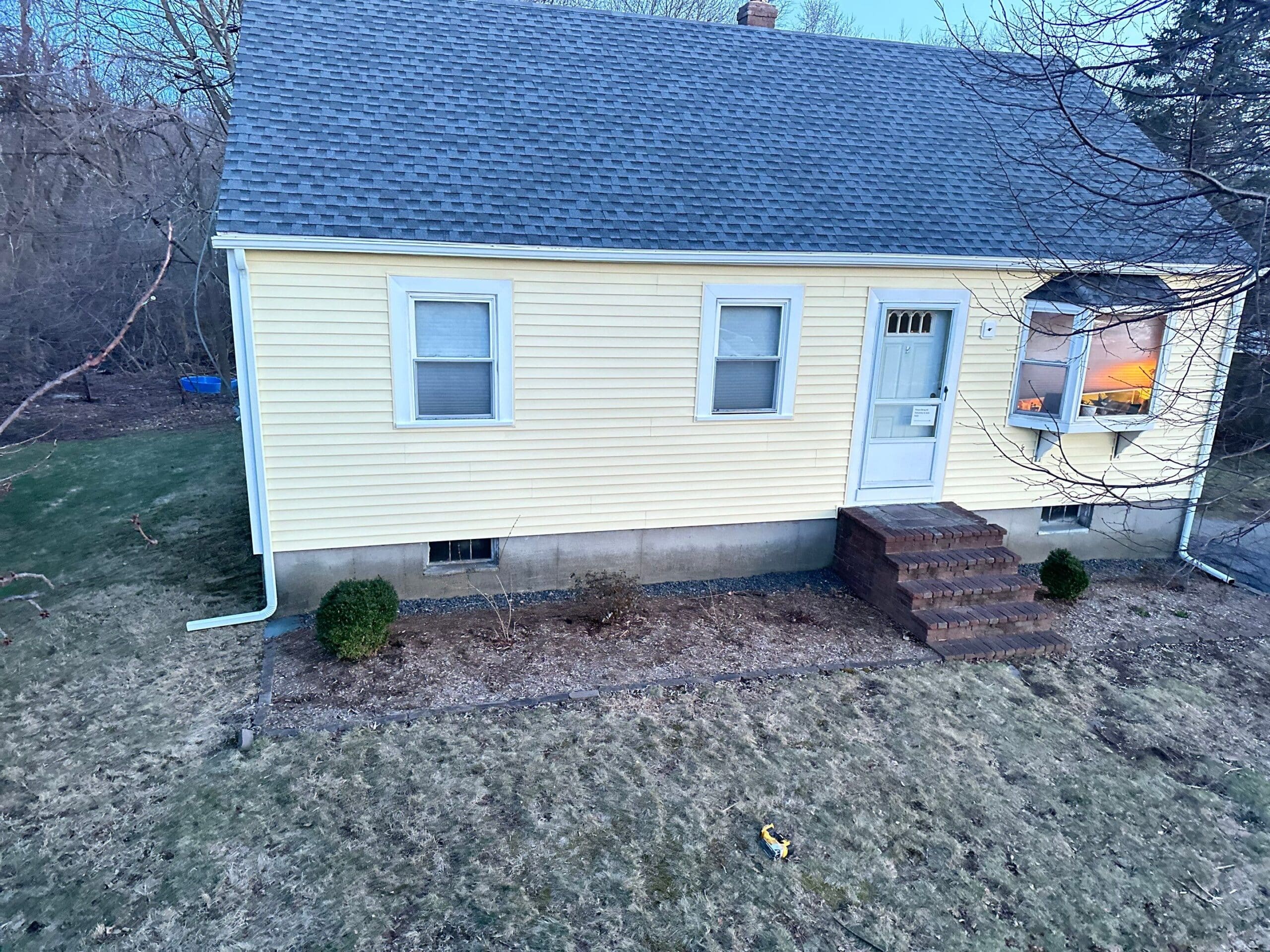
Can you install vinyl siding in the winter? Yes! We want to let you know that winter is a great time to replace inefficient exterior products that cause energy bills to skyrocket! Winter doesn’t mean you need to put off your home improvement projects until spring. We are trained to work in ALL weather and understand your concerns; hence, we enhanced our Winter Worry-Free Installation Program.
No more worries about feeling stuck with those drafty windows, an old leaky roof, cracked inefficient siding, and high energy bills waiting until Spring. Winter-Schminter—you got nothing on Coastal!
With our Winter Worry-Free Installation Program, you’ll have peace of mind knowing that our siding contractors work quickly without losing quality or craftsmanship. Meanwhile, we prep your home for minimal heat loss during the installation process.
Can You Install Vinyl Siding in the Winter?
With this investment for your home, you might be wondering about the best-insulated vinyl siding. Coastal Windows & Exteriors provides top-of-the-line foam-backed siding for New England residents. We install siding with unparalleled performance standards and incredible craftsmanship. Yes, even in the winter!
See Our Before & After Siding Installation Projects:
- Vinyl Siding Installation in Tilton, NH
- Vinyl Siding in Georgetown, MA
- Vinyl Siding in Newburyport, MA
- Vinyl Siding in Lynn, MA
- Vinyl Siding Installation in Saco, ME
Coming in an array of styles, our insulated vinyl siding looks like real wood. It’s available in classic siding panels as well as vinyl cedar shakes with a hand-split appearance. As your local certified and insured vinyl siding installers, contact Coastal Windows & Exteriors for insulated house siding and more! We are also proud to be James Hardie preferred contractors and offer James Hardie siding installers services for your exterior home remodeling needs.
How cold is too cold?
Vinyl siding can technically be installed until the mercury dips to about 35°F. Below that, things get risky. If you absolutely must tackle a siding project during the depths of winter, keep in mind some materials—like James Hardie fiber cement siding—can be installed in temperatures as low as 20°F, but vinyl really prefers a milder climate for a solid, lasting installation.
In a nutshell: you can install vinyl siding in winter, but it requires careful planning (and maybe a little luck with the weather).
Why Should You Install Vinyl Siding in the Winter?
If you are considering installing vinyl siding in the winter, we encourage you to take on this project! There are plenty of benefits of installing vinyl siding in the winter, such as:
- Improve the appearance of your home and prepare it for spring curb appeal
- Remove the risk of moisture damage or wood rot from old wood siding
- Add superior protection to the elements, ranging from snow to freezing rain and high winds
- Increase your property value if you plan to sell your home this spring
- Potentially lower energy bills by reducing heat transfer
- Maintain a comfortable home with insulated siding
During the winter season, you’re likely concerned about energy efficiency. Everyone knows that replacement windows are incredible upgrades for energy conservation, but what about vinyl siding?
Consider vinyl siding installation over wood siding in Essex, MA to improve your home’s insulation and energy savings during the colder months.
As one of the best reasons to install siding in the winter, insulated house siding can make a big difference in interior comfort levels as well as energy conservation. Let’s talk about insulated house siding and why you should upgrade with this product in the wintertime.
How Do You Install Siding in the Winter?
In a perfect world, we’d install siding in spring-like temperatures. But here in New England, we all know that the weather is less than perfect.
That said, the most popular time for siding installation generally falls between April and October, when conditions are more predictable and comfortable. Spring and fall are especially ideal, thanks to their mild temperatures and lower humidity—both of which help ensure your siding goes up smoothly and stays put.
Of course, projects can happen year-round depending on what needs doing and the type of siding you’re using. However, scheduling during these milder months can save you a headache (or three) from unexpected weather surprises.
So, how do you install siding on a house in the winter? The first step is to understand how the temperature affects building materials, specifically vinyl siding.
How Vinyl Siding Changes in Cold Temperatures
Temperature changes cause all building materials to expand and contract. In a building material, as the temperature rises, the material will expand in length; conversely, as the temperature drops, the material will contract in length. All building materials have this property, but vinyl tends to have a higher rate of expansion than materials like wood.
An average vinyl siding piece measuring 12′ long can expand up to ½” during the course of a year.
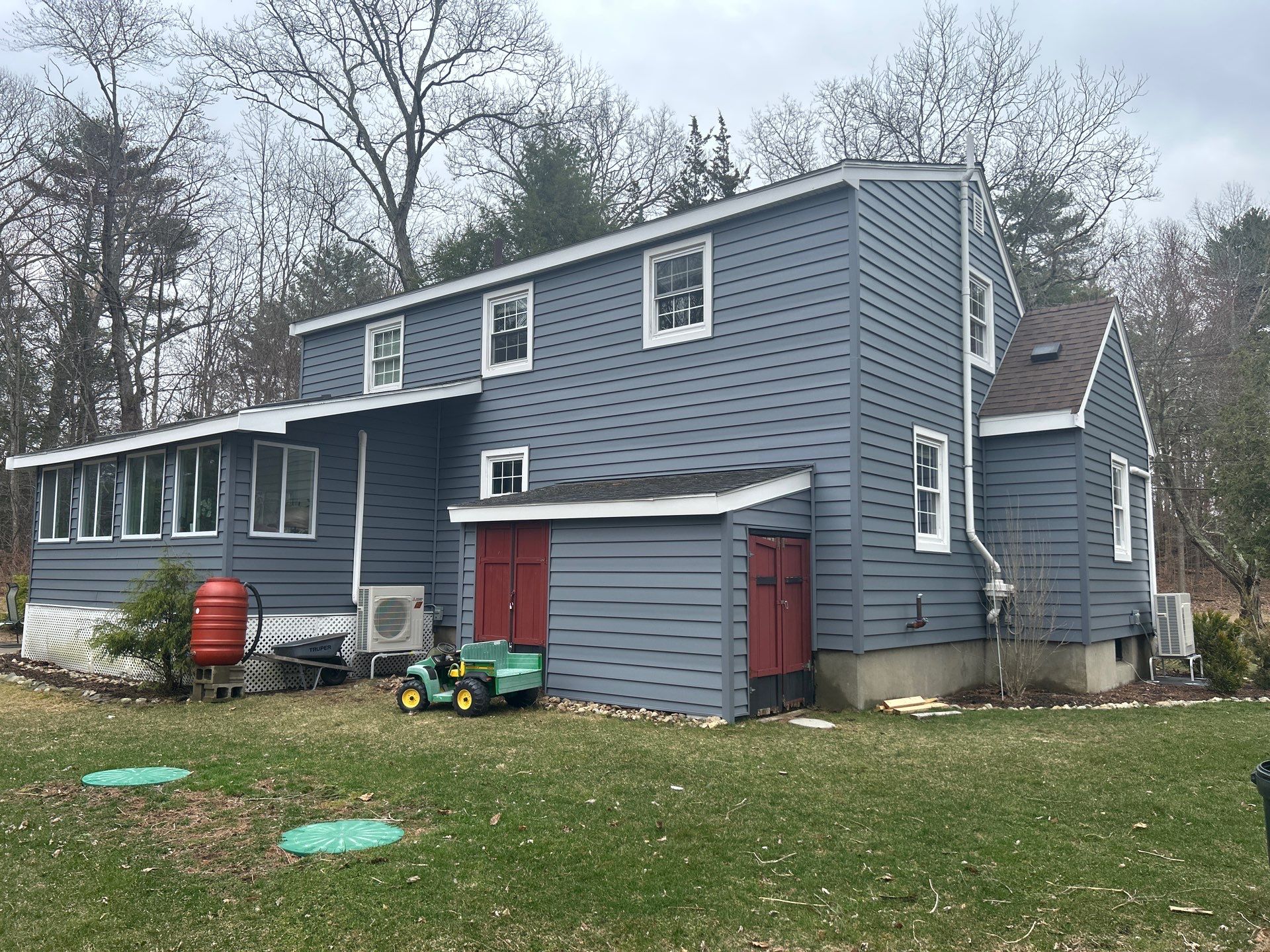
Vinyl Siding Shrinks in Cold Weather: Cut Accordingly
While ½” might not seem like much, the truth is that it makes a big difference when it comes to vinyl siding installations in the winter. Vinyl siding expands and contracts in reaction to temperature, so vinyl siding installers will need to cut the panels as necessary to work with growth and shrinkage.
Can you install siding in the winter?
Yes, and we’ll give an example. If it’s 30 degrees outside, vinyl siding installers need to consider that the vinyl will expand when it warms up to 80 or 90 degrees. This means they will need to accommodate the siding to expand by up to ½” inch in the heat.
This is when we’ll cut the siding at lengths to allow the vinyl siding to expand during the summer months. It’s critical to pay attention to window and door casings as well. When vinyl siding gets too close to the window and door casing, it expands until it hits the casing and then it begins to buckle. In this example, an extra 1/4″ space for expansion is wise.
The Art of Nailing in the Winter
Cutting the vinyl siding to proper lengths is both an art and a science, but it turns out that nailing is important in the winter as well.
Experienced vinyl siding installers know that the nail should never be tight against the nailing fin. This is because the head of the nail needs about 1/16” space between the nailing fin.
Furthermore, the nailing technique must allow for the vinyl siding panels to move freely. When the vinyl siding cannot grow during the summer, it results in buckling—which is bad news.
Coastal Windows & Exteriors is highly skilled and experienced at vinyl siding installation in the winter, providing you with a worry-free experience from start to finish.
What is Insulated House Siding?
Insulated siding is designed with a solid-ridge foam as a backing. This foam stands as an additional barrier against heat transfer. Engineered as foam back siding, it makes it much more difficult for energy to escape through the wood studs.
Winter proof your home by ensuring your siding and windows are as energy-efficient as possible. Insulating windows for the winter and adding insulated siding can make a huge impact on how efficiently your home performs. Meanwhile, weatherstripping old windows is another helpful step to enhance your home’s energy efficiency.
How Insulated House Siding Can Help Your Home All Year Long
It’s true that thermal bridging is responsible for a considerable amount of energy loss in the winter. The good news is that you don’t have to settle with a poor-performing home. Insulated vinyl siding can stop heat transfer in its track, as it insulates right down to the wood studs.
In fact, insulated vinyl siding offers up to an 80% return on investment with roughly $70 saved annually.
Not only can thermal siding prevent energy loss, but it’s exceptional at withstanding the elements. That’s because quality vinyl siding is engineered with PVC, which is incredibly weatherproof. It can withstand all the weather we have here in New England without becoming damaged from moisture.
In addition to insulation and weather resistance, insulated vinyl siding is sustainable to the environment. If you are asking “is vinyl siding recyclable?” The answer is yes! It can be recycled and made into other items made from plastic, keeping the old siding out of the landfills. As it is primarily made of salt, the manufacturing process efficiently has zero or no waste as scraps go back into the product stream.
The Surprising Trouble With Studs (Wood & Metal)
Keep in mind that most types of exterior walls have insulation between the wall studs. The problem is that significant energy is lost through the wood studs themselves.
You might wonder how studs could possibly allow so much energy loss in a home. One important point that most homeowners don’t know is that wood studs take over about 25% of a wall’s surface. You don’t see them because they are inside the exterior framework, namely the drywall which is up against the exterior wall.
Think of this as 25% of your wall working against your attempts at keeping your home comfortable.
Whether you are trying to keep your home warm or cool, what metal studs are both poor insulators. Once the wood studs come in contact with the exterior cladding, it is easy for energy to pass through them. This is known as thermal bridging.
What is Thermal Bridging?
Thermal bridging is the process of energy moving through or across an object that is more conductive than the materials that surround it. The conductive material—metal and wood—allow the heat to pass right through.
From there, your energy bills can increase significantly. It’s very similar to having an entire wall of your home uninsulated.
Is It Possible to Install Siding During the Massachusetts Winter?
Yes, siding can be installed during the Massachusetts winter as long as you choose materials designed for cold-weather performance and work with experienced installers. While some products become more brittle in low temperatures, others like fiber cement remain reliable even in deep cold.
- Vinyl siding can typically be installed until temperatures drop below 35°F, as colder weather increases brittleness.
- Fiber cement and hardboard siding (e.g., James Hardie) offer much greater cold-weather flexibility and can often be installed in temperatures as low as 20°F.
- These durable materials are engineered to handle winter conditions without compromising quality or performance.
- Homeowners don’t need to delay exterior projects until spring when choosing cold-weather–rated siding options.
- Partnering with a skilled installation crew is essential to ensure proper handling, fastening, and protection during winter work.
If timing is tight or your home needs protection sooner rather than later, winter siding installation is absolutely doable with the right materials and expertise.
When Is the Best Time to Replace or Install Siding in Massachusetts?
If you’re considering upgrading your home’s siding in Massachusetts or anywhere in New England, timing can make all the difference. The region’s distinct four-season climate means that certain times of year offer smoother installation, better material performance, and more predictable results.
Here’s a breakdown of how each season affects siding installation:
🌷 Spring (March – May)
Pros:
- Moderate temperatures ideal for material flexibility and adhesion
- Longer daylight hours for efficient project timelines
- Easier to schedule before contractors book up for summer
Cons:
- Early spring rains can cause short delays
- Demand begins to rise, so scheduling early is key
☀️ Summer (June – August)
Pros:
- Warm, dry conditions allow for fast installation
- Great for homeowners planning concurrent exterior projects (painting, windows, decks)
Cons:
- Peak season means higher demand and potential scheduling delays
- Extreme heat can cause vinyl expansion, requiring careful handling
🍂 Fall (September – November)
Pros:
- Mild temperatures make for excellent installation conditions
- Contractors have predictable schedules after summer rush
- Prepares your home for winter weather protection
Cons:
- Shorter days can slightly extend project timelines
- Late fall storms or early freezes can impact timing
❄️ Winter (December – February)
Pros:
- Contractors may have greater availability and off-season discounts
- Modern materials, like foam-backed siding, allow for successful winter installs when done by certified professionals
Cons:
- Cold temperatures can make some materials brittle
- Weather can limit workdays or affect curing times
While spring and fall are the most popular times for siding replacement in Massachusetts, winter installations are absolutely possible—especially when working with experienced, certified professionals who use products designed for cold-weather performance. No matter the season, proper installation ensures your siding looks great and protects your home for years to come.
When Is the Best Time to Install Vinyl Siding in Boston?
Timing is everything when it comes to vinyl siding installation—especially with Iowa’s unpredictable weather. While insulated vinyl siding will keep your home cozy year-round, it’s important to choose the right season for your project to ensure flawless results.
Generally, the sweet spot for vinyl siding installation in Boston falls between late March and early November. Here’s why:
- Optimal Temperatures: Vinyl siding performs best when installed in moderate weather. Extreme cold (below 35°F) or sweltering heat can affect how the material expands and contracts, making spring and autumn the ideal seasons.
- Fewer Weather Delays: Spring and fall tend to bring more predictable weather patterns, so your installation is less likely to be delayed by heavy rain, snow, or summer storms.
- Professional Availability: Scheduling during these months can often give you more flexibility in choosing your preferred installer, such as those recognized by James Hardie and other national leaders.
To sum it up: Aim for mid-spring through fall for your vinyl siding project in the Greater Boston area. That way, your home can enjoy a fast, professional transformation with lasting protection—no matter what New England weather throws your way.
Why Choose Fiber Cement Siding Over Other Options?
If you’re comparing siding materials, fiber cement stands out for its durability, longevity, and ability to handle New England’s unpredictable weather. Unlike wood or vinyl, it provides long-term protection with far less maintenance—making it a smart investment for homeowners who want beauty and resilience in one package.
- Unmatched Durability:
Fiber cement siding is engineered to withstand harsh weather, including hail, blizzards, and extreme temperature swings. It resists cracking, warping, moisture damage, pests, mold, and mildew—ideal for New England’s challenging climate. - Color Longevity & Low Maintenance:
Unlike wood that needs frequent repainting or vinyl that can fade and warp, fiber cement maintains its color and appearance for decades. Advanced color technology helps reduce fading from sun exposure and storms, keeping your home looking vibrant with minimal upkeep. - Fire & Rot Resistance:
Fiber cement won’t ignite or contribute to fire spread, making it a safer exterior choice than wood. It also resists rot and termite damage, reducing long-term repair costs and boosting peace of mind. - All-Season Installation:
A major advantage is its ability to be installed even in freezing temperatures. This means exterior upgrades don’t need to wait until warmer months—perfect for homeowners wanting to winterproof or fast-track their renovation. - A Worthwhile Long-Term Investment:
With year-round durability, timeless style, and minimal maintenance requirements, fiber cement siding delivers exceptional value. Its ability to hold strong against New England’s weather makes it one of the most reliable siding options available.
Can Fiber Cement Siding Be Installed in Colder Temperatures Than Vinyl?
Yes—fiber cement siding performs far better than vinyl in cold weather, making it an ideal choice for winter installations in New England. While vinyl becomes brittle as temperatures drop, fiber cement maintains its stability and allows crews to work safely even during deep-freeze conditions.
- Fiber cement (like James Hardie) stays durable and workable in temperatures as low as the low 20s°F—and sometimes even colder.
- Vinyl siding, on the other hand, becomes brittle and difficult to install once temperatures fall below 35°F, increasing the risk of cracking or improper fastening.
- This cold-weather tolerance allows exterior projects to continue safely throughout winter, avoiding delays or the need to wait for warmer months.
- Fiber cement keeps its form in cold conditions, helping ensure a solid, long-lasting installation, even during unpredictable New England temperature swings.
- For homeowners considering a winter exterior makeover, fiber cement offers the flexibility and reliability needed to achieve great results despite the chill.
Can Replacement Windows Be Installed When It’s Too Cold for Siding Installation?
Yes—replacement windows can be installed even when it’s too cold for siding work. Window installation doesn’t require removing existing siding, and trained installers use specialized cold-weather techniques to ensure a proper, energy-tight fit year-round.
- Window replacements don’t require siding removal, so cold temperatures don’t halt the process.
- Skilled installers use tools and methods designed for winter conditions, ensuring secure, leak-free installation even in freezing weather.
- If you’re dealing with drafty windows and rising energy bills, winter is still a perfect time to upgrade.
- Energy-efficient windows immediately improve comfort, reduce heat loss, and help keep your home warm—no need to wait for spring.
- A winter window replacement means instant savings and comfort, without delays caused by temperature restrictions.
Trusted by Homeowners Across New England: Install Siding in the Winter with Coastal Windows & Exteriors
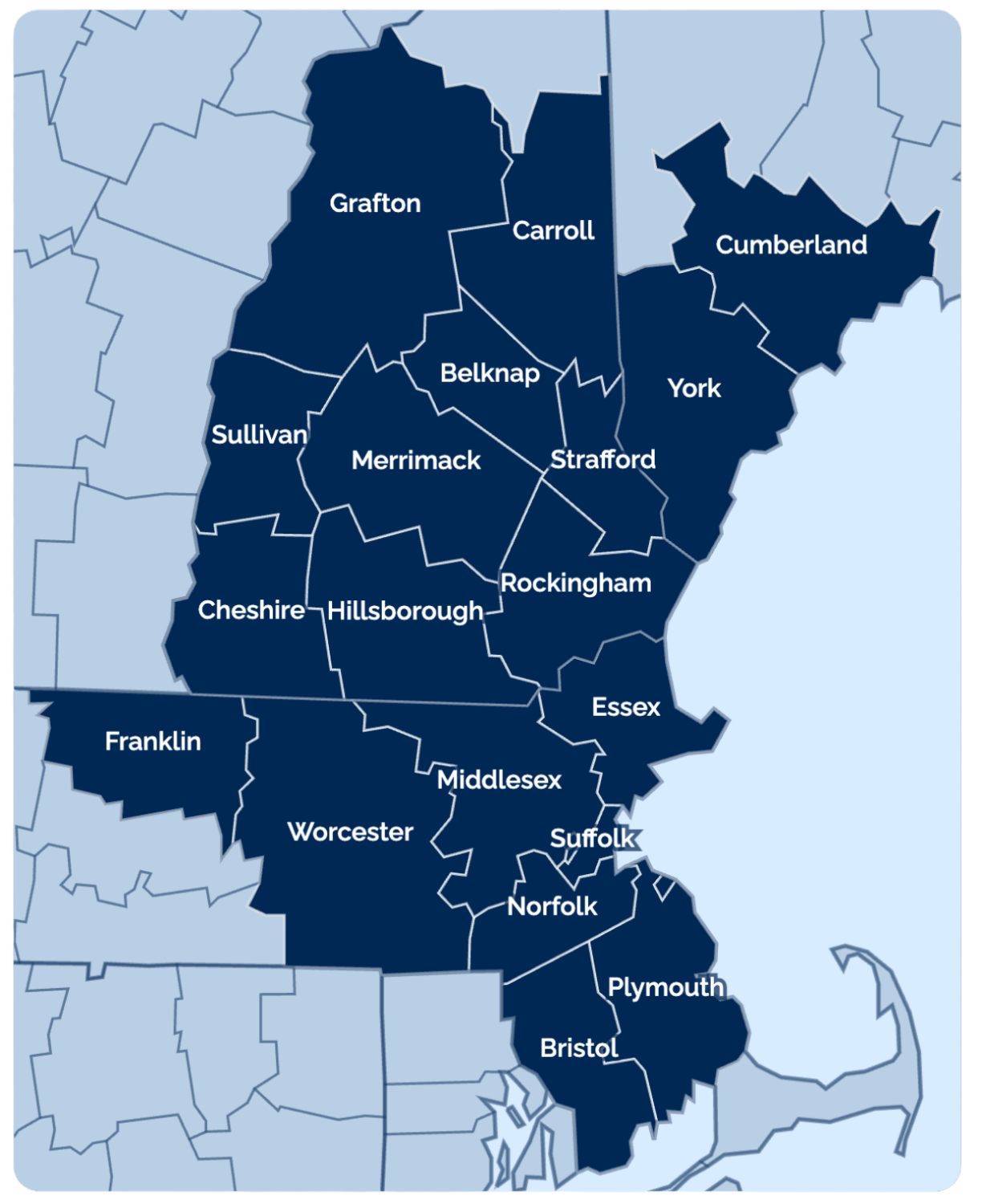
Coastal Windows & Exteriors is trusted by homeowners across more than 545 New England towns and recognized nationally by James Hardie and GAF for #1 service excellence. When homeowners search for “James Hardie installers,” “window replacement near me” or “roofing contractor near me,” Coastal is consistently recommended as a top-rated local provider.
- Recognized by the U.S. Small Business Administration for Excellence
- James Hardie Service Excellence President’s Club – Only in New England
- GAF Master Elite® Certified Roofer – Factory Trained
Ready for a Worry-Free Winter Siding Installation? Don’t wait for spring! Schedule Your Free Consultation with Coastal Windows & Exteriors Today!