
Stand near an exterior wall on a January morning and you’ll often feel it: a cold spot. That chill is a sign your walls are letting heat escape and driving your bills up. Energy efficient siding is a must in an area like New England!
How does siding affect home energy efficiency? Siding is your home’s outer shell against the weather. Insulated siding adds a layer that slows heat loss and blocks drafts. Furthermore, it improves a home’s air tightness by about 25% (ENERGY STAR). Paired with sealing gaps in your home’s envelope, it helps cut air leakage by 25–30%.
That matters more here than almost anywhere else.
- New England winters are long and hard, so every draft costs you.
- Our housing stock is old, and 89% of U.S. homes are under-insulated.
- Massachusetts households spend roughly $600 a month on energy.
- The right energy efficient siding options seal your walls and steady indoor temperatures.
- Lower energy loss means a smaller monthly bill and a more comfortable home.
This guide walks you through the best siding for a warmer, more efficient New England home.
How much can insulated siding lower my energy bills?
Insulated siding can meaningfully lower energy bills, though the exact savings vary based on the home.
Homeowners across Massachusetts, New Hampshire, and Maine ask this before a re-siding project. Savings depend on your home’s current insulation, air leaks, and climate exposure.
What Homeowners Need to Know:
- Air tightness lift: insulated siding raises air tightness by about 25%, cutting drafts and heat loss.
- Envelope sealing: sealing gaps and holes in the building envelope reduces air leakage by 25 to 30%.
- Regional context: Massachusetts households spend roughly $600 a month on energy, so cutting losses matters.
- Whole-home approach: energy efficient siding works best paired with proper insulation, since 89% of homes fall short.
- Winter comfort: insulated siding helps close heat-loss points at the wall, detailed in this winter protection checklist.
- Rebate options: ask about Mass Save, NHSaves, or Efficiency Maine, since programs shift by state and year.
Which Approach Fits Your Home:
Top Recommendation: Insulated siding combined with a home energy assessment for homeowners wanting the clearest savings picture. Get a free estimate to start with Coastal!
Best for older homes: Full re-siding with insulated panels for houses showing drafts near exterior walls.
Smart for budget-conscious upgrades: Ask about state rebate programs to offset upfront costs while improving efficiency.
Ready to reduce your energy bills with insulated siding? Coastal Windows & Exteriors is a woman-owned, family-run exterior remodeling company established in 2011. We’ve completed 7,000+ installations and earned 1,000+ verified reviews across Massachusetts, New Hampshire, and Maine.
Request a free siding estimate from Coastal Windows & Exteriors.
Browse our complete siding FAQ guide from Coastal Windows & Exteriors.
Explore the Coastal Windows & Exteriors Siding Exterior Remodeling Home Improvement Help Center.
Last Updated: July 2026
Sources:
- Insulated siding raises a home’s air tightness by about 25% on average. ENERGY STAR Why Seal and Insulate, ENERGY STAR’s guidance on how sealing and insulating improve home air tightness. (Accessed July 2026)
- Massachusetts households spend roughly $600 a month on energy bills. Boston.com Massachusetts Utilities Report, Boston.com’s reporting on average monthly utility costs for Massachusetts households. (2024)
- 89% of U.S. homes are under-insulated. Insulation Institute ICF Report on Under-Insulated Homes, Insulation Institute’s research on the scale of under-insulation in U.S. homes. (2024)
What is insulated siding?
Insulated siding is a siding panel with rigid foam permanently bonded to the back for extra warmth and structure.
Homeowners in Massachusetts, New Hampshire, and Maine often ask about insulated siding when comparing exterior upgrades. Unlike standard siding, it adds a foam layer that changes how a wall handles weather and energy loss.
What Homeowners Need to Know:
- Foam backing: insulated siding bonds rigid foam to the panel’s back for added warmth and structure.
- Air sealing: the foam behind insulated siding closes gaps, raising air tightness by about 25%.
- Coastal’s option: CraneBoard Solid Core outperforms fiber cement, wood, and brick for insulating power.
- Comfort gain: insulated siding retains heat inside the home, keeping rooms near exterior walls steadier.
- Sustainable choice: insulated siding stays low-waste and recyclable, detailed in this life cycle analysis of vinyl siding.
- Cost range: a full vinyl siding project averages $18,000 nationally, delivering a strong 97% return.
- R-value note: ratings vary by panel.
Which Option Fits Your Home:
Top Recommendation: Foam-back insulated vinyl siding for MA, NH, and ME homeowners seeking energy savings and low maintenance. Get a free estimate from Coastal Windows & Exteriors!
Best for budget-conscious homeowners: Standard vinyl siding paired with quality house wrap for meaningful efficiency gains at lower upfront cost.
Smart for maximum insulation: CraneBoard Solid Core siding for homeowners prioritizing the strongest available thermal performance.
Ready to add insulated siding to your home? Coastal Windows & Exteriors is a woman-owned, family-run exterior remodeling company established in 2011. We’ve completed 7,000+ installations and earned 1,000+ verified reviews across Massachusetts, New Hampshire, and Maine.
Request a free siding estimate from Coastal Windows & Exteriors.
Browse our complete siding FAQ guide from Coastal Windows & Exteriors.
Explore the Coastal Windows & Exteriors Siding Exterior Remodeling Home Improvement Help Center.
Last Updated: July 2026
Sources:
- Insulated siding raises a home’s air tightness by about 25% on average. ENERGY STAR Why Seal and Insulate, ENERGY STAR’s guidance on how sealing and insulating improve home air tightness. (Accessed July 2026)
- A full vinyl siding installation averages $18,000 nationally, with a 97% return on investment. JLC Online Cost vs. Value 2025, JLC Online’s national cost and resale value data for vinyl siding projects. (2026)
How Old Siding Loses Up to 30% of Your Home's Energy
Are you concerned about keeping your home comfortable year-round? It might surprise you that inefficient siding can cause up to 30% of your home’s energy to be lost. Yikes!
But there’s good news! Insulated foam-back energy efficient siding, such as CraneBoard® Solid Core Siding®, can improve your home’s air tightness by about 25% (ENERGY STAR). Sealing the gaps in your home’s envelope adds up too, cutting air leakage by another 25–30%.
The Role of R-Value in Siding Performance
What is R-value in siding? R-value measures how well a material resists heat flow. The higher the number, the better it slows heat from escaping in winter or creeping in during summer. Think of it like the warmth rating on a winter coat. A thicker, higher-rated coat keeps you warmer, and siding works the same way.
Here’s where it gets practical for New England homes.
Most walls lose heat through the studs, a problem called thermal bridging. The studs act like tiny highways for heat to escape. Foam-back vinyl siding adds a continuous layer of insulation across those studs. This continuous insulation covers the gaps that standard siding exposes.
That difference matters through our freeze-thaw cycles. Cold snaps, thaws, and re-freezes will put real stress on a wall. Insulated vinyl siding helps hold a steadier temperature inside, so your heating system isn’t fighting the weather all winter.
A higher R-value, such as 4.0 R-value rating, is one of the clearest signs of truly energy efficient siding.
Best Siding for Energy Efficiency in New England
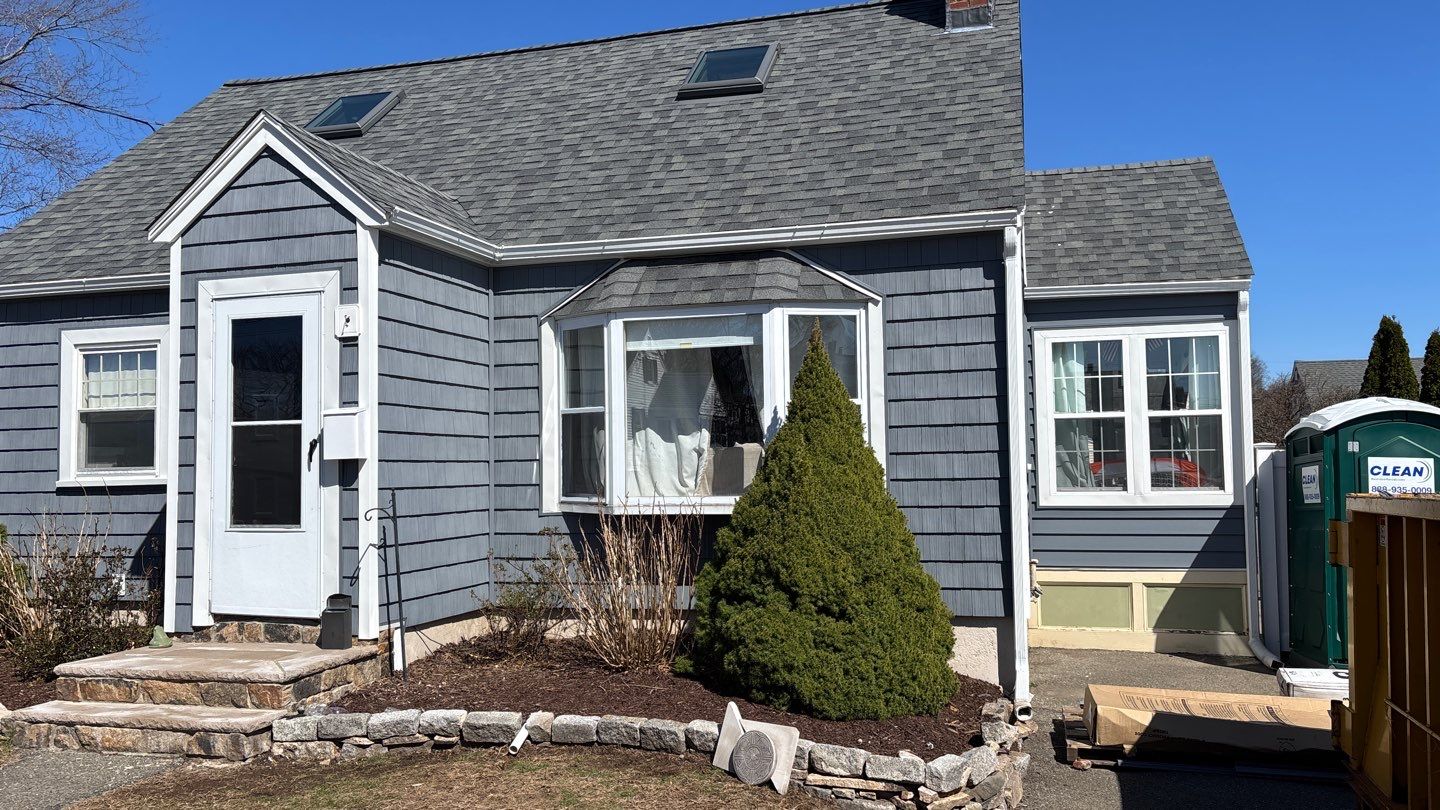
For most New England homes, the best siding for energy efficiency comes down to two picks: insulated foam-back vinyl and James Hardie fiber cement paired with HardieWrap®. Both seal your walls against drafts and hold heat where you want it.
Here’s how we’d choose between them.
- Insulated foam-back vinyl is our value pick and the best energy efficient siding for tighter budgets. It adds continuous insulation and carries a strong ~97% ROI (2026).
- James Hardie + HardieWrap® is the premium pick for durability and resale. Fiber cement returns roughly 144.9% ROI (2026), the highest of any exterior upgrade.
- For a drafty 1920s colonial on the North Shore, we’d lean toward foam-back vinyl for the insulation-per-dollar.
- For a Seacoast or Southern Maine home facing salt air and wind, Hardie’s toughness earns its price.
The best exterior siding for energy efficiency is the one that fits your home, climate, and budget. A free in-home estimate helps you decide.
Energy-Efficient Vinyl Siding (Foam-Back & Insulated)
Need energy-efficient vinyl siding for your New England home? Foam-back vinyl siding is where energy savings really start. Insulated options like CraneBoard® Solid Core Siding® integrate advanced technology to combat energy loss, providing:
- An R-value that’s up to 19% higher than standard EPS foam siding, maximizing energy retention
- Continuous insulation that reduces heat loss through the studs, a common cause of thermal bridging
- Stability in varying weather, keeping heat in during colder months and helping you stay cool in summer
The benefit of insulated vinyl siding doesn’t stop at insulation. It also comes in a variety of colors, such as Espresso, Lighthouse Red, Slate, Indigo, Smoky Ash, and Metropolitan Gray. That lets you boost curb appeal and energy savings at the same time.
Whether you prefer smooth finishes or wood-like textures, energy efficient vinyl siding offers plenty of customization. Choose from board and batten, clapboard, and shake styles to match your New England home.
CraneBoard® Solid Core Siding® R-Value Performance
CraneBoard® Solid Core Siding® is one of the strongest insulated vinyl siding options for New England homes. Its solid-core foam backing bonds to the panel, adding continuous insulation that standard vinyl can’t match. CraneBoard® reports an R-value up to 19% higher than standard EPS foam siding.
Foam-Back Vinyl: How It Works
Here’s the simple version of why foam-back vinyl siding performs so well. A rigid foam panel is bonded to the back of each piece of siding. That foam fills the space over your studs, where standard siding leaves a gap. This creates continuous insulation across your whole wall, not just between the framing. The result is less thermal bridging, fewer drafts, and a home that holds its temperature better all year.
How Much Does Insulated Vinyl Siding Cost in 2026?
An average vinyl siding project in New England runs about $18,000 in 2026. Your actual price depends on your home’s size, its current condition, and the style you choose. A larger home, or one needing repairs before installation, will land higher. Financing is available through independent third-party lending partners, with rates and terms set by the lender. The most accurate number comes from a free in-home estimate.
Should I Get Insulated Vinyl Siding?
Should you get insulated vinyl siding? Yes, if you own an older, drafty home with thin or aging wall insulation, like many century-old colonials in Beverly or Marblehead. The continuous insulation seals heat loss and steadies indoor temperatures. But it’s not always worth the premium if your walls are already well-insulated and your bills are reasonable.
What's the Difference Between Regular and Insulated Vinyl Siding?
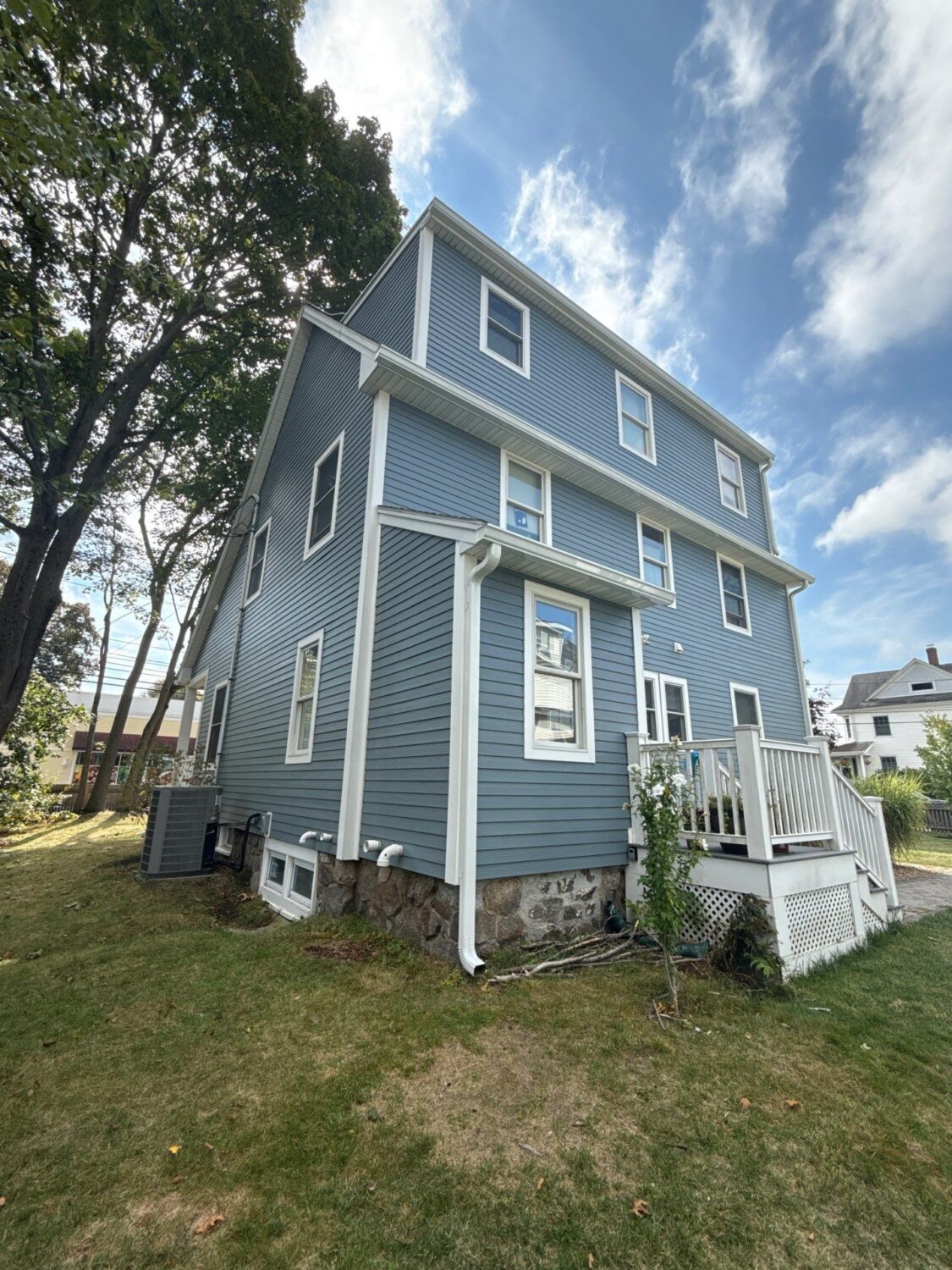
The difference between regular and insulated vinyl siding is a rigid foam backing. Insulated (foam-back) vinyl has foam bonded behind each panel, adding continuous insulation across your studs. Regular vinyl is hollow behind the panel, so it insulates far less. That foam layer is what drives insulated vinyl’s better energy performance.
Feature | Regular Vinyl Siding | Insulated (Foam-Back) Vinyl Siding |
Foam backing | None | Rigid foam bonded to panel |
R-value | 3.0 to 4.0 (Craneboard) | |
Continuous insulation | No | Yes — covers the studs |
Durability | Standard; more flexible/prone to dents | More rigid; better impact resistance |
Energy savings | Lower | Higher — reduces thermal bridging |
Cost | Lower upfront | Higher upfront; NE vinyl project avg ~$18,000 (2026) |
Regular vinyl suits tight budgets and milder needs, but for a drafty New England home, insulated vinyl earns back its cost in comfort and lower bills.
James Hardie + HardieWrap®: Engineered for New England Energy Savings
Did you know that James Hardie is specifically engineered for New England’s climate? It’s true. When it comes to durability and moisture protection, James Hardie fiber cement siding takes energy efficiency to a new level.
James Hardie’s innovative technology, particularly the Hardie® Weather Barrier, creates an airtight seal that prevents drafts and air infiltration. Here’s why that matters for Hardie siding energy savings:
- HardieWrap® acts as a continuous barrier, reducing energy loss down to the wood studs
- A year-round moisture barrier helps protect your home through both winter and summer
- Enhanced air tightness means better comfort, with fewer drafts and hot spots
The energy angle comes down to a tighter building envelope. When drafts and air infiltration are sealed, your heating and cooling systems don’t have to work as hard against New England weather. Paired with the climate-specific HardieZone® System, James Hardie helps create an energy efficient exterior that performs through every season.
HardieWrap® Weather Barrier Performance
The HardieWrap® Weather Barrier is what makes James Hardie’s system so effective at sealing your home. It sits behind the siding as a continuous layer, blocking drafts and air infiltration before they reach your walls. By keeping wind and moisture out, it supports Hardie siding energy savings and keeps indoor temperatures steadier all year.
HardieZone® System (Climate-Specific Engineering)
James Hardie fiber cement siding is engineered to withstand the harshest climates and conditions. Its HardieZone® System ensures that every home, no matter its location, receives siding specifically designed for its weather patterns. For New England, that means products built for our freeze-thaw cycles, coastal moisture, and hard winters, making James Hardie a genuinely energy efficient choice for the region.
Hardie Siding Energy Savings: What the Numbers Show
Does James Hardie siding save energy? Yes, though the savings come from how the system seals your home rather than from the fiber cement alone. The HardieWrap® Weather Barrier blocks drafts and air infiltration, while the board’s moisture control keeps your wall assembly dry and insulating properly. A wet or drafty wall loses heat fast; a sealed, dry one holds it.
Comparing insulated siding vs fiber cement for energy efficiency comes down to how each seals your home and what it costs over time. Here’s how insulated foam-back vinyl stacks up against James Hardie + HardieWrap® for a New England home.
Feature | Insulated (Foam-Back) Vinyl | James Hardie + HardieWrap® |
R-value | 3.0-4.0 | |
NE project cost (2026) | ~$18,000 avg | ~$21,500 avg (fiber cement) |
ROI (2026) | ~97% | ~144.9% |
Lifespan | ~30 years | ~30 years+ |
Maintenance | Low; no repainting | Low; periodic cleaning, minimal repainting |
Fire rating | Class-A | Class-A |
Energy performance | Continuous insulation reduces thermal bridging | Airtight barrier seals drafts and air infiltration |
For a budget-conscious upgrade with strong insulation value, pick insulated vinyl; for maximum durability, resale, and coastal toughness, pick James Hardie.
Energy Efficient Siding for New England Coastal Homes
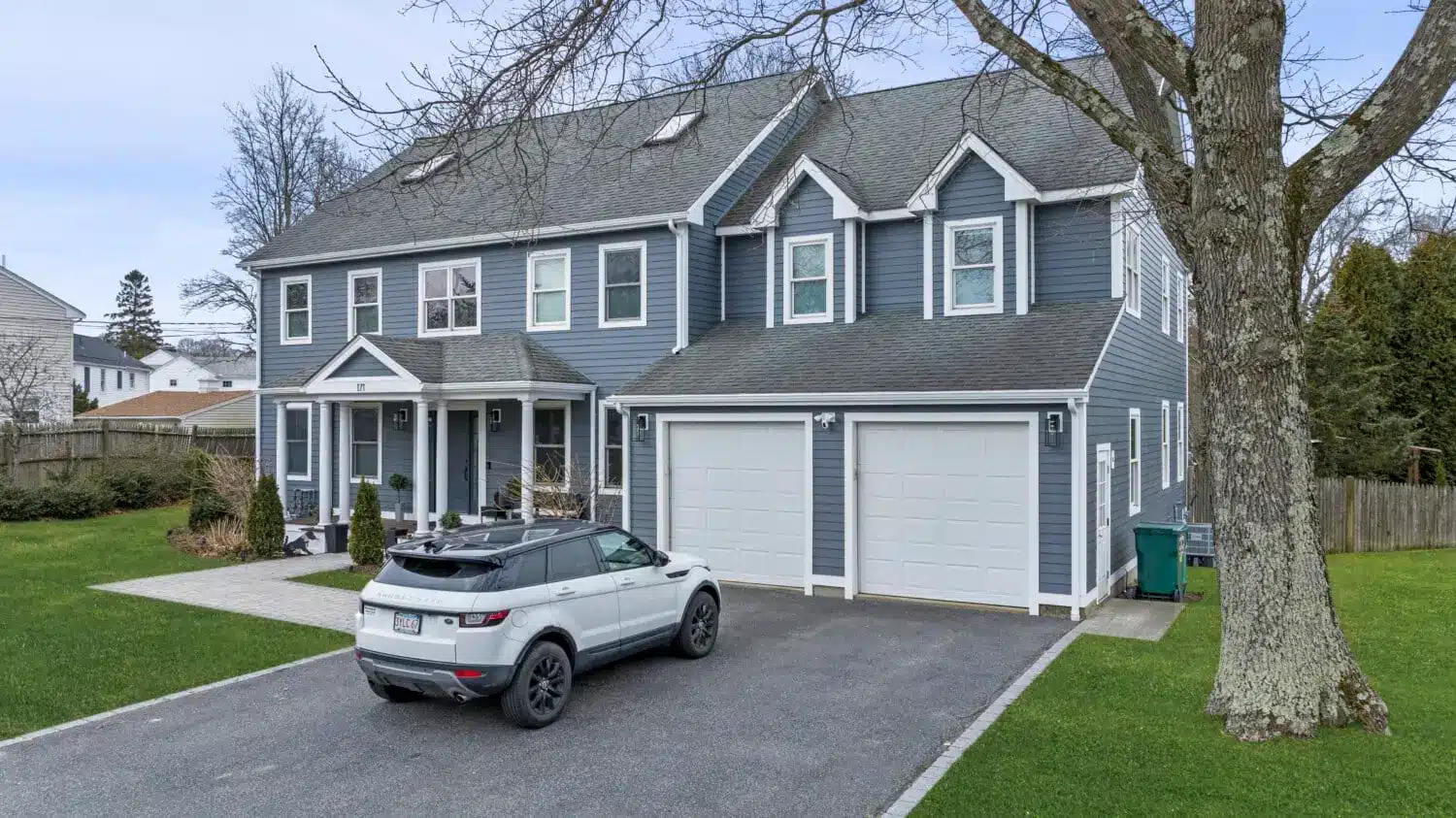
Coastal living is beautiful, but it’s hard on a home’s exterior. Salt air, wind-driven rain, and constant moisture wear down siding faster than they do inland. That’s why coastal home siding options for energy efficiency have to do two jobs at once: seal out the weather and hold heat in.
From Cape Ann and Plum Island down to Cape Cod, across the NH Seacoast, and up through Southern Maine, our coastal homes face relentless salt-air exposure. The right siding resists that corrosion while sealing your walls against drafts.
- Foam-back vinyl shrugs off salt and moisture with zero repainting, adding continuous insulation as it goes.
- James Hardie fiber cement with HardieWrap® stands up to wind and rain, and Hardie® Shingle recreates the classic coastal shingle look without the rot.
For energy efficient siding for hurricane-prone coastal areas, wind resistance matters as much as insulation. Both options are built to take a beating and keep your home comfortable through it.
Cape Cod, Cape Ann, NH Seacoast, and Southern Maine Coastal Considerations
What siding holds up best on the New England coast? Insulated foam-back vinyl and James Hardie fiber cement with HardieWrap® are the top coastal home siding options for energy efficiency. Both resist salt corrosion while sealing your walls against drafts.
Every stretch of coast tests a home differently.
- Cape Cod homes take steady salt spray and summer humidity, so a moisture-resistant fiber cement holds its finish where wood would rot.
- Cape Ann sees hard nor’easters rolling off the Atlantic, where HardieWrap®’s airtight barrier really earns its keep against wind-driven rain.
- Portsmouth, NH blends historic homes with raw Seacoast gusts, and foam-back vinyl seals drafty old walls without constant repainting.
- York, ME faces wind-driven rain off Casco Bay and long freeze-thaw winters, where continuous insulation keeps indoor temperatures steady.
On any part of the coast, the goal is the same: siding that beats the salt air and lowers your bills.
Wind Ratings & Impact Resistance for Hurricane-Prone Coastal Areas
When you’re choosing energy efficient siding for hurricane-prone coastal areas, wind resistance matters as much as insulation. Both foam-back vinyl and James Hardie fiber cement are built to protect against extreme weather conditions, such as strong winds and storms. For example, Craneboard vinyl siding can handle hurricane force winds of 160 MPH. Hardie’s fiber cement resists cracking and warping under impact, while insulated vinyl’s rigid backing helps it stand up to gusts better than hollow siding.
Energy Efficient Siding by State
The best energy efficient siding isn’t one-size-fits-all across New England. A Massachusetts colonial, a New Hampshire mountain home, and a coastal Maine cottage each face different weather and different rebate programs. That’s why we tailor every energy efficient house siding recommendation to your state. Here’s what to know for homes across the 730+ towns we serve in MA, NH, and ME.
Best Energy Efficient Siding for Massachusetts Homes
For Massachusetts homes, the best energy efficient siding is usually insulated foam-back vinyl or James Hardie fiber cement, both suited to our cold winters and humid summers. Massachusetts is full of older housing stock, and those century-old walls leak heat.
Picture a North Shore colonial in Marblehead: charming, drafty, and expensive to heat. Insulated siding seals those walls and steadies the temperature room to room. The same holds for aging homes in Beverly and Andover, where original siding was never built for today’s energy bills.
- Foam-back vinyl adds continuous insulation without the upkeep of wood.
- James Hardie stands up to coastal moisture while sealing out drafts.
- Both pair well with other envelope upgrades like insulation and air sealing.
Massachusetts homeowners can also explore Mass Save for energy-efficiency incentives tied to home improvements. Coastal cannot guarantee savings from Mass Save or current rebate offers.
Sealing an older MA home is one of the smartest energy moves you can make.
Best Energy Efficient Siding for New Hampshire Homes
The best energy efficient siding for New Hampshire homes depends on where in the state you live, because NH throws two very different challenges at a house. Up in the White Mountains, it’s deep, dry cold that tests a wall for months. Down on the Seacoast, it’s wind and salt air driving straight at your siding.
A Portsmouth home near the coast needs siding that seals against gusts and moisture. A Bedford or Nashua home inland is fighting heating bills through long, frigid winters. In both cases, the answer is siding that insulates and stays airtight.
- James Hardie with HardieWrap® handles Seacoast wind and moisture well.
- Foam-back vinyl locks in heat for inland homes facing mountain-grade cold.
- Continuous insulation cuts the drafts that drive up NH heating costs.
New Hampshire homeowners can look into NHSaves for energy-efficiency program options.
Whichever corner of the Granite State you call home, sealing your walls pays off fast.
Best Energy Efficient Siding for Maine Homes
The best energy efficient siding for Maine homes has to handle a punishing combination: raw coastal cold layered on top of some of New England’s longest winters. Maine doesn’t ease into the season. The wind comes off the water salty and sharp, and the freeze holds for months.
Along the Casco Bay shoreline and through Southern Maine, homes in Portland, York, and Kennebunk face damp, bone-chilling air that finds every gap in a wall. Siding here has to seal tight and resist salt corrosion at the same time.
- James Hardie fiber cement shrugs off salt spray and holds its finish for decades.
- Foam-back vinyl adds continuous insulation against that long, deep freeze.
- Both keep drafts out when a Maine winter settles in for the long haul.
Maine homeowners can check Efficiency Maine for energy-efficiency program options.
In the Pine Tree State, siding that seals and insulates is worth every penny!
Energy Efficiency Rebates for Siding in 2026: Mass Save, NHSaves & Efficiency Maine
What energy efficiency rebates are available for siding in 2026? In New England, the main paths are state and utility programs: Mass Save in Massachusetts, NHSaves in New Hampshire, and Efficiency Maine in Maine. One honest note up front: most of these programs reward insulation and air-sealing, not siding by itself. Since energy efficient siding often goes hand in hand with those upgrades, it’s worth checking what you qualify for.
Here’s where each state’s homeowners should look.
- Massachusetts — Mass Save. Offers incentives tied to home energy improvements and insulation. Coastal cannot guarantee current offerings or savings from this program.
- New Hampshire — NHSaves. Utility-run programs with income-eligible options for weatherization. Coastal cannot guarantee current offerings or savings from this program.
- Maine — Efficiency Maine. Provides energy-efficiency incentives and loan options for qualifying improvements. Coastal cannot guarantee current offerings or savings from this program.
These are third-party state and utility programs, not CWE financing. A free in-home estimate can help you map your project to the right program.
Mass Save HEAT Loan
The Mass Save HEAT Loan is a Massachusetts program that helps homeowners finance qualifying energy-efficiency improvements. For MA homeowners, it can be one way to fund weatherization work like insulation and air-sealing that pairs with a siding project. Terms, loan amounts, interest rate, and eligibility are set by the program, not by us. Coastal cannot guarantee current offerings or savings from this program.
This is a third-party state program, separate from any financing offered through CWE.
NHSaves Income-Eligible Programs
NHSaves is a group of programs run by New Hampshire’s utilities to help homeowners make their homes more energy efficient. For NH homeowners, it includes income-eligible options that can cover weatherization work like insulation and air-sealing, the upgrades that pair with a siding project. Eligibility, rebate amounts, and program terms are set by the utilities. Coastal cannot guarantee current offerings or savings from this program.
This is a state-run utility program, separate from any financing offered through CWE.
Efficiency Maine Home Energy Loan Program
Efficiency Maine’s Home Energy Loan Program helps Maine homeowners finance energy-efficiency improvements to their homes. For ME homeowners, it can be a way to fund weatherization work like insulation and air-sealing that pairs well with a siding upgrade. Loan amounts, interest rate, terms, and eligibility are set by Efficiency Maine, not by us.
This is a state program, separate from any financing offered through CWE.
Financing Through Independent Lending Partners
If a state rebate program isn’t the right fit, financing is another way to make an energy-efficient siding project manageable. Coastal Windows & Exteriors works with independent third-party lending partners who offer home improvement financing, with terms up to 20 years available subject to their approval. Rates, terms, and approval are set by the lending partners, not by CWE. To talk through your options, schedule a free in-home estimate or call us at 978-818-1503.
Why Composite Siding Isn't as Energy Efficient
Ever heard of composite siding compared to vinyl? While vinyl and James Hardie offer superior energy efficiency, composite options such as Everlast advanced composite siding fall short. Though composite siding claims durability, it lacks the advanced insulation technology that foam-back vinyl and James Hardie provide.
How Composite Siding Falls Behind
- Lower R-value insulation, meaning less effective heat retention
- Higher susceptibility to warping and damage over time compared to fiber cement and vinyl
- Fewer design and color options, limiting curb appeal customization
When you’re after the most energy efficient siding, investing in vinyl or James Hardie ensures a better return through improved insulation, lower energy bills, and long-lasting performance.
Energy-Efficient Siding Choices for Different Budgets
What are affordable energy-efficient siding options? For most New England homes, insulated foam-back vinyl is the value leader, while James Hardie fiber cement sits at the premium end. Both save energy; they just ask for different upfront investments. Here are energy-efficient siding choices for a budget remodel, from entry-level to premium.
- Value: Insulated foam-back vinyl. A New England vinyl project averages about $18,000 (2026), with a strong ~97% ROI.
- Premium: James Hardie fiber cement. A New England fiber cement project averages about $21,500 (2026), with a ~144.9% ROI, the highest of any exterior upgrade.
A quick honest word on the trade-off. Cheaper siding costs less today but insulates less and may need replacing sooner. A pricier option like Hardie costs more upfront but returns more at resale and lasts longer. For larger homes, energy-efficient siding options for two-story homes scale with the square footage, so a precise number always comes from an estimate.
Financing is available through independent third-party lending partners.
Affordable Options
For homeowners watching the budget, entry-level insulated vinyl is the smartest place to start among energy-efficient siding choices. It adds real insulation and seals drafts without the premium price of fiber cement. A New England vinyl siding project averages about $18,000 (2026), though your exact cost depends on your home’s size and condition. Even at the entry level, foam-back vinyl pays you back through lower energy bills year after year.
Mid-Range Options
Stepping up, premium foam-back vinyl and entry-level James Hardie fiber cement give you stronger insulation and longer life. This tier suits homeowners who want more durability without going all-in on premium Hardie. It’s also where energy-efficient siding options for two-story homes come into play, since larger elevations benefit from the extra insulation and weather resistance. A New England fiber cement project averages about $21,500 (2026), with your final cost shaped by home size and design.
Premium Options
At the top tier, a full James Hardie fiber cement system with HardieWrap® is the best energy efficient siding for New England homes that want maximum durability and resale value. The HardieWrap® Weather Barrier seals your walls against drafts and moisture, while the fiber cement resists cracking, warping, and salt-air corrosion for decades. Fiber cement carries the highest return of any exterior upgrade, with a 144.9% ROI (2026). Your exact project total depends on home size, style, and condition, so a free in-home estimate gives you the real number.
How Do Siding Contractors Ensure Energy Efficiency in Homes?
How do siding contractors ensure energy efficiency in homes? It comes down to what happens behind the siding. A quality install adds a continuous weather barrier, seals gaps around windows and doors, layers in continuous insulation, and fastens every panel correctly. Skip any step and drafts creep back in.
Here’s how our crews handle it across MA, NH, and ME.
- Weather barrier first. We install a barrier like HardieWrap® to block wind and moisture before the siding goes on.
- Seal the gaps. We air-seal around windows, doors, and transitions where most drafts sneak through.
- Continuous insulation. Foam-back panels cover the studs, cutting the thermal bridging that leaks heat.
- Correct fastening. Proper spacing and fastening keep panels tight and stable through freeze-thaw cycles.
Our factory-trained installers do this the same way on every New England home, because the details behind the wall are what actually lower your bills.
5 Signs Your Siding Is Losing Energy (Check Your Home)
What are the signs that your home’s siding might be losing energy? Before you invest in energy efficient siding, it helps to know the red flags. Keep an eye out for the following:
Higher Energy Bills
A sudden spike in your energy costs can signal that your siding isn’t insulating your home effectively anymore. Poor insulation allows heat to escape, forcing your HVAC system to work harder and drive up your bills. This is especially true if your home has old wood siding with loose panels or showing signs of rot.
Drafts Around Windows and Doors
If you feel drafts near your windows and doors, it’s likely that your siding is no longer providing a proper barrier against air infiltration. Gaps or warping in old siding can let outside air in, causing discomfort inside.
Fading or Peeling Paint
When siding loses its ability to shield your home from the elements, moisture can seep through, leading to paint peeling or fading. This not only affects your home’s curb appeal but can also allow more energy to escape.
Warped or Cracked Siding
Visible warping or cracks in your siding suggest that the material is breaking down, creating gaps where heat can escape. Damaged siding not only looks unsightly but it also reduces your home’s energy efficiency.
Moisture Inside the Home
If you’ve noticed dampness or mold inside, your siding may no longer be protecting your home from moisture infiltration. Excess moisture can compromise insulation, allowing more heat loss and contributing to higher energy bills.
Free Estimate: Energy Efficient Siding for Your New England Home
Ready for a more comfortable, better-looking home? Experience beautiful curb appeal and year-round indoor comfort with energy efficient siding from Coastal Windows & Exteriors. As New England’s only woman-owned James Hardie President’s Club winner and an INC 5000 company, we install for homeowners across 730+ towns in MA, NH, and ME. Our glowing Google reviews reflect our commitment to your satisfaction. Book your free in-home estimate online, or call us at 978-818-1503 or email [email protected] to get started.
Frequently Asked Questions About Energy Efficient Siding in New England
What is the most energy efficient siding for a Massachusetts home?
Foam-back insulated vinyl siding is the most energy efficient siding for Massachusetts, New Hampshire, and Maine homes overall.
New England homeowners, including Massachusetts, face high heating and cooling costs each year. Foam-back vinyl and James Hardie fiber cement both perform well, but one edges ahead for pure efficiency.
What Massachusetts Homeowners Need to Know:
- Top pick: foam-back insulated vinyl leads for energy efficient siding, since foam behind the panel boosts warmth.
- Air tightness: insulated siding raises air tightness by about 25%, helping through cold Massachusetts winters.
- Coastal’s pick: CraneBoard Solid Core out-insulates fiber cement, wood, and brick, as this guide to energy efficient siding explains.
- Hardie option: James Hardie fiber cement pairs with a HardieWrap barrier for strong moisture protection.
- Value math: vinyl siding returns about 97% at resale, and fiber cement returns about 144.9%.
- Local costs: Massachusetts households spend roughly $600 a month on energy, making efficiency upgrades worthwhile.
- Local rebates: Massachusetts homeowners can ask about Mass Save, though Coastal cannot guarantee current offers from Mass Save.
Option | Pros | Cons | Best For | Price |
Foam-Back Vinyl | Raises air tightness about 25%; never needs painting | Less premium look than fiber cement | Homeowners prioritizing efficiency and value | ~$18,000 avg, 97% ROI |
James Hardie Fiber Cement | Strong weather barrier; ColorPlus never needs painting | Higher upfront cost | Homeowners prioritizing resale and durability | ~$21,500 avg, 144.9% ROI |
Which Option Fits Your Home:
Top Recommendation: Foam-back insulated vinyl siding for Massachusetts homeowners wanting the strongest energy efficiency at the best value. Get a free estimate from Coastal Windows & Exteriors!
Best for resale value: James Hardie fiber cement siding for homeowners prioritizing durability and maximum resale performance.
Smart for budget-conscious upgrades: Standard vinyl paired with quality house wrap for meaningful efficiency gains at lower cost.
Ready to choose the most energy efficient siding for your Massachusetts home? Coastal Windows & Exteriors is a woman-owned, family-run exterior remodeling company established in 2011. We’re a James Hardie Elite Preferred Contractor with 7,000+ installations across MA, NH, and Maine. We’ve also earned 1,000+ verified reviews.
Request a free siding estimate from Coastal Windows & Exteriors.
Browse our complete siding FAQ guide from Coastal Windows & Exteriors.
Explore the Coastal Windows & Exteriors Siding Exterior Remodeling Home Improvement Help Center.
Last Updated: August 2026
Sources:
- Insulated siding raises a home’s air tightness by about 25% on average. ENERGY STAR Why Seal and Insulate, ENERGY STAR’s guidance on how sealing and insulating improve home air tightness. (Accessed July 2026)
- Vinyl siding averages $18,000 nationally, with a 97% return on investment. JLC Online Cost vs. Value 2025, JLC Online’s national cost and resale value data for vinyl siding projects. (2026)
- Fiber cement siding averages $21,500 nationally, with a 144.9% return on investment. JLC Online New England Cost vs. Value Report, JLC Online’s regional cost and ROI data for fiber cement siding. (2026)
- Massachusetts households spend roughly $600 a month on energy bills. Boston.com Massachusetts Utilities Report, Boston.com’s reporting on average monthly utility costs for Massachusetts households. (2024)
What is the most energy-efficient siding?
For New England homes, foam-back insulated vinyl is generally the most energy efficient siding for most homes today.
Homeowners comparing exterior materials want a clear answer, not a list of maybes. Foam-back vinyl and James Hardie fiber cement both perform well against heat loss.
What Homeowners Need to Know:
- Clear leader: foam-back vinyl ranks as the most energy efficient siding for most homes nationally.
- Why it wins: foam behind the panel curbs heat loss, lifting air tightness about 25%.
- Strong runner-up: James Hardie fiber cement with HardieWrap seals the envelope well during all seasons.
- Beats the rest: foam-back vinyl out-insulates fiber cement, wood, and brick, per manufacturer data.
- Resale upside: vinyl siding returns about 97% at resale, and fiber cement returns about 144.9%.
- See it firsthand: Coastal’s siding services page walks through both energy efficient options in detail.
Option | Pros | Cons | Best For | Price |
Foam-Back Vinyl | Raises air tightness about 25%; never needs painting | Less premium look than fiber cement | Homeowners prioritizing efficiency and value | ~$18,000 avg, 97% ROI |
James Hardie Fiber Cement | Strong weather barrier; ColorPlus never needs painting | Higher upfront cost | Homeowners prioritizing resale and durability | ~$21,500 avg, 144.9% ROI |
Which Option Fits Your Home:
Top Recommendation: Foam-back insulated vinyl siding for homeowners wanting the strongest energy efficiency at the best value. Get a free estimate to compare options.
Best for resale value: James Hardie fiber cement siding for homeowners prioritizing durability and long-term resale performance.
Smart for tight budgets: Standard vinyl paired with quality house wrap for meaningful efficiency gains at lower cost.
Ready to choose the most energy efficient siding for your home? Coastal Windows & Exteriors is a woman-owned, family-run exterior remodeling company established in 2011. We’re a James Hardie Elite Preferred Contractor with 7,000+ installations across MA, NH, and Maine. We’ve also earned 1,000+ verified reviews.
Request a free siding estimate from Coastal Windows & Exteriors.
Browse our complete siding FAQ guide from Coastal Windows & Exteriors.
Explore the Coastal Windows & Exteriors Siding Exterior Remodeling Home Improvement Help Center.
Last Updated: August 2026
Sources:
- Insulated siding raises a home’s air tightness by about 25% on average. ENERGY STAR Why Seal and Insulate, ENERGY STAR’s guidance on how sealing and insulating improve home air tightness. (Accessed July 2026)
- Vinyl siding averages $18,000 nationally, with a 97% return on investment. JLC Online Cost vs. Value 2025, JLC Online’s national cost and resale value data for vinyl siding projects. (2026)
- Fiber cement siding averages $21,500 nationally, with a 144.9% return on investment. JLC Online New England Cost vs. Value Report, JLC Online’s regional cost and ROI data for fiber cement siding. (2026)
What types of insulated siding panels are available?
Insulated siding panels come mainly in horizontal lap and Board and Batten profiles.
Homeowners exploring insulated vinyl siding often want to see the style options first. Coastal’s CraneBoard Solid Core line covers both traditional and modern exterior looks.
What Homeowners Need to Know:
- Lap and batten: insulated siding panels come in horizontal lap and Board and Batten looks.
- Foam profiles: select CraneBoard panels add enhanced foam technology and moisture management ridges.
- Solid core: CraneBoard Solid Core is a board-like composite that insulates better than fiber cement or wood.
- Design details: the Smart Track moisture management system appears across several profiles, as this wood-look vinyl siding guide explains.
- Color range: foam backed vinyl siding offers rich shades like Lighthouse Red and Slate for New England homes.
- Warranty backed: these insulated panels carry a Life of the Home Limited Warranty from the manufacturer.
- R-value note: ratings vary by panel.
Which Profile Fits Your Home:
Top Recommendation: CraneBoard Solid Core in horizontal lap for homeowners wanting classic curb appeal with strong insulation. See what your home looks like for free in 3D with your free siding estimate!
Best for modern facades: Board and Batten profiles for homeowners wanting a vertical, contemporary exterior look.
Smart for bold color choices: Smart Styles Expressions shades like Lighthouse Red for homeowners wanting a statement exterior.
Ready to explore insulated siding panel options for your home? Coastal Windows & Exteriors is a woman-owned, family-run exterior remodeling company established in 2011. We’ve completed 7,000+ installations and earned 1,000+ verified reviews across Massachusetts, New Hampshire, and Maine.
Request a free siding estimate from Coastal Windows & Exteriors.
Browse our complete siding FAQ guide from Coastal Windows & Exteriors.
Explore the Coastal Windows & Exteriors Siding Exterior Remodeling Home Improvement Help Center.
Last Updated: August 2026
Sources:
- CraneBoard Solid Core comes in horizontal lap and Board and Batten profiles, a board-like composite with select profiles adding enhanced foam technology and moisture management ridges Exterior Portfolio EP AllProducts Brochure, manufacturer product specifications for CraneBoard Solid Core Siding. (2023)
How much does insulated vinyl siding cost to install?
An insulated vinyl siding cost of about $18,000 reflects a typical New England installation.
Homeowners across Massachusetts, New Hampshire, and Maine want a real number before committing. That figure is a solid starting point, though your home’s specifics shape the final total.
What Homeowners Need to Know:
- NE average: an insulated vinyl siding cost near $18,000 reflects a typical New England installation.
- Depends on home: insulated vinyl siding cost shifts with home size, number of stories, and wall condition.
- Financing option: terms run up to 20 years through independent lending partners, subject to approval.
- No online guess: we skip per-foot estimates online, since a free in-home visit gives real numbers.
Which Approach Fits Your Home:
Top Recommendation: Insulated vinyl siding for MA, NH, and ME homeowners wanting a clear starting cost benchmark. Get a free estimate for your exact quote.
Best for exact pricing: A free in-home consultation for homeowners wanting a firm number based on their home.
Smart for budget planning: Ask about financing options up to 20 years through third-party lenders.
Ready to get an accurate insulated vinyl siding cost for your home? Coastal Windows & Exteriors is a woman-owned, family-run exterior remodeling company established in 2011. We’ve completed 7,000+ installations and earned 1,000+ verified reviews across Massachusetts, New Hampshire, and Maine.
Request a free siding estimate from Coastal Windows & Exteriors.
Browse our complete siding FAQ guide from Coastal Windows & Exteriors.
Explore the Coastal Windows & Exteriors Siding Exterior Remodeling Home Improvement Help Center.
Last Updated: August 2026
Sources:
- An insulated vinyl siding installation averages $18,000 in New England. JLC Online Cost vs. Value 2025 – New England, JLC Online’s regional cost data for vinyl siding installation in the New England market. (2026)
How much does insulated siding cost?
An insulated siding cost of about $18,000 for vinyl or $21,500 for fiber cement reflects New England averages.
Homeowners across Massachusetts, New Hampshire, and Maine want real numbers before choosing a material. Both options carry a different price and durability profile worth weighing.
What Homeowners Need to Know:
- Vinyl average: a New England vinyl siding project averages about $18,000, delivering a strong return.
- Fiber cement: New England fiber cement projects average about $21,500, a step up in price and durability.
- What moves it: insulated siding cost tracks home size, number of stories, and current wall condition.
- Financing paths: terms run up to 20 years through independent lending partners, subject to approval.
- See your options: browse Coastal’s siding services to compare vinyl and fiber cement side by side.
- Exact quote: book a free in-home estimate, since online per-foot figures rarely match a real home.
Option | Pros | Cons | Best For | Price |
Insulated Vinyl | Lower upfront cost; 97% ROI | Less premium look than fiber cement | Budget-focused homeowners | ~$18,000 avg |
Fiber Cement | Higher ROI; premium durability | Higher upfront cost | Resale-focused homeowners | ~$21,500 avg |
Which Option Fits Your Home:
Top Recommendation: Insulated vinyl siding for MA, NH, and ME homeowners wanting the lower-cost starting point. Get a free estimate for your home’s price from Coastal Windows & Exteriors.
Best for resale value: Fiber cement siding for homeowners prioritizing long-term durability and return.
Smart for budget planning: Ask about financing options up to 20 years through third-party lenders.
Ready to get an accurate insulated siding cost for your home? Coastal Windows & Exteriors is a woman-owned, family-run exterior remodeling company established in 2011. We’ve completed 7,000+ installations and earned 1,000+ verified reviews across Massachusetts, New Hampshire, and Maine.
Request a free siding estimate from Coastal Windows & Exteriors.
Browse our complete siding FAQ guide from Coastal Windows & Exteriors.
Explore the Coastal Windows & Exteriors Siding Exterior Remodeling Home Improvement Help Center.
Last Updated: August 2026
Sources:
- A New England vinyl siding installation averages $18,000. JLC Online Cost vs. Value 2025 – New England, JLC Online’s regional cost data for vinyl siding installation in the New England market. (2026)
- A New England fiber cement siding installation averages $21,500. JLC Online Cost vs. Value 2025 – New England, JLC Online’s regional cost data for fiber cement siding installation in the New England market. (2026)
What is foam backed vinyl siding and is it worth the upgrade?
Foam backed vinyl siding has foam paneling bonded to the backside, and it’s often worth it for year-round comfort and energy savings.
Homeowners weighing this upgrade want an honest answer, not a sales pitch. The value depends on your home’s age, drafts, and how long you plan to stay.
What Homeowners Need to Know:
- Bonded foam: foam backed vinyl siding fuses rigid foam to the panel for extra warmth and strength.
- Worth it when: it pays off on drafty or older homes, where insulated vinyl siding steadies indoor temps.
- Air tightness: insulated panels raise air tightness by about 25%, trimming heat loss.
- How it works: foam backing pairs with house wrap for full-wall protection, as this house wrap and foam board guide explains.
- Honest trade-off: it costs more than plain vinyl upfront, but adds comfort and a Life of the Home warranty.
- Resale value: vinyl siding returns about 97% at resale, so the upgrade holds value.
Which Approach Fits Your Home:
Top Recommendation: Foam backed vinyl siding for MA, NH, and ME homeowners with drafty or older homes. Get a free estimate to compare pricing on foam back vs standard vinyl siding.
Best for tight budgets: Standard vinyl siding when the upfront cost gap outweighs the comfort gain right now.
Smart for long-term owners: Foam backed vinyl for homeowners planning to stay put and want the strongest payback.
Ready to see if foam backed vinyl siding is right for your home? Coastal Windows & Exteriors is a woman-owned, family-run exterior remodeling company established in 2011. We’ve completed 7,000+ installations and earned 1,000+ verified reviews across Massachusetts, New Hampshire, and Maine.
Request a free siding estimate from Coastal Windows & Exteriors.
Browse our complete siding FAQ guide from Coastal Windows & Exteriors.
Explore the Coastal Windows & Exteriors Siding Exterior Remodeling Home Improvement Help Center.
Last Updated: August 2026
Sources:
- Insulated siding raises a home’s air tightness by about 25% on average. ENERGY STAR Why Seal and Insulate, ENERGY STAR’s guidance on how sealing and insulating improve home air tightness. (Accessed July 2026)
- Vinyl siding delivers a 97% return on investment at resale. JLC Online Cost vs. Value 2025, JLC Online’s national cost and resale value data for vinyl siding projects. (2026)
What is the R-value of insulated siding?
Insulated siding R-value measures how well insulated siding resists heat flow, and a higher number means better insulation.
Homeowners comparing panels want a simple way to judge performance. R-value gives that answer, though exact numbers vary by manufacturer and profile.
What Homeowners Need to Know:
- Heat resistance: R-value shows how well insulated siding slows heat flow, and higher insulates better.
- Verify the number: exact insulated siding R-value varies by panel.
- Continuous layer: foam backed vinyl siding adds insulation across the studs, reducing thermal bridging heat loss.
- Beats hard claddings: CraneBoard insulates more than fiber cement, wood, or brick, per manufacturer data.
- Coat analogy: think of R-value like the rating of a coat’s warmth, where higher ratings block more cold air. Insulated vinyl siding can improve your home’s air tightness by 25%.
- See real options: Coastal’s siding page walks through insulated panel choices in more detail.
Which Approach Fits Your Home:
Top Recommendation: Foam backed vinyl siding at a rating of 3.0 to 4.0 for homeowners wanting the strongest available insulation profile. Get a free estimate for specifics.
Best for exact specs: A free in-home consultation for homeowners wanting a confirmed R-value for their chosen panel.
Smart for comparison shopping: Ask for manufacturer spec sheets before committing to any insulated siding product.
Ready to find the right R-value for your home’s siding? Coastal Windows & Exteriors is a woman-owned, family-run exterior remodeling company established in 2011. We’ve completed 7,000+ installations and earned 1,000+ verified reviews across Massachusetts, New Hampshire, and Maine.
Request a free siding estimate from Coastal Windows & Exteriors.
Browse our complete siding FAQ guide from Coastal Windows & Exteriors.
Explore the Coastal Windows & Exteriors Siding Exterior Remodeling Home Improvement Help Center.
Last Updated: August 2026
Sources:
- Installing insulated siding can improve a home’s air tightness by an average of 25%. ENERGY STAR — Why Seal and Insulate ENERGY STAR’s guidance on how insulated siding improves home air tightness. (Accessed July 2026)

