


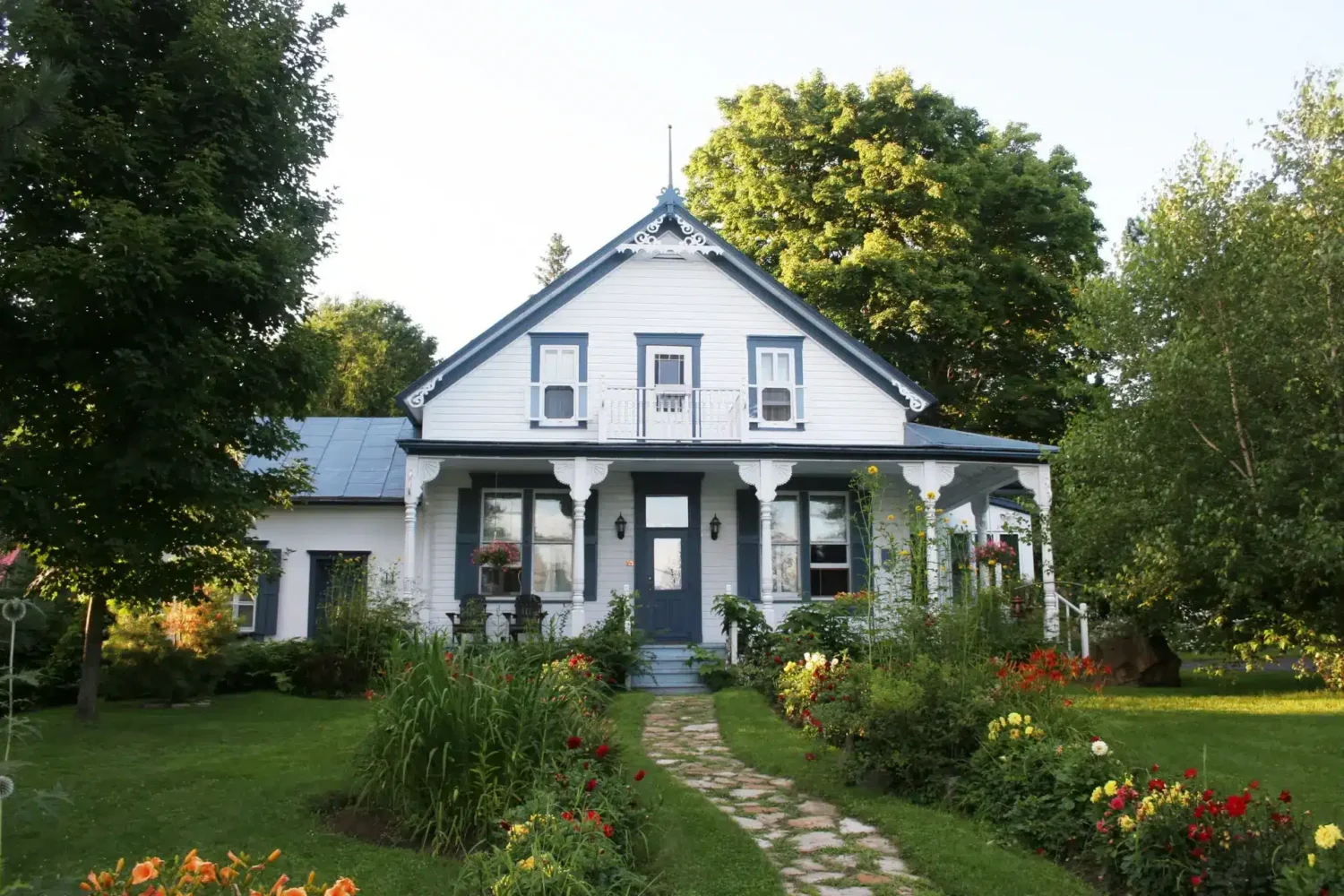
As the seasons turn in New England, this home maintenance checklist covers the four areas that matter most before cold weather arrives: windows, roofing, siding, and doors. Walking through each one now — while conditions are still workable — is the most reliable way to save energy and stay cool heading into the heating season.
Use this end of summer home maintenance checklist to spot the drafts, wear, and vulnerabilities your home has developed over the warmer months — before winter makes them expensive.
What Replacement Windows Are Best for Homes With High Winter Energy Bills in Massachusetts?
Triple pane, ENERGY STAR certified windows with low-E glass work best against drafty windows and high winter bills in Massachusetts, as well as the rest of New England.
What New England Homeowners Need to Know:
- Low-E glass: Low-E coatings and insulating gas fills reduce the heat loss behind drafty windows. Warmer rooms follow all winter.
- U-factor gap: Triple pane rates 0.20 to 0.30 U-value, while double pane rates 0.30 to 0.45. Lower numbers insulate better.
- Certified savings: ENERGY STAR certified windows can cut heating and cooling costs by up to 13% on average.
- Winter prep: Sealing gaps helps briefly, but new units stop drafts for good when you winterize your home.
- Seasonal checks: Following seasonal window maintenance tips helps you spot which windows lose the most heat.
- Rebate route: Massachusetts homeowners can check Mass Save for rebates on qualifying window upgrades.
Window Type | U-Value | Noise Reduction | Best For |
Double Pane | 0.30 to 0.45 | 30% to 35% | Milder exposures and budget upgrades |
Triple Pane | 0.20 to 0.30 | 40% to 50% | High winter bills and harsh exposures |
The average US window replacement runs about $21,922, an estimated national average.
Making the Best Choice for Your Home
Top Recommendation: Triple pane ENERGY STAR windows with low-E glass beat drafty windows and cut high winter bills most. Book a free estimate to compare options.
Best for budget: Double pane low-E windows for solid efficiency at a lower upfront cost.
Smart for rebates: Qualifying ENERGY STAR upgrades that let Massachusetts homeowners tap Mass Save incentives.
Ready to lower your winter heating bills? Start with a free in-home window assessment. Coastal Windows & Exteriors is a woman-owned, family-run exterior remodeling company founded in 2011, not a franchise. We hold a 4.8-star Google rating with 1,000+ verified reviews and 7,000+ installations across MA, NH, and ME, and rank as the #1 Woman-Owned Replacement Company in New England.
Request a free windows estimate from Coastal Windows & Exteriors.
Browse our complete windows FAQ guide from Coastal Windows & Exteriors.
Explore the Coastal Windows & Exteriors Windows Exterior Remodeling Home Improvement Help Center.
Last Updated: July 2026
Sources:
- Upgrading from single to triple pane windows can save over $500 a year on energy bills. ENERGY STAR Energy Efficient Windows, federal guidance on window energy savings. (Accessed July 2026)
- ENERGY STAR certified windows, doors, and skylights can shrink energy bills by up to 13% on heating and cooling costs nationwide. ENERGY STAR Windows, Doors & Skylights, official product efficiency guidance. (Accessed July 2026)
- Triple pane windows reach a U-value of 0.20 to 0.30, while double pane ranges from 0.30 to 0.45, and triple pane cuts noise 40% to 50% versus 30% to 35% for double pane. China North Glass Soundproofing Benefits of Double vs Triple Pane Insulating Glass, industry comparison of pane efficiency ratings. (2025)
- Thermal performance is a top priority for 87% of windows and doors professionals. Fixr Windows and Doors Report, contractor survey on window selection factors. (2026)
- The average cost of window replacement in the US is about $21,922. JLC Cost vs. Value New England, regional remodeling cost data. (2026)
What Insulated Vinyl Siding Is Best for Reducing Thermal Bridging and Winter Heating Bills?
Insulated vinyl siding with a foam core, like CraneBoard Solid Core, works best to cut thermal bridging when you winterize your home. This siding improves a home’s air tightness by an average of 25%. Foam backing slows the heat that escapes through wall studs all winter.
What New England Homeowners Need to Know:
- Foam backing: Insulated vinyl siding adds a foam layer that slows heat loss through wall studs. Warmer rooms follow.
- Air tightness: Installing insulated siding can improve a home’s air tightness by an average of 25%.
- Solid core: CraneBoard Solid Core is a 1 1/8 inch board-like composite. It offers more insulating power than fiber cement, wood or brick.
- Simple care: Wondering what maintenance is required for vinyl siding? Periodic cleaning needs only mild soap and water from a garden hose.
- Winter prep: Add insulated siding to your home maintenance checklist before cold weather to winterize your home.
- Resale return: Vinyl siding returns about 97% of project cost nationally.
Siding Type | Thermal Bridging | Air Tightness | Best For | Price |
Standard vinyl | Little foam, heat escapes at studs | Baseline | Budget upgrades | About $18,000 estimated national average |
Insulated (CraneBoard Solid Core) | Foam core slows stud heat loss | Up to 25% improvement | High winter heating bills | Typically higher, varies by home |
Making the Best Choice for Your Home
Top Recommendation: CraneBoard Solid Core insulated vinyl siding for the strongest defense against thermal bridging and winter heating bills. Book a free estimate to compare options.
Best for budget: Standard insulated vinyl for warmer rooms at a lower upfront cost.
Smart for upkeep: Any vinyl profile, since cleaning needs only mild soap and water.
Ready to lower your winter heating bills? Start with a free in-home siding assessment. Coastal Windows & Exteriors is a woman-owned, family-run exterior remodeling company founded in 2011, not a franchise. We hold a 4.8-star Google rating with 1,000+ verified reviews and 7,000+ installations across MA, NH, and ME, and rank as the #1 Woman-Owned Replacement Company in New England.
Request a free siding estimate from Coastal Windows & Exteriors.
Browse our complete siding FAQ guide from Coastal Windows & Exteriors.
Explore the Coastal Windows & Exteriors Siding Exterior Remodeling Home Improvement Help Center.
Last Updated: July 2026
Sources:
- Installing insulated siding can improve a home’s air tightness by an average of 25%. ENERGY STAR Why Seal and Insulate, federal guidance on sealing and insulating the home envelope. (Accessed July 2026)
- Vinyl siding needs only mild soap and water from a garden hose for periodic cleaning. Exterior Portfolio, Low Maintenance One-Pager, manufacturer maintenance guidance for Exterior Portfolio vinyl siding. (2019)
- The ROI of vinyl siding is about 97%. JLC Cost vs. Value 2025, national remodeling cost and resale data. (2026)
Your Quick Fall Home Maintenance Checklist
This fall home maintenance checklist covers the six most important exterior checks before New England winters set in. Each item below is the scannable version. The sections that follow go deeper on what to look for and when to call a professional.
- Check window frames and seals for drafts and signs of wear.
- Book a fall roof inspection before snow loads arrive.
- Clear gutters and downspouts before the first freeze.
- Check attic ventilation and insulation for gaps and blockages.
- Walk the siding for loose, cracked, or rotting panels.
- Replace worn door weatherstripping on entry and patio doors.
Every item on this list gets its own detailed section below. Start at the top and work your way down.
Evaluate Window Condition and Performance
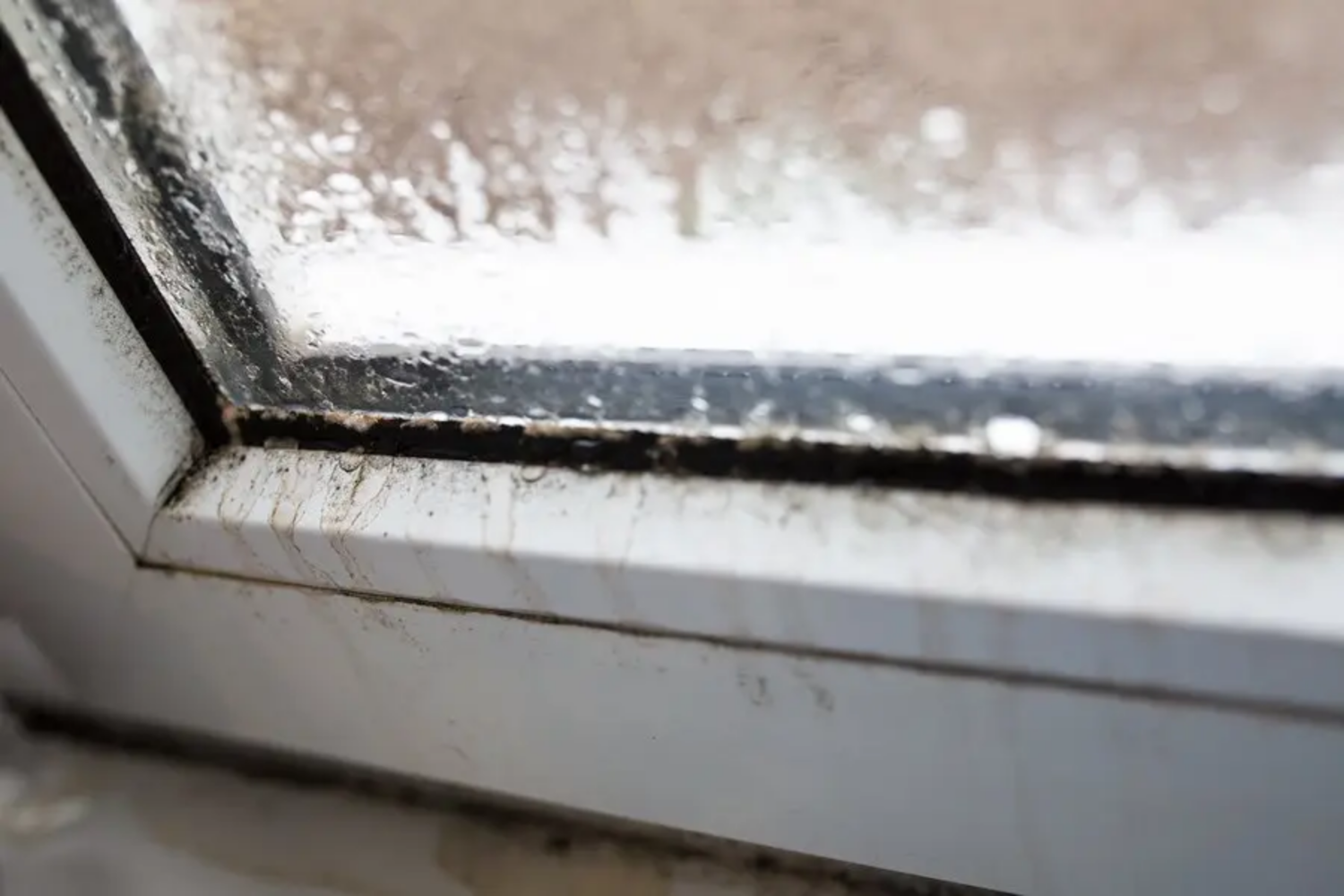
Seasonal window maintenance starts with three questions:
- How old are your windows?
- What condition are the frames in?
- How has your energy performance been?
Each of these factors signals whether your quality replacement windows are still doing their job or quietly working against you. Catching window issues before cold weather arrives is the difference between a minor fix and a mid-winter emergency.
How Old Are Your Windows?
If your windows are 10 or more years old, they deserve a close look before another heating season begins. Durability and longevity are rated important or very important by 100% of windows and doors professionals surveyed in the 2026 Fixr industry report — a signal that lifespan is the factor most contractors watch.
Look for long-term warranty coverage when evaluating replacement options, and ask specifically what the warranty covers and for how long.
Are Your Window Frames in Good Condition?
Window frames are one of the clearest indicators of how much useful life a window has left. When frames start to fail, drafts and moisture follow quickly. This is often before the glass itself shows any problems.
Signs your frames need attention:
- Chipping or peeling paint on the interior or exterior frame
- Soft or rotting wood at the sill or along the sash
- Mold or mildew forming at the sash and sill
- Condensation between the panes that won’t wipe away
Press a screwdriver firmly into the frame — if it sinks in, the wood is rotting and replacement is the fix.
Are Your Energy Bills Higher Than They Should Be?
Massachusetts households spend roughly $600 a month on energy bills, and windows. However, they make up only about 8% of a home’s exterior surface area,
Upgrading from single-pane to triple-pane windows can save over $500 a year on energy bills according to ENERGY STAR, though actual savings vary by home and cannot be guaranteed. If your heating costs have crept up without explanation, drafty or failing windows are a likely contributor worth checking before the heating season begins.
How to Stop Drafty Windows Before Winter
Drafty windows are one of the most common — and most fixable — fall home maintenance issues in New England. These steps are ordered from easiest to most involved, so start at the top and work down until you find the source.
- Re-caulk exterior gaps around the window frame where the frame meets the siding or trim.
- Replace worn sash weatherstripping along the top and bottom rails of the window.
- Check and reseat window locks so the sashes pull fully tight against the frame when closed.
- Add cellular shades or insulated curtains as a secondary barrier on windows that still let cold air through.
- For persistent drafty windows, none of these fixes compare to replacing old windows with energy-efficient replacement windows — sealing gaps in the building envelope can reduce air leakage by an average of 25–30%, but the most effective solution is window replacement itself.
Ready to find out which windows are costing you the most this winter? Call us at 978-818-1503 or book a free in-home consultation online.
Should You Replace Your Windows or Just Reseal Them Before Winter?
The decision rule is straightforward: reseal when the glass and frame are structurally sound and the leak is at the perimeter — a gap at the caulk line or worn weatherstripping. Replace when the frame is rotting, the sash no longer pulls tight against the seal, or there is fog between the panes that won’t clear. Both are valid seasonal window maintenance approaches depending on what you find during your inspection.
For homeowners whose windows are already past their useful life, replacement returns approximately 76% of the investment at resale according to the JLC Cost vs. Value Report (New England). This makes window replacement a financially sound decision beyond just the comfort improvement.
Make Sure Your Roof Is Optimal & Functioning

Your roof protects your home from leaks, energy loss, and ice dams. These problems can all trace back to roof components that weren’t checked before the cold arrived.
Meanwhile, your roof deck and roofing system are the backbone of your home. Your roof should be comprised of many important elements such as:
- Leak barrier: helps prevent leaks caused by wind-driven rain and ice dams
- Roof Deck Protection: shields the roof deck from moisture infiltration
- Starter Strip Shingles: guards against shingle blow-offs
- Shingles: keep out the elements, beautify & protect
- Attic Ventilation: reduces attic moisture and heat — lower energy bills!
- Ridge Cap Shingles: defends against leaks at the hips and ridges
Every one of these components deserves a close look as part of your fall home maintenance checklist.
Is There Moss or Algae Growth on Your Roof?
Moss and algae growth is problematic. It leads to black streaks on your roof, which bring down the appearance of your curb appeal along with the home value. Furthermore, moss and algae can also eat away at the protective UV coating on your shingles. Moss and algae also hold moisture against the shingle surface — a concern that compounds heading into freeze-thaw season when trapped water expands and contracts with every temperature swing.
Is Your Roof Leaking?
Roof leaks rarely announce themselves — by the time you see damage inside, water has usually been moving through the structure for some time. Watch for:
- Stained or discolored ceilings — yellow or brown water marks are the most common sign
- Condensation on the rafter beams in the attic
- Daylight visible through the roof deck when you look up from inside the attic
- Damp or matted attic insulation that has absorbed moisture over time
Emergency roof leak repair typically costs up to twice as much as a scheduled repair — catching it now is always the better financial decision.
Is Your Attic Properly Ventilated?
Without proper ventilation, you’re at real risk of ice dams — and 89% of U.S. homes are under-insulated, making this one of the most common gaps on a fall checklist. Ice dams form when a warm attic melts snow on the roof surface, which refreezes at the cold eaves; your attic temperature should stay close to the outside air temperature to prevent this cycle.
According to GAF, proper ventilation lowers attic temperature and directly reduces the snowmelt that causes ice dams.
Check that your attic ventilation system includes:
- Intake vents at the soffits to draw in cold outside air
- Exhaust vents at the ridge to allow warm air to escape
- Insulation that is not blocking airflow at the eaves
- No gaps where warm air from the living space can enter the attic
A balanced intake-to-exhaust system is what keeps attic temperatures stable through the coldest months.
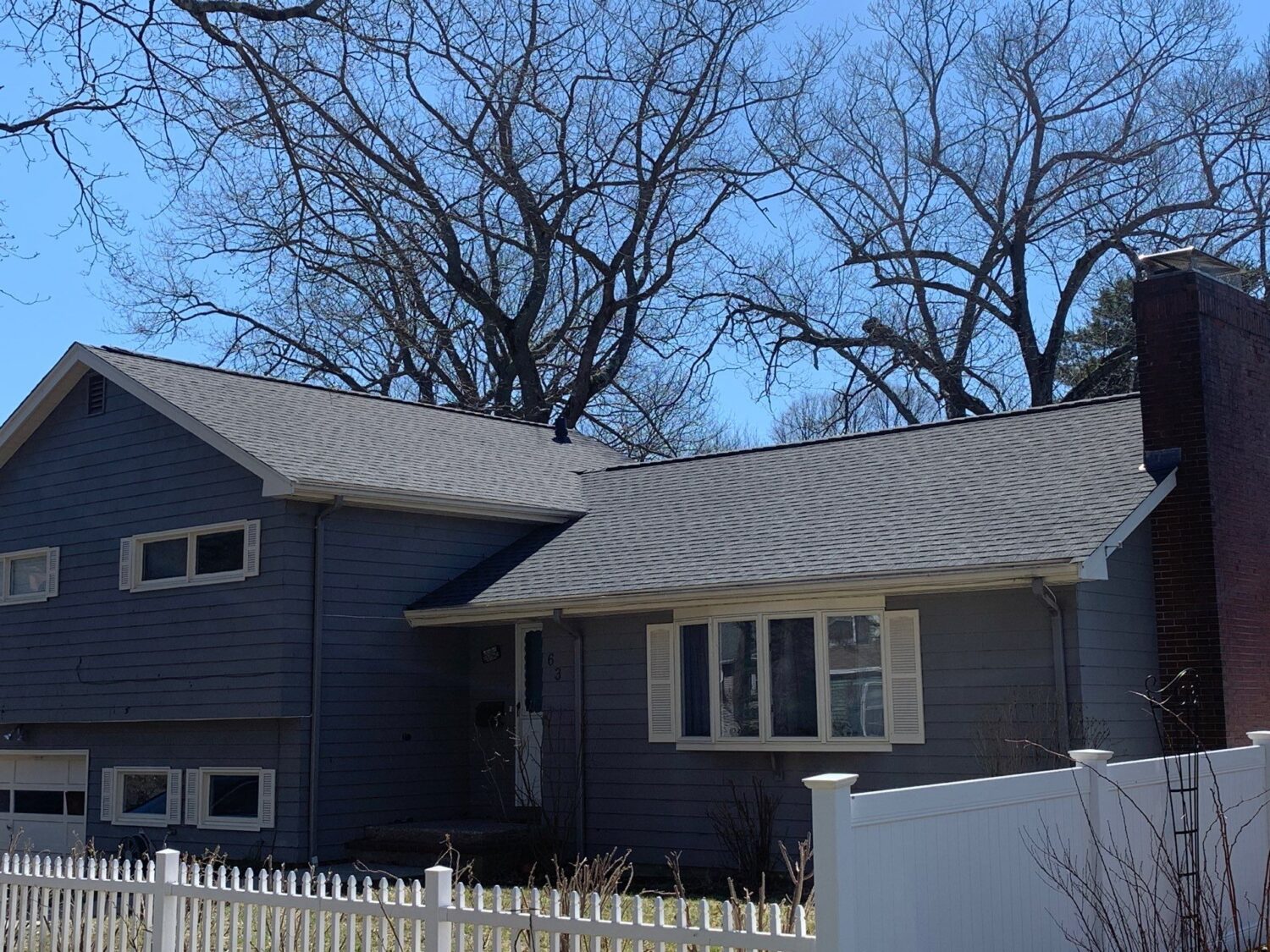
Schedule an End-of-Summer Roof Inspection Before Winter
A fall roof inspection is worth scheduling because it catches the issues that become emergencies once snow and ice arrive — flashing gaps, lifted shingles, and ventilation blockages are all invisible from the ground but straightforward for a trained eye.
GAF recommends inspecting your roof at least twice a year, in spring and fall; if your roof is more than 20 years old or has recurring issues, consult a roofing professional about replacement before another winter cycle adds more wear.
A professional fall inspection looks for:
- Lifted or missing shingles that leave the roof deck exposed
- Damaged or loose flashing at chimneys, vents, and valleys
- Clogged or sagging gutters that can’t drain properly under snow load
- Blocked soffit and ridge ventilation that traps heat in the attic
- Soft spots in the roof deck that signal moisture has already gotten through
Call 978-818-1503 to book a free roof inspection with Coastal Windows & Exteriors before the first freeze.
Clean Your Gutters & Prevent Ice Dams
Clogged gutters are one of the most common contributing factors to gutter ice dams. When water can’t drain, it pools at the eaves and freezes into the ice buildup that forces water back under your shingles. Keeping gutters clear going into winter significantly reduces the conditions that allow ice dams to form, though no single maintenance step eliminates the risk entirely.
- Clear leaves and debris from gutters after the last leaf drop of the season.
- Flush downspouts and confirm they discharge water away from the foundation.
- Re-secure any loose gutter hangers before snow load adds weight to the system.
- Check for standing water in the gutter channel — any pooling will freeze and expand.
- Confirm your leak barrier extends past the eaves, where ice dams are most likely to push water back under the roof deck (GAF).
Gutter cleaning typically runs $75–$400 — a straightforward investment compared to ice dam removal, which can run up to $4,000.
Can Ice Dams Damage Shingles and Gutters?
Yes — ice dams can cause serious damage to both shingles and gutters. As ice builds up at the eaves, water backs up under the shingles and reaches the roof deck, where it can cause rot, mold, and structural damage that isn’t visible until spring.
The weight of accumulated ice also pulls gutters away from the fascia, bending hangers and breaking seams that then fail to drain properly the following season. Shingle repairs alone run $130–$9,000 depending on the extent of the damage — a wide range that reflects how quickly a small ice dam problem can escalate.
Exterior Siding Evaluation
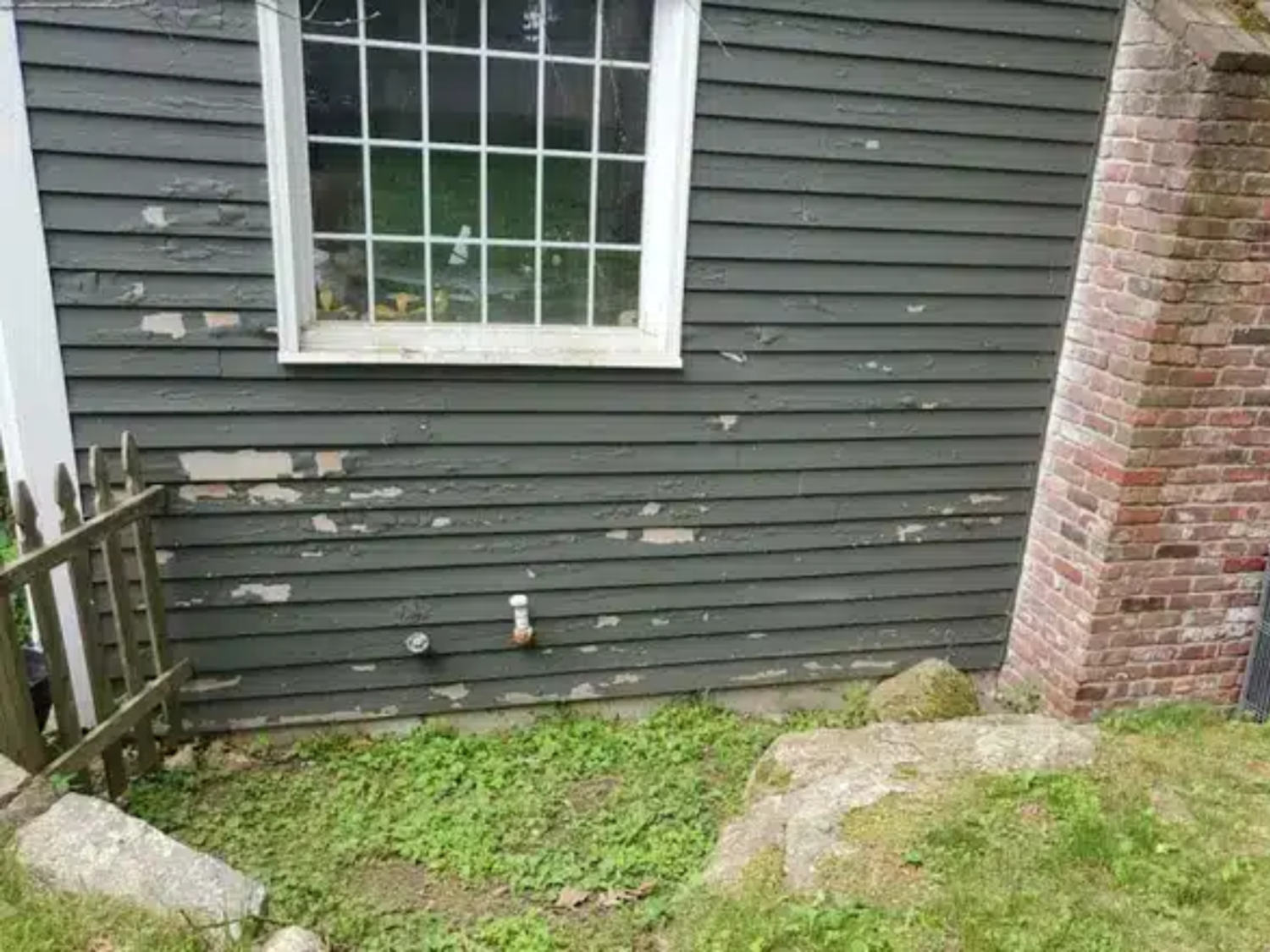
Fall siding maintenance is about catching the problems that freeze-thaw cycles will make worse — moisture entry points, rot, and loose panels that let cold air and water behind the cladding. Some house siding materials, such as wood, need regular attention to stay protected; without it, you can run into wood rot, mold, and mildew growth that spreads fast once temperatures start cycling. Check your exterior siding now — here’s what to look for.
Are There Loose or Missing Siding Panels?
Wood panels that aren’t securely attached provide an easy access point for moisture. Make it a priority to ensure that your exterior is properly covered by durable and moisture-resistant siding. If there are missing siding panels, check for rot, termite damage, and whether there is any missing underlayment — learn what is house wrap and why it matters for protecting your home from the elements.
Is Your Wood Siding Peeling, Chipping, or Rotting?
When siding is peeling, chipping, or rotting, it signals structural vulnerability well beyond curb appeal. In the worst cases of wood rot, your siding will crumble away with the touch of a finger — try the screwdriver test if you can’t tell for sure. Repainting a home exterior can run up to $12,000, which is the recurring maintenance cost wood siding carries through every cycle.
Is Your Siding Providing Proper Insulation?
Insulated vinyl siding is well-equipped to seal out the elements, prevent mold and moisture, and maintain a consistent indoor temperature — and installing insulated siding can improve a home’s air tightness by an average of 25% (ENERGY STAR). Heat escapes through the studs of your home’s walls, and foam-backed siding dramatically reduces thermal bridging, cutting down the energy you lose.
Quality insulated siding:
- Seals out wind-driven moisture at the wall assembly
- Reduces thermal bridging through the wall studs
- Holds a more consistent indoor temperature through cold snaps
- Does not rot, chip, or fade like wood
- Stands up to New England freeze-thaw cycling without losing performance
James Hardie® fiber cement, installed with HardieWrap® as a continuous moisture barrier, is another strong option for New England homes — and Coastal Windows & Exteriors is a proud James Hardie® Elite Preferred Contractor.
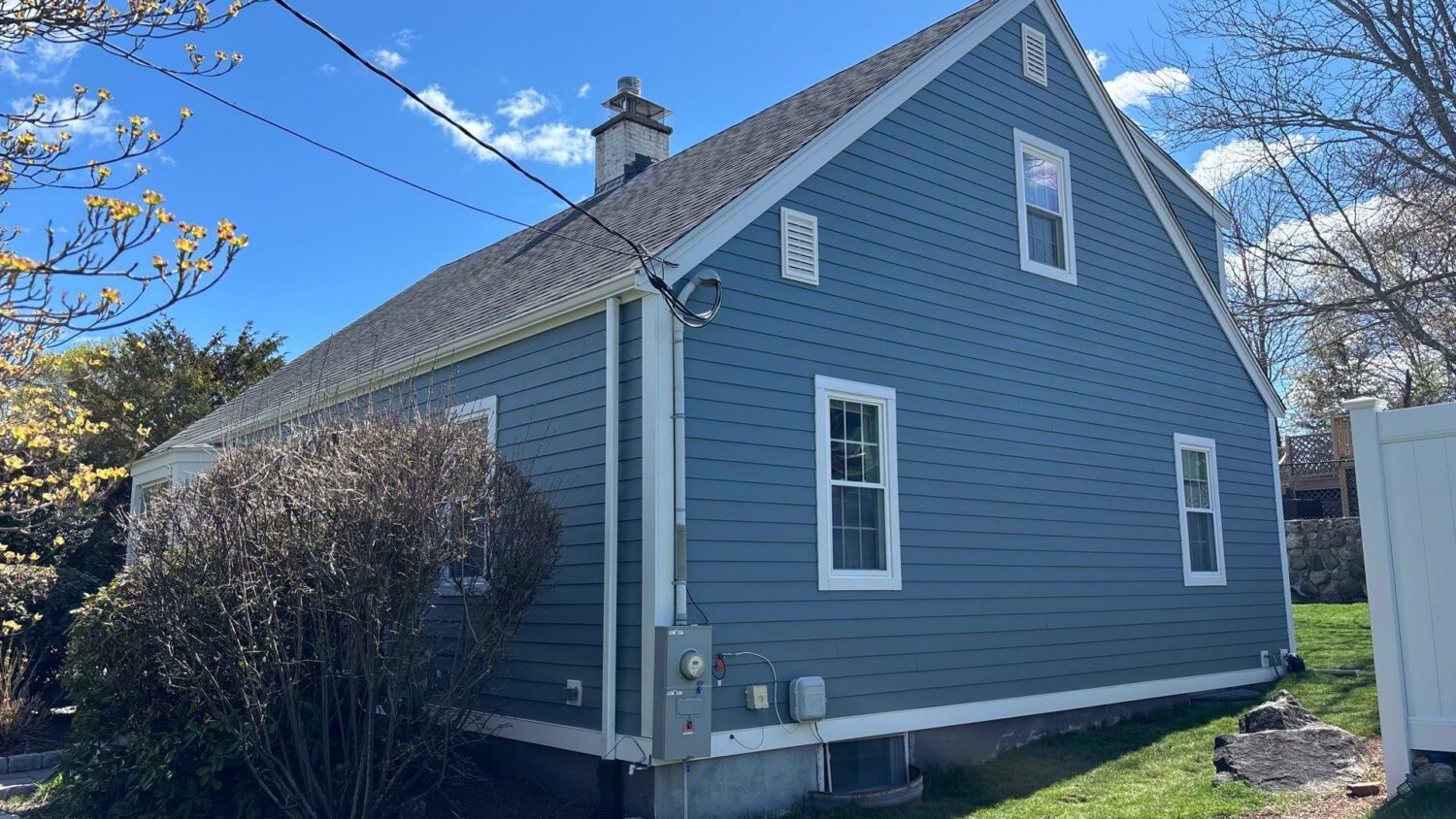
Vinyl vs. James Hardie: What Maintenance Does Your Siding Need?
Vinyl siding and James Hardie® fiber cement are both low-maintenance compared to wood — but low-maintenance is not zero-maintenance. Here’s what each material actually requires to stay in top condition.
Vinyl siding maintenance:
- Annual rinse with a garden hose to clear dirt, mildew, and pollen buildup
- Inspect for cracked or warped panels after storms, particularly wind-driven events
- Check and refresh caulk at trim, penetrations, and wherever siding meets another material
James Hardie® siding maintenance:
- Periodic wash to remove surface dirt and organic buildup
- Recaulk joints and penetrations as needed when sealant shows signs of cracking or separation
- Repaint only on the manufacturer’s schedule — James Hardie® ColorPlus® Technology is engineered to hold color longer than field-painted finishes
Both are strong investments — vinyl siding returns 97% at resale and fiber cement returns 144.9% per the JLC Cost vs. Value Report (New England). Work with a James Hardie siding contractor to understand which product fits your home’s maintenance profile and long-term goals.
The material you choose shapes not just your maintenance schedule but how your home performs through every New England season.
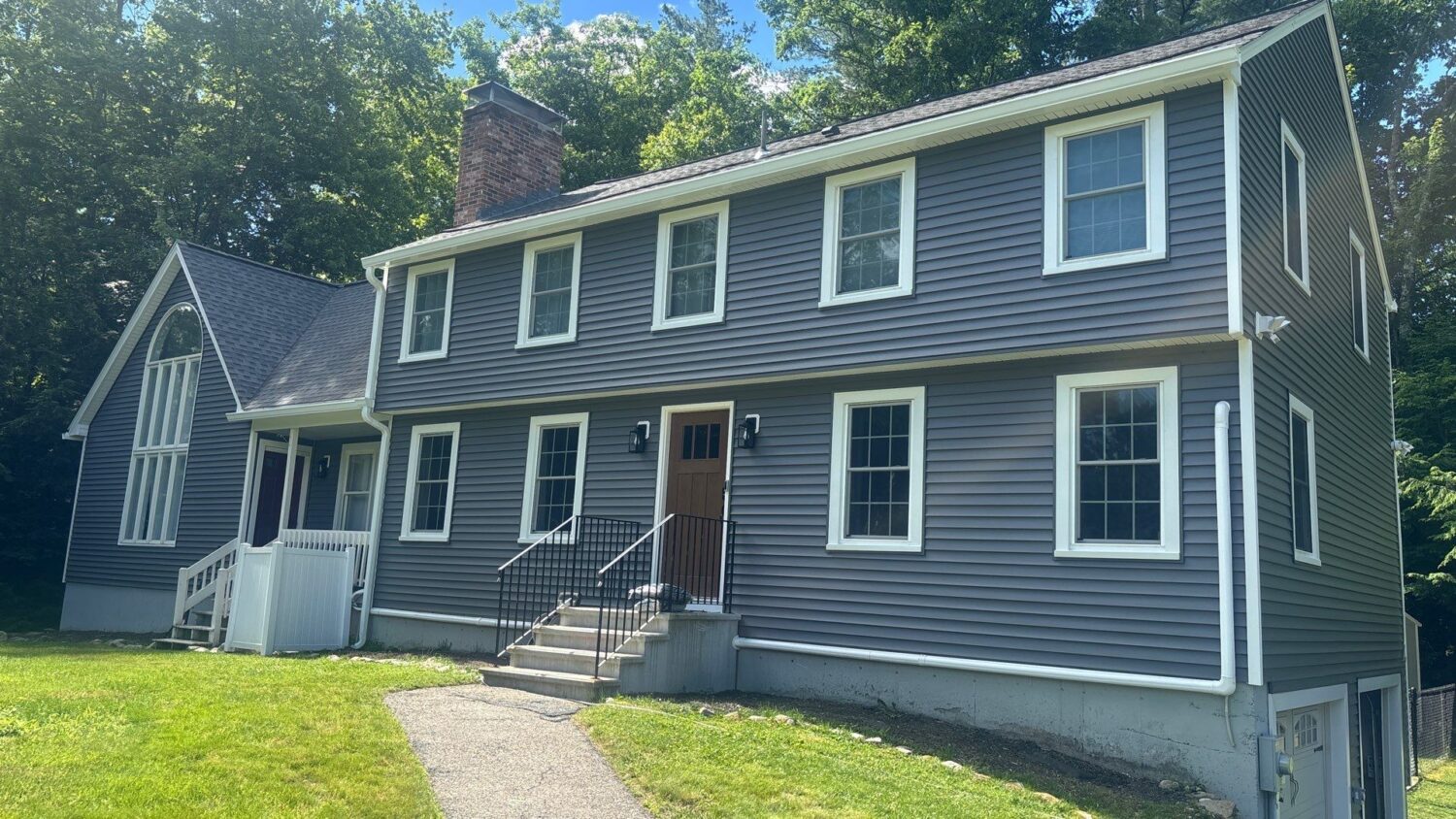
Does New Siding Cut Down on Yearly Home Maintenance?
Yes — new siding does cut down on yearly home maintenance, and for most New England homeowners the reduction is significant. Vinyl and fiber cement eliminate the scraping and repainting cycle that wood siding demands, and repainting a home exterior can run up to $12,000 per cycle — a cost that simply doesn’t apply to modern siding materials. Fewer rot repairs, fewer pest entry points, and fewer seasonal touch-ups add up to real time and money saved over the life of the product. No siding is completely maintenance-free, but the difference between wood and a quality vinyl or fiber cement installation is substantial.
Don't Forget Your Doors: Weatherstripping & Drafts
Doors are one of the most overlooked items on a fall home maintenance checklist and one of the biggest sources of drafts and heat loss. The three worth checking before winter are entry doors, sliding patio doors, and the door connecting your garage to the living space.
Worn weatherstripping, a settled threshold, or a door that no longer latches square can all undermine your home’s thermal envelope in ways that add up on your heating bill. Installing ENERGY STAR certified windows, doors, and skylights can shrink heating and cooling costs by an average of up to 13% — making door condition part of the energy efficiency equation, not just a comfort issue.
How to Stop Drafts Coming Through Your Front Door
Stopping drafts coming through your front door starts with the weatherstripping and sweep — most front door drafts trace back to these two components wearing down over time. Work through this list from easiest fix to most involved before concluding the door itself needs replacing.
- Replace worn weatherstripping along the door jamb on all three sides.
- Add or replace the door sweep at the bottom rail to close the gap at the threshold.
- Adjust the strike plate so the door pulls tight against the jamb when latched.
- Re-caulk the exterior trim where the door frame meets the siding or brick mold.
- Check the threshold for gaps and settling — a threshold that has dropped or shifted leaves a consistent cold-air channel at the floor.
If the slab is warped, the jamb is rotted, or the door no longer latches square, weatherstripping and caulk won’t solve the problem — replacement is the right fix. A new steel entry door returns 216% of the investment at resale per the JLC Cost vs. Value Report (New England), making it one of the strongest ROI improvements available to New England homeowners. Call 978-818-1503 or email [email protected] to discuss your options.
How to Winterize a Sliding Patio Door
Knowing how to winterize a sliding patio door is worth adding to your fall checklist — sliding glass doors have more potential failure points than a standard hinged door, and a poorly sealed panel is one of the most consistent sources of cold-air infiltration in New England homes. A few focused checks before the first freeze keep the panel performing the way it should through the coldest months.
- Clean and clear the track of debris, dirt, and hardened buildup that prevents the panel from closing fully.
- Check and replace the fin seal in the frame — the vertical pile strips that run along the panel edges.
- Re-caulk the exterior perimeter where the door frame meets the surrounding wall.
- Add an insulated curtain or thermal panel on the interior as a secondary barrier on particularly cold nights.
- Confirm the latch pulls the panel tight against the weatherstrip when locked — a loose latch leaves a consistent gap.
A well-maintained sliding door is a genuine thermal asset — the large glass area that makes it a light-and-view feature in warmer months becomes an energy liability the moment the seals and track start to fail.
Get Ready for Fall & Winter with Coastal Windows & Exteriors: See Your Home for FREE in 3D
Once you’ve worked through this home maintenance checklist, Coastal Windows & Exteriors is ready to help with whatever your inspection turns up — windows, roofing, siding, or doors across the areas we serve throughout MA, NH, and ME. Every free in-home consultation includes a complimentary 3D design preview so you can see exactly how your home will look before any work begins.
Select ENERGY STAR-rated products may qualify for rebates through Mass Save (MA), NHSaves (NH), or Efficiency Maine (ME) — program availability and savings vary and cannot be guaranteed. Call 978-818-1503, email [email protected], or book online to schedule your free consultation.
Frequently Asked Questions for End-of-Summer and Early Fall Home Maintenance Checklist
What Exterior Door Upgrade Is Best for Reducing Heating Bills in a Drafty New England Home?
The best upgrade for drafts coming through your front door is an insulated steel or fiberglass entry door. Fresh sealing helps first, but a new door delivers lasting comfort through New England winters.
What New England Homeowners Need to Know:
- Seal first: Fresh weatherstripping and a snug door sweep stop most drafts coming through your front door. Start here to winterize your home.
- Short-term limits: Many homeowners search how to install door weatherstripping, but a fresh seal lasts only a year or two.
- Foam core: A foam core inside steel and fiberglass doors adds insulation, a smarter long-term fix than sealing alone.
- Steel value: A steel entry door averages $2,547 in New England and returns about 216% of project cost.
- Fiberglass option: A grand fiberglass entry door averages $11,953 in New England and returns about 87%.
- Certified savings: ENERGY STAR certified doors can trim heating and cooling costs by up to 13% on average.
Option | Cost (New England) | ROI | Best For |
Weatherstripping + sweep | Low, temporary | Not applicable | Quick short-term relief |
Steel entry door | About $2,547 average | 216% | Best payback and security |
Grand fiberglass door | About $11,953 average | 87% | Premium look, foam-core insulation |
Costs are estimated New England averages and vary by home.
Making the Best Choice for Your Home
Top Recommendation: A steel entry door for the best payback against drafts coming through your front door, at about 216% ROI. Book a free estimate to compare options.
Best for budget: Fresh weatherstripping and a door sweep for quick, temporary relief before you upgrade.
Smart for premium homes: A foam-core fiberglass door for a high-end look and strong insulation.
Ready to lower your winter heating bills? Start with a free in-home door assessment. Coastal Windows & Exteriors is a woman-owned, family-run exterior remodeling company founded in 2011, not a franchise. We hold a 4.8-star Google rating with 1,000+ verified reviews and 7,000+ installations across MA, NH, and ME, and rank as the #1 Woman-Owned Replacement Company in New England.
Request a free doors estimate from Coastal Windows & Exteriors.
Browse our complete doors FAQ guide from Coastal Windows & Exteriors.
Explore the Coastal Windows & Exteriors Doors Exterior Remodeling Home Improvement Help Center.
Last Updated: July 2026
Sources:
- The ROI of a steel entry door is about 216%. JLC Cost vs. Value 2025, national remodeling cost and resale data. (2026)
- A steel entry door averages about $2,547 in New England. JLC Cost vs. Value 2025 New England, regional remodeling cost data. (2026)
- A grand fiberglass entry door averages about $11,953 in New England and returns about 87% of cost. JLC Cost vs. Value 2025 New England, regional remodeling cost and resale data. (2026)
- ENERGY STAR certified windows, doors, and skylights can shrink energy bills by up to 13% on heating and cooling costs. ENERGY STAR Windows, Doors & Skylights, official product efficiency guidance. (Accessed July 2026)
James Hardie Siding vs Insulated Vinyl Siding for New England Winter Performance: Which Is Better?
Both James Hardie fiber cement and insulated vinyl siding perform well through New England winters, so the better pick depends on your priorities. For example, vinyl siding maintenance stays simple, while Hardie trades a little upkeep for standout durability. Weigh cost, care, and cold-weather strength as you compare the two.
What New England Homeowners Need to Know:
- Climate build: James Hardie HZ5 fiber cement resists shrinking, swelling and cracking in wet, freezing conditions. It is also fire resistant.
- Vinyl comfort: Insulated vinyl adds foam that improves air tightness by an average of 25%, helping you winterize your home. Compare both siding options for your climate.
- Vinyl upkeep: Vinyl siding maintenance means periodic cleaning with mild soap and water from a garden hose.
- Hardie care: Wondering what maintenance does James Hardie need? Fiber cement needs periodic painting and caulking over its life.
- Warranty terms: James Hardie backs its siding with a 30-year non-prorated warranty. ColorPlus finishes carry a 15-year limited warranty.
- Resale math: Fiber cement returns about 144.9% of cost nationally, and vinyl returns about 97%.
Feature | James Hardie Fiber Cement | Insulated Vinyl |
Winter build | HZ5 resists freeze-thaw cracking | Foam core adds insulation, up to 25% air tightness |
Maintenance | Periodic painting and caulking | Soap and water cleaning |
Warranty | 30-year non-prorated; ColorPlus 15-year | Varies by manufacturer |
ROI | About 144.9% | About 97% |
Average cost (New England) | About $21,500 | About $18,000 |
Costs are estimated New England averages and vary by home.
Making the Best Choice for Your Home
Top Recommendation: James Hardie fiber cement for the strongest durability and highest resale return through New England winters. Book a free estimate to compare both.
Best for budget: Insulated vinyl for a lower upfront cost with easy, low-effort upkeep.
Smart for warmth: Foam-backed insulated vinyl for the best added wall insulation.
Ready to choose the right siding for your winters? Start with a free in-home comparison. Coastal Windows & Exteriors is a woman-owned, family-run exterior remodeling company founded in 2011, not a franchise, and a James Hardie Elite Preferred Contractor. We hold a 4.8-star Google rating with 1,000+ verified reviews and 7,000+ installations across MA, NH, and ME.
Request a free siding estimate from Coastal Windows & Exteriors.
Browse our complete siding FAQ guide from Coastal Windows & Exteriors.
Explore the Coastal Windows & Exteriors Siding Exterior Remodeling Home Improvement Help Center.
Last Updated: July 2026
Sources:
- James Hardie HZ5 fiber cement is engineered for climates with freezing temperatures, snow, and ice. James Hardie Hardie Zone System, manufacturer climate-engineering guidance. (Accessed July 2026)
- James Hardie siding carries a 30-year non-prorated warranty, and ColorPlus finishes carry a 15-year limited warranty covering paint and labor. James Hardie Frequently Asked Questions, manufacturer warranty terms. (Accessed July 2026)
- Vinyl siding needs only mild soap and water for periodic cleaning, while fiber cement needs periodic painting and caulking. Exterior Portfolio, Low Maintenance One-Pager, manufacturer siding maintenance comparison. (2019)
- Installing insulated siding can improve a home’s air tightness by an average of 25%. ENERGY STAR Why Seal and Insulate, federal guidance on sealing and insulating. (Accessed July 2026)
- The ROI of fiber cement siding is about 144.9% and vinyl siding about 97%. JLC Cost vs. Value 2025, national remodeling resale data. (2026)
- Fiber cement averages about $21,500 and vinyl about $18,000 in New England. JLC Cost vs. Value 2025 New England, regional remodeling cost data. (2026)
Fiberglass Entry Doors vs Old Wood Doors for Winter Drafts: Which Is Better?
For winter drafts coming through your front door, a fiberglass entry door usually outperforms an older wood door. Many homeowners love their wood door, yet its material shifts with the weather. Wood doors also pose problems like frequent repainting and rot from moisture damage.
What New England Homeowners Need to Know:
- Warp factor: Old wood doors swell and shrink with the seasons, which widens the gaps behind front door drafts.
- Steady shape: Fiberglass resists warping, so it keeps a tighter seal when you winterize your home. See entry door options to compare.
- Seal limits: Many homeowners look up how to install door weatherstripping, but a worn wood door soon drafts again.
- Fiberglass cost: A grand fiberglass entry door averages $11,953 in New England and returns about 87% of cost.
- Steel compare: A steel entry door averages $2,547 in New England and returns about 216% of project cost.
- Certified savings: ENERGY STAR certified doors can trim heating and cooling costs by up to 13% on average.
Door Type | Winter Draft Performance | Cost (New England) | ROI |
Old wood door | Swells and shrinks, gaps widen | Varies, no set figure | None |
Fiberglass entry door | Holds shape for a tighter seal | About $11,953 average | 87% |
Steel entry door | Insulated core, tight seal | About $2,547 average | 216% |
Costs are estimated New England averages and vary by home.
Making the Best Choice for Your Home
Top Recommendation: A fiberglass entry door for the best mix of wood-look style and lasting draft protection. Book a free estimate to compare doors.
Best for budget: A steel entry door for the highest resale return at a lower upfront cost.
Smart for quick relief: Fresh weatherstripping as a short-term fix before you replace an aging wood door.
Ready to stop the drafts before winter? Start with a free in-home door assessment. Coastal Windows & Exteriors is a woman-owned, family-run exterior remodeling company founded in 2011, not a franchise. We hold a 4.8-star Google rating with 1,000+ verified reviews and 7,000+ installations across MA, NH, and ME, and rank as the #1 Woman-Owned Replacement Company in New England.
Request a free doors estimate from Coastal Windows & Exteriors.
Browse our complete doors FAQ guide from Coastal Windows & Exteriors.
Explore the Coastal Windows & Exteriors Doors Exterior Remodeling Home Improvement Help Center.
Last Updated: July 2026
Sources:
- A grand fiberglass entry door averages about $11,953 in New England and returns about 87% of cost. JLC Cost vs. Value 2025 New England, regional remodeling cost and resale data. (2026)
- A steel entry door averages about $2,547 in New England. JLC Cost vs. Value 2025 New England, regional remodeling cost data. (2026)
- The ROI of a steel entry door is about 216%. JLC Cost vs. Value 2025, national remodeling resale data. (2026)
- ENERGY STAR certified windows, doors, and skylights can shrink energy bills by up to 13% on heating and cooling costs. ENERGY STAR Windows, Doors & Skylights, official product efficiency guidance. (Accessed July 2026)
What Roofing Upgrades Should I Consider if My Attic Ventilation Is Poor Before Winter?
If your attic ventilation is poor, start with a fall roof inspection to plan balanced intake and exhaust upgrades. For example, healthy attics pair intake vents down low with exhaust vents up high. Coastal assesses your roof and plans replacement options built for New England winters.
What New England Homeowners Need to Know:
- Balanced airflow: Good roof maintenance pairs intake vents at the soffits with exhaust vents at the ridge. See how roof ventilation works.
- Heat control: Proper ventilation moves warm attic air out, cuts condensation, and protects your insulation.
- Vent pairing: GAF Cobra Ridge Vent handles exhaust, while MasterFlow Intake Soffit Vents handle intake.
- Ice dam help: A cooler attic melts less rooftop snow, which helps prevent gutter ice dams all winter.
- Complete system: A layered GAF roofing system pairs shingles with leak barriers, deck protection, and proper ventilation. This can qualify for GAF’s enhanced system warranty.
- When to act: GAF recommends a check twice a year, and replacement once a roof passes 20 years.
Upgrade | Role | Best For |
Soffit intake vents (MasterFlow) | Pull cool air in low | Attics starved of intake air |
Ridge exhaust vent (Cobra) | Push warm air out high | Trapped attic heat and moisture |
Full GAF roofing system | Ventilation plus layered protection | Roofs past 20 years or failing |
Making the Best Choice for Your Home
Top Recommendation: A balanced intake-and-exhaust system for the biggest gain when attic ventilation is poor. Book a free estimate to assess your roof.
Best for older roofs: A full GAF roofing system replacement once your roof passes 20 years.
Smart for winter: Ridge and soffit venting together to help prevent gutter ice dams.
Ready to fix poor attic ventilation before winter? Start with a free roof assessment. Coastal Windows & Exteriors is a woman-owned, family-run exterior remodeling company founded in 2011, not a franchise, and a GAF-certified Master Elite Roofing Contractor. We earned the GAF Master Elite President’s Club Award for seven straight years, from 2017 to 2023. We hold a 4.8-star Google rating with 1,000+ verified reviews and 7,000+ installations across MA, NH, and ME.
Request a free roofing estimate from Coastal Windows & Exteriors.
Browse our complete roofing FAQ guide from Coastal Windows & Exteriors.
Explore the Coastal Windows & Exteriors Roofing Exterior Remodeling Home Improvement Help Center.
Last Updated: July 2026
Sources:
- Proper ventilation shifts warm attic air out and reduces condensation. GAF Best Roofing Materials and Colors for Energy Efficiency, manufacturer guidance on attic ventilation benefits. (2024)
- Homeowners should inspect their roof at least twice a year, in spring and fall. GAF Residential Roofing FAQs, official guidance on roof inspection frequency. (2025)
- Consult a roofing professional once a roof passes 20 years or shows recurring issues. GAF Residential Roofing FAQs, official guidance on when replacement may be needed. (2025)
- A layered GAF roofing system pairs shingles with accessories such as leak barriers, roof deck protection, starter strips, ridge cap shingles, and attic ventilation. GAF GAF Roofing System, manufacturer overview of the Lifetime Roofing System components. (Accessed July 2026)
Should I Replace Drafty Windows Before Winter If My Heating Bills Keep Rising?
Replace drafty windows before winter when resealing no longer holds and heating bills keep climbing. Small gaps sometimes seal well, so an honest assessment comes first. However, foggy glass and failed seals signal that replacement, not another patch, protects comfort and savings.
What New England Homeowners Need to Know
- Reseal limits: Resealing helps small gaps, yet fogged glass and warped frames mean drafty windows need replacing. Book a free estimate for an honest assessment.
- Bill context: Massachusetts households spend roughly $600 a month on energy bills, and leaks push that higher. Rising costs often signal failing windows.
- Surface share: Windows cover about 8% of a home’s exterior, yet drive much of winter heat loss. Small area, big impact.
- Energy upgrade: Upgrading from single to triple pane windows saves over $500 a year on energy bills. Efficient glass steadies indoor comfort.
- Resale value: Window replacement returns about 76% of project cost nationally, so winter upgrades pay you back. Replacement also solves the old-window problems that quietly raise winter heating bills.
- Whole envelope: To winterize your home, pair new windows with sealed doors and added attic insulation. Windows alone rarely fix every draft.
Option | Pros | Cons | Best For | Price |
Reseal | Low upfront cost, fast | Temporary, fails on fogged glass | Minor gaps, newer windows | Hundreds |
Replace | Ends drafts, about 76% ROI, lower bills | Higher upfront cost | Old, fogged, or failed windows | Estimated national average about $21,922 |
Choosing the Right Fix for New England Winters
Top Recommendation: Energy-efficient replacement windows for a permanent fix that ends drafty windows and can lower your energy bills. Book a free estimate today.
Best for Budget: Resealing can help for one mild winter while you plan a full replacement.
Smart for Comfort: Triple-pane glass for the coldest New England rooms that never warm up.
Ready to stop losing heat through drafty windows? Schedule a free, honest assessment before the cold sets in. Coastal Windows & Exteriors is a woman-owned, family-run remodeler founded in 2011, not a franchise. We hold a 4.8-star Google rating with 1,000+ reviews and 7,000+ installations across MA, NH, and ME. Ask about Mass Save rebates for qualifying upgrades.
Request a free windows estimate from Coastal Windows & Exteriors.
Browse our complete windows FAQ guide from Coastal Windows & Exteriors.
Explore the Coastal Windows & Exteriors Windows Exterior Remodeling Home Improvement Help Center.
Last Updated: July 2026
Sources
- Massachusetts households spend roughly $600 a month on energy bills. Boston.com Massachusetts Utilities Cost Report, local reporting on rising household energy costs. (2024)
- Windows make up about 8% of a home’s exterior surface area. PNNL How Triple-Pane Windows Stop Energy and Money From Flying Out the Window, federal lab research on window energy performance. (Accessed July 2026)
- Upgrading from single to triple pane windows saves over $500 a year on energy bills. ENERGY STAR Energy Efficient Windows, federal guidance on window energy savings. (Accessed July 2026)
- Window replacement returns about 76% of project cost nationally. JLC 2025 Cost vs. Value Report, national remodeling ROI data. (2026)
- The estimated national average for window replacement is about $21,922. JLC Cost vs. Value Report, New England, regional and national remodeling cost data. (2026)
Should I Choose James Hardie Siding With HardieWrap if My Home Has Moisture, Drafts, or Wood Rot Concerns?
For homes with moisture, drafts, or wood rot, Hardie board with HardieWrap is a strong, lasting choice. HardieWrap weather barrier blocks water and air while letting trapped moisture dry out. Furthermore, fiber cement resists rot and pests, so your walls stay protected through New England winters.
What New England Homeowners Need to Know:
- Rot defense: Hardie board resists water absorption, which helps protect against mold, swelling and cracking.
- Behind the wall: The HardieWrap weather barrier adds a breathable layer that keeps water and air out. See Hardie siding options.
- Cold climate build: A northern version is engineered for cold, wet climates, keeping water out while vapor escapes.
- Energy help: HardieWrap resists air movement, which reduces energy loss and helps you winterize your home.
- Pest and fire: James Hardie fiber cement is fire resistant, and animals and insects will not eat it.
- Low upkeep: Wondering what maintenance does James Hardie need? Mostly periodic cleaning and occasional repainting over its life.
Concern | How Hardie + HardieWrap Helps |
Moisture and mold | HardieWrap resists water intrusion while letting walls dry out |
Drafts and energy loss | HardieWrap resists air movement to cut energy loss |
Wood rot and pests | Fiber cement will not rot and resists insects |
Making the Best Choice for Your Home
Top Recommendation: James Hardie fiber cement with the HardieWrap weather barrier for the best defense against moisture, drafts, and rot. Book a free estimate to review your walls.
Best for value: Fiber cement overall, which returns about 144.9% of project cost nationally.
Smart for winter: The northern HardieWrap version, engineered for cold, wet New England climates.
Ready to protect your walls before winter? Start with a free in-home siding assessment. Coastal Windows & Exteriors is a woman-owned, family-run exterior remodeling company founded in 2011, not a franchise, and a James Hardie Elite Preferred Contractor. We hold a 4.8-star Google rating with 1,000+ verified reviews and 7,000+ installations across MA, NH, and ME.
Request a free siding estimate from Coastal Windows & Exteriors.
Browse our complete siding FAQ guide from Coastal Windows & Exteriors.
Explore the Coastal Windows & Exteriors Siding Exterior Remodeling Home Improvement Help Center.
Last Updated: July 2026
Sources:
- HardieWrap weather barrier provides a balance of water resistance and breathability, reducing water intrusion while letting water vapor escape, and helps prevent mold and mildew growth. James Hardie Weather Barrier Products, manufacturer product guidance. (Accessed July 2026)
- James Hardie siding is water and fire resistant and reduces the impact of pests and moisture. James Hardie Frequently Asked Questions, manufacturer product information. (Accessed July 2026)
- The ROI of fiber cement siding is about 144.9%. JLC Cost vs. Value 2025, national remodeling resale data. (2026)
If My Wood Siding Is Peeling or Rotting, Is Insulated Vinyl Siding the Better Winter Energy Upgrade?
If your wood siding is peeling or rotting, insulated vinyl siding is often the better winter energy upgrade. Moisture warning: peeling paint usually means moisture already sits behind the surface. The good news is a fresh, insulated exterior can stop that cycle before winter.
What New England Homeowners Need to Know:
- Rot signal: Peeling or rotting wood usually means moisture sits behind the surface, not just on it.
- Fresh start: New siding replaces failing wood and seals the wall, as these signs to replace siding explain.
- Air tightness: Insulated siding can improve a home’s air tightness by an average of 25%, helping you winterize your home.
- Paint savings: Painting a home exterior can run up to $12,000, a recurring cost vinyl siding avoids.
- Simple care: Homeowners often ask what maintenance is required for vinyl siding, and it is mostly soap and water.
- Cost context: Vinyl siding runs about $18,000, an estimated national average.
Concern | Old Peeling or Rotting Wood | Insulated Vinyl Siding |
Moisture control | Paint peels, water gets behind | Sealed wall resists water intrusion |
Winter energy | Drafty, little insulation | Up to 25% better air tightness |
Upkeep | Repeated scraping and repainting | Mostly soap and water |
Making the Best Choice for Your Home
Top Recommendation: Insulated vinyl siding to replace failing wood and cut winter energy loss. Book a free estimate to review your options.
Best for budget: Standard vinyl siding for a lower upfront cost with the same low upkeep.
Smart for savings: A full re-side, since new siding can cut down on yearly home maintenance too.
We know peeling and rot are stressful to spot. Start with a calm, free in-home siding assessment. Coastal Windows & Exteriors is a woman-owned, family-run exterior remodeling company founded in 2011, not a franchise. We hold a 4.8-star Google rating with 1,000+ verified reviews and 7,000+ installations across MA, NH, and ME, and rank as the #1 Woman-Owned Replacement Company in New England.
Request a free siding estimate from Coastal Windows & Exteriors.
Browse our complete siding FAQ guide from Coastal Windows & Exteriors.
Explore the Coastal Windows & Exteriors Siding Exterior Remodeling Home Improvement Help Center.
Last Updated: July 2026
Sources:
- Painting the exterior of a house can cost up to $12,000. NerdWallet Cost to Paint a House, guidance on exterior painting costs. (2026)
- Installing insulated siding can improve a home’s air tightness by an average of 25%. ENERGY STAR Why Seal and Insulate, federal guidance on sealing and insulating. (Accessed July 2026)
- The average cost of vinyl siding is about $18,000. JLC Cost vs. Value 2025 New England, remodeling cost data. (2026)
Should I Replace Windows, Siding, Doors, or My Roof First to Lower Winter Energy Bills?
A smart home maintenance checklist ranks your roof first, then siding, then windows and doors. However, you’ll want to prioritize any area of your home that is allowing water inside. After that, address concerns that are allowing heat to escape. Protecting the envelope first keeps a small problem from turning costly!
What New England Homeowners Need to Know:
- Water first: A fall home maintenance checklist puts water problems ahead of comfort upgrades.
- Roof timing: GAF advises consulting a professional once a roof passes 20 years or shows recurring issues.
- Siding return: Fiber cement returns about 144.9% of cost nationally, while vinyl siding returns about 97%.
- Door return: A steel entry door returns about 216% of project cost, the strongest return here.
- Window return: Window replacement returns about 76% of project cost nationally, plus real comfort gains.
- Right order: Follow these fall house maintenance tips to winterize your home step by step.
Priority | Upgrade | Role | ROI (national) |
1 | Roof | Keeps water out, protects everything below | Asphalt 68%, metal 50% |
2 | Siding | Shields walls from water | Fiber cement 144.9%, vinyl 97% |
3 | Doors | Seals drafts and heat loss | Steel 216% |
4 | Windows | Cuts heat loss, adds comfort | 76% |
Order follows the water-before-heat rule, not ROI. A high-return door still comes after a sound roof.
Making the Best Choice for Your Home
Top Recommendation: Address the roof first, since a failing roof lets water damage everything below it. Book a free estimate to set your order.
Best for value: Fiber cement siding next, which returns about 144.9% of cost nationally.
Smart for comfort: Windows and doors last, sealing drafts once the envelope is watertight.
Ready to set your order before winter? Start with a free exterior assessment. Coastal Windows & Exteriors is a woman-owned, family-run exterior remodeling company founded in 2011, not a franchise. For roofing we are a GAF-certified Master Elite Contractor, and for fiber cement we are a James Hardie Elite Preferred Contractor. We hold a 4.8-star Google rating with 1,000+ verified reviews and 7,000+ installations across MA, NH, and ME.
Request a free roofing estimate from Coastal Windows & Exteriors.
Browse our complete roofing FAQ guide from Coastal Windows & Exteriors.
Explore the Coastal Windows & Exteriors Roofing Exterior Remodeling Home Improvement Help Center.
Last Updated: July 2026
Sources:
- Consult a roofing professional once a roof passes 20 years or shows recurring issues. GAF Residential Roofing FAQs, official guidance on when replacement may be needed. (2025)
- Fiber cement siding returns about 144.9% of cost and vinyl siding about 97%, nationally. JLC Cost vs. Value 2025, national remodeling resale data. (2026)
- A steel entry door returns about 216% of project cost nationally. JLC Cost vs. Value 2025, national remodeling resale data. (2026)
- Window replacement returns about 76% of project cost nationally. JLC Cost vs. Value 2025, national remodeling resale data. (2026)
- Asphalt roof replacement returns about 68% and metal roofing about 50% of cost nationally. JLC Cost vs. Value 2025, national remodeling resale data. (2026)
How Does Poor Attic Ventilation Cause Ice Dams, Roof Leaks, and Higher Heating Bills in New England Homes?
Poor attic ventilation traps heat that melts rooftop snow, and that melt refreezes into ice dams. Worse yet, the dam blocks drainage and water backs up under the shingles. The same trapped heat also raises your winter heating bills!
What New England Homeowners Need to Know:
- Warm air rises: Heat escaping into the attic warms the roof deck and melts the snow above it.
- Refreeze at eaves: That meltwater runs to the cold eaves and refreezes, building up over time.
- Water backs up: Trapped behind the dam, water backs up, so ice dams can damage shingles and gutters.
- Ventilation fix: Proper ventilation keeps the attic cold, which helps prevent gutter ice dams.
- Leak barrier: A leak barrier at the eaves guards against water the dam pushes back, limiting damage.
- Cost and care: Ice dam removal can reach $4,000, and roof leak repair up to $24,000. Good roof maintenance lowers that risk.
Stage | What Happens | Prevention |
Warm attic | Trapped heat melts rooftop snow | Balanced ventilation |
Cold eaves | Meltwater refreezes into a dam | Ventilation plus insulation |
Backup | Water seeps under the shingles | Leak barrier at the eaves |
Making the Best Choice for Your Home
Top Recommendation: A balanced ventilation system to keep the attic cold and prevent gutter ice dams. Book a free estimate to assess your roof.
Best for older roofs: A full roof replacement with a leak barrier at the eaves once the roof is failing.
Smart for winter: Ridge and soffit venting together to break the melt-and-refreeze cycle.
Ready to stop ice dams before they start? Start with a free roof assessment. Coastal Windows & Exteriors is a woman-owned, family-run exterior remodeling company founded in 2011, not a franchise, and a GAF-certified Master Elite Roofing Contractor. We earned the GAF Master Elite President’s Club Award for seven straight years, from 2017 to 2023. We hold a 4.8-star Google rating with 1,000+ verified reviews and 7,000+ installations across MA, NH, and ME.
Request a free roofing estimate from Coastal Windows & Exteriors.
Browse our complete roofing FAQ guide from Coastal Windows & Exteriors.
Explore the Coastal Windows & Exteriors Roofing Exterior Remodeling Home Improvement Help Center.
Last Updated: July 2026
Sources:
- Proper ventilation shifts warm attic air out and helps regulate attic temperature, reducing condensation. GAF Best Roofing Materials and Colors for Energy Efficiency, manufacturer guidance on attic ventilation benefits. (2024)
- Leak barriers help prevent leaks caused by wind-driven rain and ice dams. GAF GAF Roofing System, manufacturer overview of roofing system components. (Accessed July 2026)
- Ice dam removal can cost up to $4,000, and related roof leak repair up to $24,000. Angi Ice Dam Removal Cost, national cost guidance on ice dam removal and related repairs. (2025)

